For us, sustainability is not a trend—it’s a responsibility. At African Scenic Safaris, we believe that travel should uplift the communities it touches and preserve the environments it moves through. Our commitment is both strategic and sincere: to operate with respect, reduce our footprint, and contribute to a more conscious tourism industry.
Carbon Offsets
Over the last three years, African Scenic Safaris has successfully offset the carbon emissions generated by our jeeps, cooking gas, and electricity by purchasing verified carbon‑offset credits through Carbon Tanzania, which draws from the Ntakata Mountains and Yaeda–Eyasi Landscape projects. These community‑led REDD+ initiatives protect over 217 000 hectares of miombo woodland in western Tanzania and around 110 500 hectares of dryland forest in northern Tanzania, respectively, with carbon‑credit revenues paid into local community forest‑trust funds and institutions to strengthen land‑use planning, support livelihoods, protect forests through patrols and boundary demarcation, and fund education, healthcare, and basic infrastructure. Building on this, we are now working to enable our clients to contribute to their trips as well, directing their voluntary contributions to the same projects so that each safari helps conserve critical ecosystems and supports Hadza and Datooga communities, as well as farming villagers, in sustaining their lands and way of life.
Tree planting initiatives
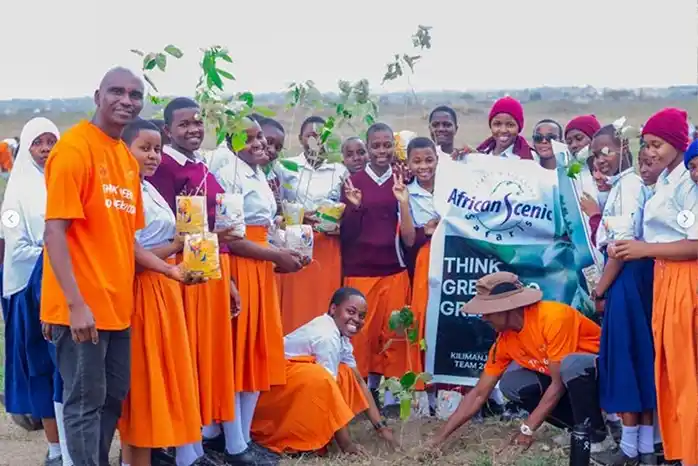
Over the last three years, African Scenic Safaris has actively participated in tree planting initiatives. Our dedicated staff has planted more than 3,000 trees along school grounds and riverbanks in the Kilimanjaro region, achieving an impressive 98% survival rate.
This effort addresses the urgent threat that Kilimanjaro's ice could vanish by 2040, a critical concern for our company operating on the mountain. During these sessions, our team also delivered educational lessons to school students on the vital role of trees, Mount Kilimanjaro's indirect influence on local livelihoods, and practical ways they can contribute to environmental stewardship for mutual sustainability.
The sessions also encouraged students to take responsibility for caring for the planted trees and to share what they learned with their families and communities. Through this work, African Scenic Safaris continues to support environmental protection, climate awareness, and stronger local participation in conservation across the wider Kilimanjaro region over time.
Sports Bonanza
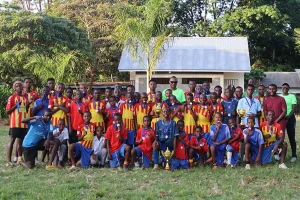
In November 2025, African Scenic Safaris joined students from schools across Moshi Mjini for a day of sport at Mwereni Primary School, marking our second year of bringing this bonanza to life. Football, rope jumping, basketball, sack races, and running brought the children together, while our staff competed alongside them, not from the sidelines.
Partnership with Moskiza Football Club
The 2025 Sports Bonanza was strengthened by our partnership with Moskiza Football Club, whose support was key to making this year’s event a success. Their involvement helped bring children from different backgrounds together on equal ground, including students from local families and others who are orphans.
Through the partnership, the children were able to take part in football and other sporting activities in a friendly and supportive setting. Moskiza Football Club contributed its time, experience, and encouragement, helping the event run smoothly and giving the students a chance to enjoy healthy competition.
The partnership also showed how sport can connect young people, build confidence, and create a sense of belonging. Every child was encouraged to participate, support others, and enjoy the day without feeling left out. By working with Moskiza Football Club, African Scenic Safaris was able to make the Sports Bonanza more inclusive and meaningful for the students and the wider Moshi community.
Trash collection on Mount Kilimanjaro
Every year, between 30,000 and 40,000 people attempt to climb Kilimanjaro, and the mountain carries the evidence. Waste accumulates season after season, route after route, and without active effort, it stays there. This is why our clean-up work never really stops.
Apart from bringing all our trash out, Our porters and mountain guides collect waste on every single climb throughout the year, not as a program, just as a standard. In November 2025, we went further. Twelve members of our team dedicated six full days to a targeted clean-up of the Machame Route, collecting 262kg of waste from the gate all the way up to Kosovo Camp at 5,470 meters.
Every piece that came off that mountain is one less piece contaminating the soil, the water sources, and the ecosystems that make Kilimanjaro what it is. We do not just take people up Kilimanjaro. We take care of it.
Reusable water bottles and jerricans
As a DMC, we feel it’s part of our responsibility to empower travelers with options that make their holidays and experiences more mindful and environmentally friendly. That is why, in 2023, we decided to take action by equipping our jeeps with jerricans and supplying our clients with reusable water bottles.
In 2025, we moved from plastic reusable water bottles to metallic bottles. Every day, 1 client used 1 plastic water bottle. For a 3-person safari trip lasting 7 days, 28 to 30 water bottles could have ended up in landfills (including the guide).
Through this Initiative, our travelers benefit from reducing the impact of their travel and shaping cleaner, more responsible encounters. This initiative has helped save 350,000 bottles from ending up in landfills in the last 2 years.
Itineraries designed to reduce driving
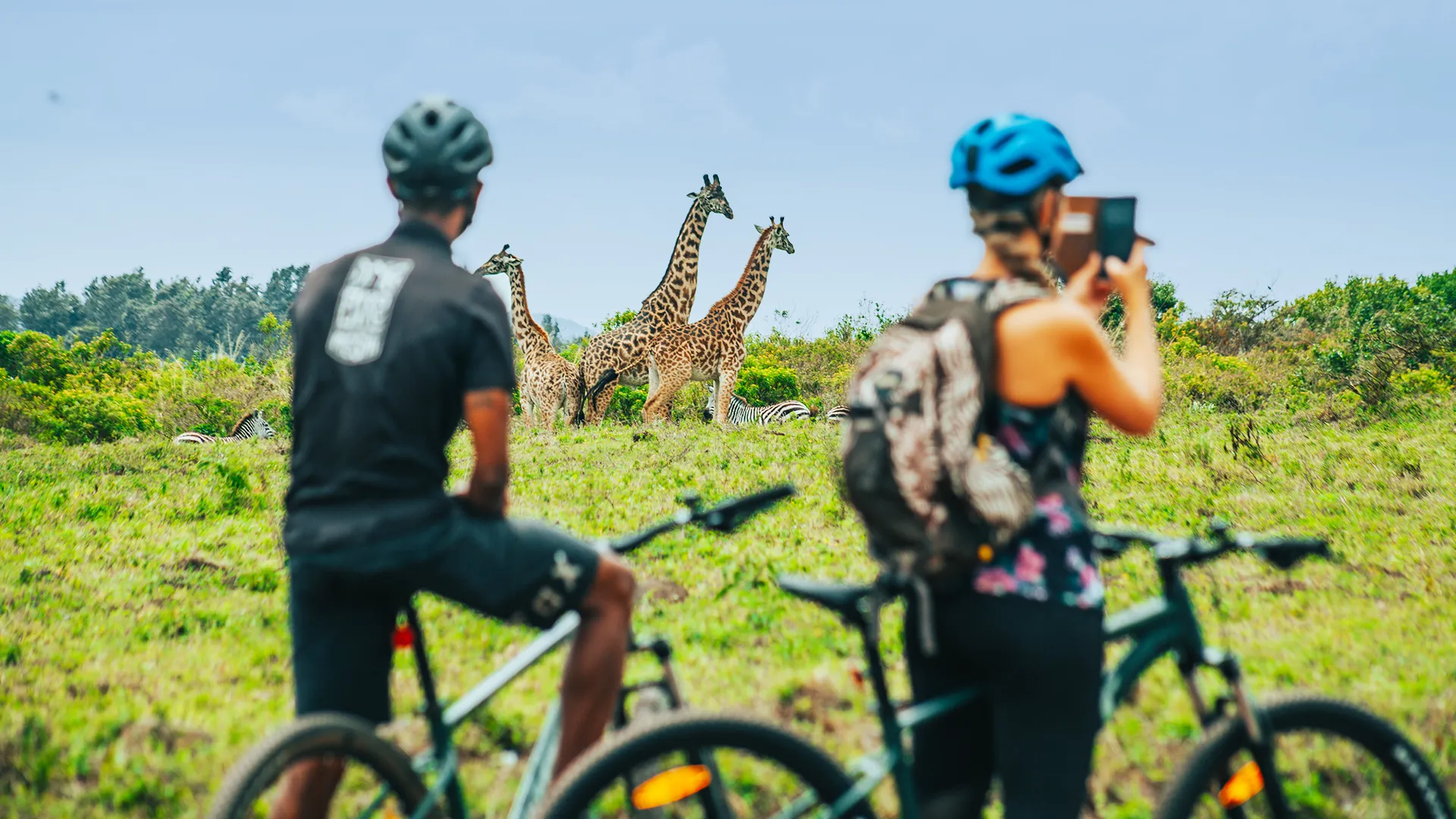
Our itineraries are carefully designed to include a wider variety of activities beyond game drives, such as walking safaris and community-based experiences, so that our clients spend less time on long road-based drives. This approach reduces the total distance traveled and lowers the amount of carbon emitted per trip.
By including activities that do not always require vehicles, we can reduce unnecessary driving while still giving our clients a varied travel experience. Walking safaris allow guests to explore nature on foot, while community-based experiences create opportunities to meet local people and learn about their daily lives.
We also plan activities and accommodation carefully to reduce long transfers between destinations wherever possible. This helps make each itinerary practical, enjoyable, and more environmentally friendly. Through this approach, African Scenic Safaris continues to reduce the environmental impact of travel while offering meaningful experiences across Tanzania.
Medical Camps
For two consecutive years, we have partnered with Kibosho Hospital to support medical camps in remote villages around Kilimanjaro. This initiative is our way of contributing to the community by providing essential check-ups and screenings for people who often cannot afford to travel to the hospital.
During these medical camps, local residents are able to meet healthcare professionals closer to their homes and receive basic health support. The camps help identify common health concerns early and give people useful advice about their wellbeing. They also reduce the need for long and costly journeys to reach medical services.
Through this partnership, African Scenic Safaris and Kibosho Hospital continue to support communities with limited access to healthcare. The initiative reflects our commitment to practical community support and helps more people receive essential medical attention when they need it.
Community Partnerships
On Women’s Day 2025, our ladies’ team donated reusable sanitary pads to 600 girls across Tanzania. In Arusha, 300 pads were donated to girls at Tinga Tinga Secondary School, near the Maasai village where we take guests for cultural experiences. Training sessions also covered women’s health, girls’ empowerment, and tourism as a future career.
In Dar es Salaam, another 300 pads were donated to girls at Huruma Orphanage in Goba, in partnership with Nuru Yetu Foundation. All pads were sourced from Ree Pads, a women-owned social enterprise whose products are made by local women tailors.
From 6th to 10th October, our Director, Ms. Neema Natai, and General Manager and Sustainable Tourism Coordinator, Ms. Mary Njuguna, also led our team at Kilimanjaro Christian Medical Centre. Over three days, we prepared and served meals to more than 3,600 patients, families, medical students, and hospital staff.
Sustainability Training & Workshops
For the past four years, our staff and some of our suppliers have participated in sustainability training delivered by Tieranjani Africa. This has been instrumental in building their understanding of sustainability and ensuring they apply sustainable practices in their daily work.
In addition, 95 % our staff have completed Travelife’s Sustainability Basics course, which further strengthens their knowledge and commitment to sustainability across our operations. The training helps our team understand how their everyday decisions can affect the environment, local communities, and the quality of our services.
These sessions also create space for staff and suppliers to discuss practical challenges, share ideas, and identify areas for improvement. By continuing to invest in sustainability training and workshops, African Scenic Safaris helps ensure that responsible practices are understood and followed across office work, field operations, guest services, and supplier relationships.









 African Scenic Safaris #1 on TripAdvisor