How Much Does It Cost to Climb Kilimanjaro 2026 - 2027 ?
Last Updated:3 October 2026
The cost of climbing Mount Kilimanjaro typically ranges from $2,500 to $3,800 per
person for a guided climb. The exact price depends on factors such as the route, number of
trekking days, group size, and level of accommodation. Your Kilimanjaro climbing package generally
includes the essential costs of your trek, including park fees, professional mountain guides and
porters, meals and drinking water on the mountain, tents and camping equipment, two hotel nights with
breakfast, and airport and trailhead transfers.
This means you can focus on the climb itself while your operator takes care of the key logistics
before, during, and after your trek.
But that is not the full cost of your trip. You also have to pay for your international flights, your
Tanzania visa, the mandatory $44 Tanzania government travel insurance payable on
arrival, your personal travel insurance policy, your personal gear, and the
tips you give your crew at the end of the climb. Once you add all of these, the trip comes to
$4,300 to $8,000 per person. Many people plan for the climb price and forget the rest,
so this page explains every cost you will need to pay, not just the price your operator quotes.
Don't forget the $44 mandatory insurance
Every foreign non-resident must buy Tanzania's government travel insurance on arrival — $44 per person, non-refundable, valid 62 days. It's separate from your personal travel insurance policy, and it's not optional. Budget for both.
Your final price depends on three things: the route you pick, how many days you spend on the mountain,
and how many people are in your group. Longer routes cost more because park fees are charged per person
per day. This is why two climbers can be quoted very different prices for what looks like the same trip.
How Much Does a Kilimanjaro Climbing Cost ?
A Kilimanjaro climb typically costs $2,500 to $3,800 per person for the guided package. Park fees of $992 are included . For a typical 7-day Machame climb — the most popular route — budget $2,500–$3,600 per person, excluding international flights.
Move the slider to choose how many days you'll spend on the mountain, then tap the climbing style that matches how you want to reach Uhuru Peak: budget, mid-range, or luxury. Your real price range appears instantly, right here on the page.
If you are planning a climb in 2026 or 2027, this guide shows you where your money goes. Here is what
you will learn:
Why one climb costs more than another
How your route choice changes the price
How much to set aside for tipping
Why extra days add to your budget
The normal price range for a Kilimanjaro climb
Which costs people forget to plan for
What to check before you pay a deposit
Park fees are the highest fixed cost in any quote. On a 7-day Machame climb, they come to $992
per person. This money goes to the Tanzania National Parks Authority. The government sets the
rates, so every operator pays the same amount.
At African Scenic Safaris, we explain every cost in plain terms. We work in the upper-mid-range and
premium segments of the market. We do not sell budget climbs, and we explain why further down this page.
Kilimanjaro Trip Cost Calculator
Included in package
Park fees, permits & VAT
Guides, cook & porters
Meals & drinking water
Tents, mess tent, mattresses
Oximeter, oxygen, first aid
2 hotel nights + transfers
PACKAGE PRICE$2,500–$3,800
Tick what you'll need
Flights
$900–2.2k
Visa
$50–100
Insurance
$200–400
Crew tips
$300–450
Personal gear
$70–650
Extras/souvenirs
$0–500
EXTRAS TOTAL$1,800–$4,200
YOUR TOTAL
$4,300 – $8,000
These prices are per person for a 7-day route, with two or more people in the group. A solo climber
pays more. We show a full solo budget later on this page. Park fees are the same for every operator, so
no one can give you a discount on them.
Every quote we send lists park fees, crew wages, and equipment as separate lines, so you can see
where each dollar goes before you pay anything.
African Scenic Safaris ensures every single client receives clear, honest, and transparent pricing.
Every quote is based on actual mountain activities, not rough guesses.
We explain every charge in straightforward terms, including
park entry, rescue fees, crew wages, lunches, transportation, and mountain gear, so climbers know
precisely what they are paying for.
We explain how the money from all park fees goes toward
protecting the environment, paying for ranger services, and keeping the trails safe.
We also highlight ethical requirements, such as fair
compensation for porters and the right safety gear, to assist climbers in realizing why
responsible climbs can't be priced too low.
Which Kilimanjaro Climb Fits Your Budget?
Estimated package price, per person
$2,500 – $3,800
Excludes flights, visa, insurance, tips and gear
What’s Included in Your Kilimanjaro Package
A truly good Kilimanjaro Climbing Package covers essential logistics and safety. This
coverage is for the entire duration of the trek. This is the main factor for determining your
final cost to hike Kilimanjaro.
Every quote you get should include six things, no exceptions. Here's exactly what's covered before you pay a single dollar in extras:
Park Fees & Taxes
The single largest portion of the total price to climb Kilimanjaro is all the mandatory park fees.
These funds go directly to the Tanzania National Parks Authority (TANAPA). These fees help sustain the
conservation of national park lands. Safe and ethical Kilimanjaro tour operators will never try to
bypass these required fees. They are completely non-negotiable.
Fee
Rate (non-resident adult)
How it is charged
Conservation (entry) fee
$70 per person
Per day in the park
Camping fee
$50 per person
Per night, on camping routes
Hut fee (Marangu only)
$60 per person
Per night
Rescue fee
$20 per person
Once per climb
Forest fee (Tanzania Forest Services)
$20 per person
Once per climb
Crew park fee
5,000 TZS (about $2) per crew member
Once per climb
VAT
18%
Added on top of every line above
These rates do not include VAT. Children aged 5 to 15 pay $20 for conservation and $10 for
camping. Children under 5 are free. Children under 10 cannot go above 3,700 meters.
Example: Park fees on a 7-day Machame climb
This example is for two adult climbers traveling together on the Machame route. They spend seven days
in the park and camp for six nights, supported by a crew of eleven guides, cooks, and porters.
Item
How we work it out
Per climber
Conservation fee
$70 × 7 days
$490.00
Camping fee
$50 × 6 nights
$300.00
Rescue fee
$20 × 1
$20.00
Forest fee
$20 × 1
$20.00
Crew park fees
about $2 × 11 crew ÷ 2 climbers
$11.00
Subtotal, before VAT
-
$841.00
VAT at 18%
-
$151.38
Total park fees per climber
-
About $992
We have run exactly the same calculation for the other four routes we operate. Each figure below is
per climber and includes the conservation fee, the camping or hut fee, the rescue fee, the forest fee,
the crew park fees and 18% VAT. You can see clearly that every extra day on the mountain adds roughly
$145 to what you pay the park.
Marangu works out differently from the rest. It is the only route where you sleep in huts rather than
tents, so you pay a hut fee of $60 a night instead of the $50 camping fee. It is also the shortest
route we run, which is why its park fees are the lowest on the list.
Route
Days
Sleeping
Park fees per climber (with VAT)
Marangu
6
Huts
About $898
Machame
7
Camping
About $992
Rongai
7
Camping
About $992
Lemosho
8
Camping
About $1,138
Northern Circuit
9
Camping
About $1,283
What does a Kilimanjaro climb really cost to run it safely?
Once you know the park fee, you can judge whether any quote you are given is realistic. On a 7-day
Machame climb, about $992 per climber has already gone to the park before your operator has paid a
single wage or bought a single meal.
Everything else still has to be paid on top of that. Here is what a 7-day Machame climb genuinely
costs to run, per climber, with the park fees from the table above included:
What has to be paid
Per climber
Park fees, permits and VAT
about $992
Crew wages for eleven people over seven days
about $400
Food, water and cooking fuel, for climbers and crew
about $180
Transport to and from the gate, plus two hotel nights
about $220
Tents, oxygen, equipment, insurance and office costs
about $250
Total before the operator earns anything
About $2,041
This is why a climb advertised at $1,500 does not add up. That price does cover the $992 in park
fees, because those cannot be avoided or negotiated. That leaves about $519 for everything else, and
crew wages alone are around $400.
So, to make a climb possible at $1500, some prices have to be compromised. Usually, it's the porters'
pay, the number of crew sent up the mountain, or the safety equipment that quietly gets left behind.
But that’s against ethical standards and unsafe too. That’s why operators should never
ignore the safety and well -being of climbers as well as the climbing staff.
How does African Scenic Safaris price a climb?
We build our prices from the real costs shown in the table above, and we do not cut into any of
those costs to make a quote look cheaper. We pay every porter, cook and guide at or above the agreed
KPAP minimum, and we pay them within two days of coming down the mountain. We send a full crew on
every climb so nobody carries more than the 20 kg limit. Every departure goes up with emergency
oxygen, pulse oximeters and a full first aid kit, whatever the route and whatever the size of the
group.
We don't reduce any of these to win a booking. Each one is what protects you and the crew when the
weather turns, or when somebody falls ill at 4,600 meters and needs to come down quickly.
Check the park fees yourself:TANAPA Park Fees and
Tariffs. The published rates run on the government financial year (1 July to 30 June) and can
change. We check the current rates before every quote, and if they change between your booking and
your climb, we tell you and adjust your invoice.
Your Climb Price Should Never Compromise Safety
Our pricing reflects the real cost of a responsible Kilimanjaro climb — current TANAPA fees, fair crew wages, full staffing, safety equipment, oxygen, first aid, and essential mountain support. Ask us for a transparent quote and see exactly how your climb price is built.
Who is in your Kilimanjaro crew, and what we pay them
The second large part of your package price goes to the people who get you up the mountain. On a
typical climb, you will be supported by somewhere between 10 and 16 crew members. Most of them are
porters, carrying the tents, food, water and equipment so that you only ever carry a day sack.
The table below sets out the standards we work to. These are not targets we reach only when a group is
big enough to pay for them. They apply to every departure we run, whatever the route and group size.
Benchmark
Our standard
Guides per climber
1 guide per 2 climbers, and at least 2 guides on every climb
Lead guide qualification
KINAPA-licensed, Wilderness First Responder trained
Porters per climber
4 on camping routes. KPAP allows 2 on Marangu, because there are no tents to carry
Maximum porter load
20 kg of company and client gear, not counting the porter's own kit
Porter wages
At or above the KPAP minimum of 20,000 TZS a day (confirm current rate at kiliporters.org before travel), paid within 2 days of coming down
Crew meals
3 full meals a day for every crew member, not just clients
Crew shelter
Proper tents and sleeping gear for the whole team
Porter first aid
Our porters hold First Aid certification through KPAP
Guide languages
English, French, Italian and German
Ongoing training
Senior guides mentor junior crew, with refresher courses every low season
Group type
Private climbs only. We never put you into a mixed group of strangers
Meals and water
You get three cooked meals a day, made fresh on the mountain by your cook, plus hot drinks and
snacks. Appetite drops sharply above 4,000 meters, so we build menus around calories and familiar food
rather than variety. We handle vegetarian, vegan, gluten-free and halal diets as standard. Tell us
your food choices when you book.
All drinking water is included. It is either boiled and filtered, or purified. You never pay
separately for food or water on the mountain.
Camping equipment
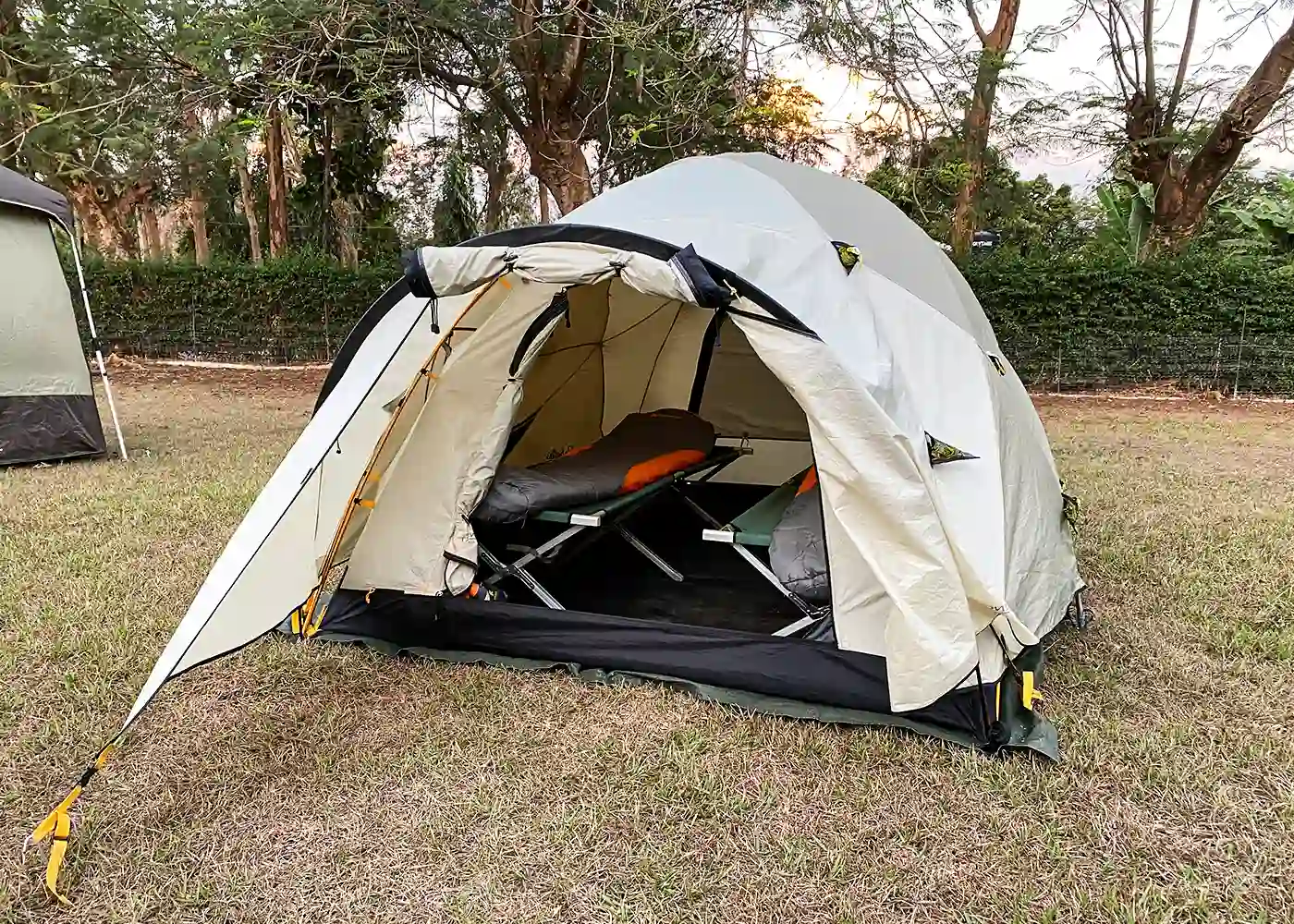
We provide four-season mountain tents on every camping route: Machame, Lemosho, Rongai, and the
Northern Circuit. Each tent comes with a proper sleeping mattress, and you can hire a second mattress
from us for $15 if you would like more padding and insulation underneath you.
You also get a separate mess tent with a table and chairs, so that you eat and rest properly instead
of sitting on the ground in the cold. A full first aid kit is kept at every camp.
Marangu is the one exception, because it is the only route where you sleep in huts rather than tents.
Your hut fee is already included in the package price, so there is nothing extra to pay.
Daily health checks
Altitude is the main reason people turn back. You can manage it if you catch it early.
We check every climber twice a day, morning and
evening. We record pulse rate, blood oxygen level on a pulse oximeter, and a Lake Louise symptom
score.
Emergency oxygen goes up on every climb and is
checked daily.
A full first aid kit is carried by the lead
guide.
A Gamow bag (a portable pressure chamber) goes
on our longer and higher routes.
A written descent and evacuation plan for every
camp on your route.
Guides look at how your numbers change over several days, not just today's reading. If your oxygen
level is falling while your symptoms get worse, that is when we start descending. Your guide makes
that call.
Know Who’s Looking After You on the Mountain
Your safety on Kilimanjaro depends on more than equipment. Our guides monitor your oxygen levels, pulse rate, altitude symptoms, and overall condition twice daily, helping them make informed decisions throughout your climb.
We do not treat safety equipment as a cost to cut. It goes up on every climb, whatever the group
size, route, or package. We check it before each climb, not once a season.
Every African Scenic Safaris climb carries pulse oximeters for twice-daily checks, emergency oxygen,
a full first aid kit held by the lead guide, and a written descent plan for each camp. Our longer
routes also carry a Gamow bag. This buys time for a climber with serious altitude sickness while we
bring them down.
Other low-cost operators cut exactly these items, because oxygen cylinders, oximeters and a Gamow bag
cost money and are usually never used. That is why we carry them.
Ethics on the mountain
We are a KPAP / KRTO partner operator. We open every climb to independent porter
welfare monitoring. In practice this means fair wages paid within two days of coming down, proper gear
and shelter for the crew, three meals a day for every porter, and load limits we enforce.
This is not separate from your safety. A crew that is well fed, properly equipped, and not overloaded
is a crew that can help you at 4,600 meters.
Your climb supports an entire mountain crew. We follow KPAP/KRTO porter welfare standards for fair wages, proper equipment, nutritious meals and safe load limits. Don’t just take our word for it—verify our status independently before you climb.
Route length is the next biggest thing that changes your price, because it sets how many days of park
fees and crew wages you pay. A 6-day climb costs less than a 9-day climb for that reason. It also has a
much lower summit rate.
Route comparison
The table gives you the two things that decide most bookings, which are how many days you need and what
the climb starts from, alongside the acclimatisation profile that determines whether you reach the top.
All prices are per person for a private climb and drop, and increase as your group gets bigger. They
include every park fee and VAT, both hotel nights, all your meals and water, all transfers, and the full
safety kit described above. Tips and personal gear are extra.
Marangu is the only route where you sleep in huts rather than tents, which is part of why it is the
cheapest and why it suits climbers who would rather not camp.
If altitude worries you at all, read the acclimatisation row first and let it decide for you. You can
enjoy the scenery on any of these routes. You only reach the summit if your body has had enough time.
Climb Style: Budget Vs Mid-Range Vs Luxury
The Average Cost to Climb Kilimanjaro varies widely. It depends on the quality of
service you choose, the quality of your gear, and the experience level of the crew supporting you. You
essentially choose between budget, midrange, or luxury service.
Budget (Under $2,400)
Below about $2,400, a 7-day climb cannot pay $992 in park fees,
KPAP wages for 10 to 12 crew, food, transport, equipment and two hotel nights and still leave the
operator with nothing at all. When the price is this low, the operator has already reduced one of those
costs before you booked. It is normally the porters' wages or the number of crew sent up, because those
are the two costs a client never sees. We do not work at this level.
Mid-range ($2,400 to $3,600)
This is where a properly run climb sits. Full safety
equipment, licensed and trained guides, KPAP crew standards, good four-season tents, fresh food. Most
climbers should be looking here.
Luxury ($3,600 and above)
Same safety standard as mid-range, with more comfort. Better
hotels either side, a private toilet tent, bigger sleeping tents, better mattresses, a heated mess tent,
more crew per climber. You are paying for comfort, not for a safer climb.
Kilimanjaro Tiers, Honestly Compared
Price, 7 days
Under $2,400
$2,400–$3,600
$3,600+
Safety kit
No oxygen/oximeter
Oximeter, oxygen, first aid
+ Gamow bag
Guides
May be unlicensed
KINAPA, WFR-trained
KINAPA, WFR-trained
Crew treatment
Underpaid, overloaded
KPAP wages, 20kg limit
KPAP wages, more crew
Group size
Large, 12–15+ strangers
Small group or private
Private
Tents & bedding
Old, sometimes leaking
New 4-season tents
Bigger, heated mess tent
Food
Repetitive, small
Fresh, varied, diets catered
Fresh, wider menu
Hotel either side
Basic, or not included
Good local lodge
Upgraded lodge
Toilet
Public long-drops only
Private tent optional
Private toilet included
You're buying
A price
A safe, well-run climb
Safety, plus comfort
Why Does African Scenic Safaris Not Offer Budget Climbs?
African Scenic Safaris exclusively works in the high-end, mid-range, and luxury categories, and
this is on purpose. If we offered inexpensive climbs, we would have to compromise safety standards,
put porters' health at risk, or cut back on the right gear. That goes against everything the
business stands for.
We maintain a 98% summit success rate across our private guided departures since
2009, follow KPAP ethical rules, and give every guest a safe, responsible, and truly
life-changing climb by offering mid-range and luxury packages.
PLAN YOUR KILIMANJARO CLIMBING
Which Climbing Style Suits You Best?
Let us know how you like to travel, and we'll match you with an experience that fits your budget. Every tier includes expert guides, park fees, and transport.
Your package includes two nights of hotel accommodation, one before your climb and one after it, with
breakfast on both mornings. You don't need to pay extra for these two nights.
2 Nights Included (Pre-Climb & Post-Climb)
African Scenic Safaris includes your accommodation for two essential nights. This covers the critical
night before your climb starts. It also covers the night you immediately return from the mountain.
Locally Owned Lodges with Breakfast
We choose high-quality, locally owned lodges near the park entrance. These lodges offer comfortable
rooms. They include all necessary amenities. A filling, fresh breakfast is always included. We provide
this on both non-climbing days. This directly supports the local economy. This strengthens the
Kilimanjaro community in Tanzania.
Community Impact Note
Choosing local Kilimanjaro climb tour operators, like us, has a direct, tangible positive effect. It
supports Tanzania's local economy. Your spending strongly supports local employment. It also reliably
supports small, community businesses. We're proud to prioritize sustainable, long-term tourism.
Know Where You’ll Stay Before You Climb
Your Kilimanjaro journey starts before you reach the mountain and continues after you descend. Share your travel dates with us, and we’ll confirm your pre-climb and post-climb lodge, breakfast arrangements, and what’s included before you book.
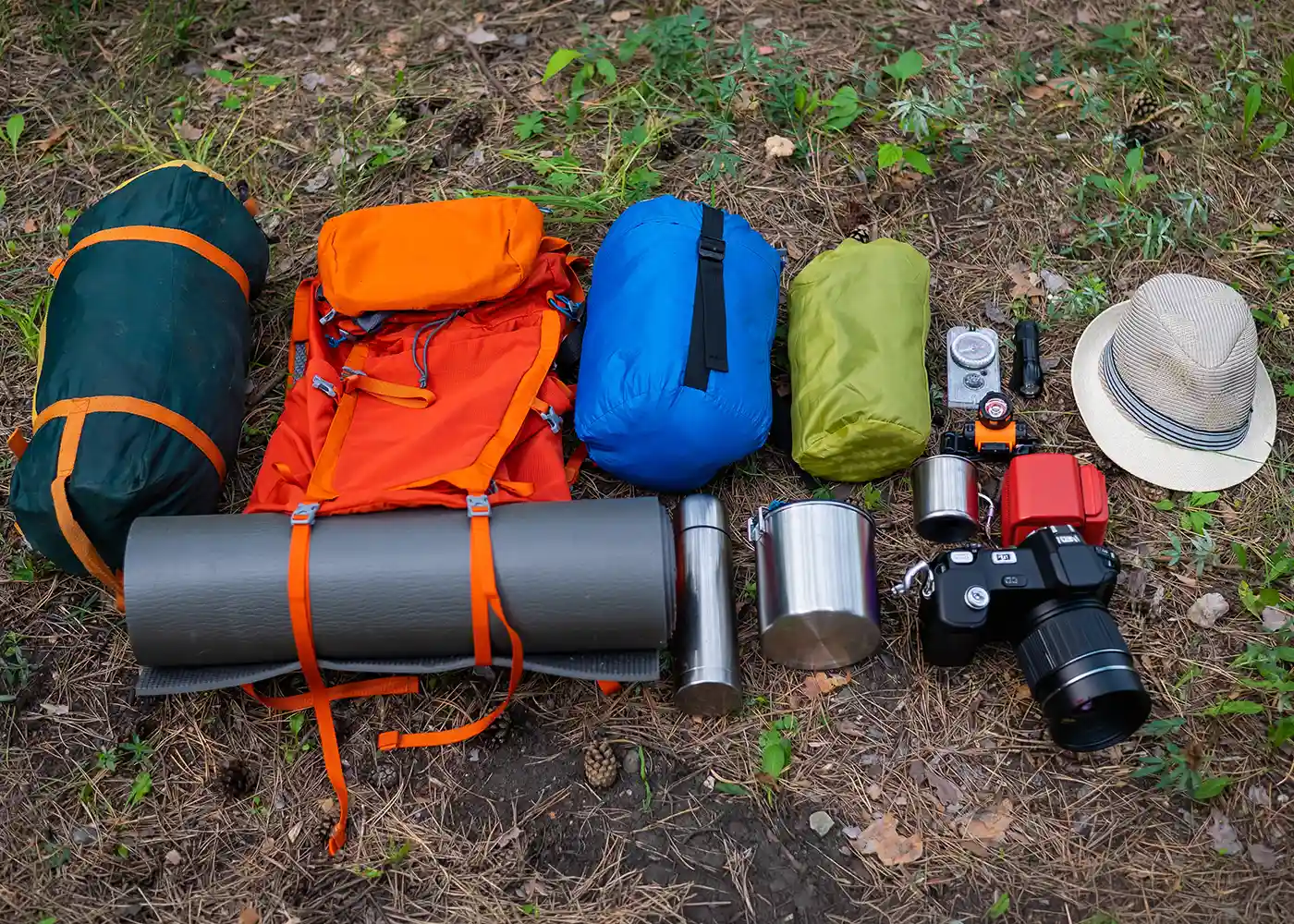
Gear costs $105 to $525 if you hire it from us. Hiring just the big items costs
$105. A full head-to-toe kit is about $525. If you would rather buy,
budget $310 to $650 for the items worth owning.
Most climbers do a mix. They buy boots, socks, thermals, and a head torch, then hire the sleeping bag,
down jacket, poles, and duffel. That comes to roughly $400 to $600 in total.
You pass through four climate zones on the way up, from tropical forest to an arctic summit zone where
it drops to about −15°C. Layers matter more than any single expensive item.
We hire out every item you need. Our prices are per climb, not per day, and you check
and fit everything at the briefing the evening before you leave.
What we already provide
Check this list before you buy or hire anything. Several bigger items are already in your package, so
you don't need to pay for them twice.
Four-season sleeping tent and sleeping mattress.
Mess tent, table and chairs.
Porters to carry your main bag. You only carry a day sack.
Group first aid kit, pulse oximeters, emergency oxygen.
All cooking equipment and clean drinking water.
Essential gear checklist
Everything in the first list below is genuinely required. If you arrive without one of these items, we
will hire it to you at the gear check the evening before you leave.
You must have these
Walking boots. Waterproof, with ankle protection, and worn in
Sleeping bag rated to −18°C, or −30°C if you feel the cold
Waterproof and windproof jacket and over-trousers
Down jacket for summit night
Thermal top and long johns, 2 to 3 of each
Thick gloves plus thin liner gloves
Warm hat, sun hat, and a buff
Gaiters. Compulsory, unless you have long
trousers with straps or high boots
Head torch with spare batteries. Summit night starts around
midnight
Day sack, 30–40 litres, with a waterproof cover
Duffel bag, 70–100 litres, soft-sided. Porters carry this on
their heads
3 to 4 litres of water capacity. Bring a bottle as well as a
bladder, because bladders freeze on summit night
Sunglasses with 100% UV protection
Hiking socks, at least 4 pairs, one of them thermal
High-SPF sun cream and lip balm
Strongly recommended
Walking poles.
Sleeping bag liner.
Camp shoes for the evenings.
Rain poncho.
Personal first aid kit and toiletries.
Kilimanjaro Gear: Buy vs Rent
If You Bought Everything
$1,983
Midpoint of buy price, all 16 items
Following Our Advice
$840
Buy what's worth owning, hire the rest
If You Rentd Everything
$313
Cheapest option, least personal fit
We Say Buy
We Say Rent
It Depends
Item
Buy New (USD)
Rent From Us
What We Advise
What it costs to hire
Climbers who already hike at home usually spend $105 to $165, because they only need
the cold-weather items. Climbers starting from nothing spend $400 to $525. Buying
that same kit new would cost well over $2,000.
Choose Your Gear Package
What you hire
Total
Just the big items
Sleeping bag, down jacket, walking poles, duffel bag
$105
Big items plus waterproofs
The four above, plus jacket, over-trousers, gaiters and a bag cover
$165
A full kit, head to toe
Everything you need
about $525
What you cannot bring on the mountain
These are park and national rules rather than ours, and staff checks for them at the gate. Two of
them affect what you pack, so read them before you shop.
Not allowed
Why
Single-use plastic bags
Banned across Tanzania. Zip-lock bags are fine
Single-use plastic bottles
You must use a reusable bottle or a hydration bladder
Portable speakers
To keep camps quiet for everyone
Cigarettes
No smoking on the mountain, because of fire risk
Drones
Not permitted in the national park
Knives
Not permitted
Your packing list
Pack only what you need. Every extra kilo is carried by a porter who is already at their 20 kg limit,
and layers beat bulk on a mountain where the temperature swings this far in a day.
Our public Kilimanjaro packing
list is available now. Once you book, we also send you our full Kilimanjaro Equipment List
and Guidance, which covers every item with hire prices, plus your personal first aid kit,
toiletries, and the documents and valuables to bring.
Not Sure What to Pack?
Share what you already have, and we’ll help you complete your Kilimanjaro kit without buying unnecessary gear or carrying extra weight.
Your journey begins long before you arrive at the mountain gates. Pre-climb expenses are completely
necessary for a safe trip. They are billed separately from your main Kilimanjaro climbing
package price.
Flights To Tanzania
Most climbers choose to fly into Kilimanjaro International
Airport (JRO). It sits between Moshi and Arusha. Some people fly to Nairobi and take a shuttle,
but a direct flight to JRO is simpler.
Fares change a lot depending on where you fly from and when you book. Expect $900 to
$2,200 return. Book four to six months ahead. This usually saves $300 to $600 compared with
booking eight weeks out.
Visa Fees
Almost every foreign traveller needs a visa. Apply online before you travel.
Most nationalities: Ordinary single-entry visa,
$50, valid up to 90 days.
US passport holders: You must apply for the
Multiple Entry Visa, $100, valid for 12 months. The $50 single-entry visa is not
available to you.
Transit visa: $30 — valid for stays under 72
hours and specific nationalities only. Check visa.immigration.go.tz for eligibility.
Processing takes four to six working days. Apply at least two weeks before you travel. Your passport
must be valid for six months from your arrival date and have one blank page. You also need a return or
onward ticket.
You only need a certificate if you are arriving from a country with yellow fever risk, or if you
spent more than 12 hours in transit there. You do not need it for direct flights from Europe or North
America.
Mandatory Tanzania Travel Insurance
Tanzania requires all foreign non-residents to purchase mandatory government travel insurance on
arrival at the point of entry. The cost is $44 per person, valid for 62 days, and is
non-refundable. EAC nationals are exempt. This is separate from your personal travel insurance policy
— you need both.
If you are also visiting Zanzibar, a separate Zanzibar Insurance Certificate (ZIC)
applies: $44 for adults, $22 for children aged 3–17, free under 3. Purchase
this in advance at zic.co.tz and present your QR code on arrival at Zanzibar airport.
Mandatory Government Insurance
$44/person
Valid 62 days Non-refundable Paid on arrival
Required for all foreign non-residents entering Tanzania. EAC nationals are exempt. This does not replace your own travel insurance — it's an extra, separate requirement.
Travel Insurance
Your chosen travel insurance must include emergency evacuation coverage. It must also cover medical
costs up to Mount Kilimanjaro
Height. Standard travel policies are simply not enough for this extreme altitude.
The Travel Insurance for Climbing is absolutely non-negotiable. This is an
essential safety requirement. Comprehensive Kilimanjaro Travel
Insurance usually costs between $200 and $400.
Always confirm your chosen policy. Make sure it covers trekking at very high altitudes. Safety and a
reliable evacuation plan must be your ultimate priorities.
Do you need help finding suitable comprehensive travel insurance? Let us guide you. We can recommend
reliable, proven providers.
Airport Transfers
All transfers are included in your package. This covers transfers from the airport
to the hotel, from the hotel to the trailhead, and back. You do not need to budget for these
separately.
Route
Distance
Drive time
JRO → Moshi
about 45 km
45–60 minutes
JRO → Arusha
about 50 km
60–75 minutes
Moshi → Machame Gate
about 35 km
45–60 minutes
Moshi → Londorossi Gate (Lemosho)
about 90 km
2.5–3 hours
Moshi → Nale Moru (Rongai)
about 110 km
3–3.5 hours
We base our climbs in Moshi. It is closer to the mountain and to most gates. Arusha
is the safari hub and a longer drive to every gate except Londorossi.
When to arrive
Arrive at least one full day before your climb starts. That night is included in
your package.
If you are flying from North America, Australia, or East Asia, or your route has two connections,
add a second night. Your briefing and gear check happen the afternoon before you
leave. If you land that morning, you will be checking your equipment while jet-lagged. That is when
people miss something important.
Pre-Climb Expenses Breakdown
The following is a breakdown of the pre-climb costs. These are the costs incurred before climbing
trips to Kilimanjaro.
Expense
Cost (USD)
Notes
Flights
$900 – $2,200
Depends on where you fly from and when you book
Tanzania visa
$50 – $100
$50 for most nationalities, $100 for US citizens
Mandatory Tanzania travel insurance
$44
Required for all foreign non-residents on arrival — non-refundable. EAC nationals exempt
Travel insurance (Personal Policy)
$200 – $400
Must cover high-altitude evacuation — separate from the mandatory $44 above
Other small costs
$50 – $100
Personal items before you leave
Avoid Unexpected Kilimanjaro Costs
Your climb price is only part of your overall budget. Share your travel details with us and we’ll help you identify the additional costs to plan for before you arrive in Tanzania.
Health preparation for Kilimanjaro costs vary by country. It also depends on whether your health
service pays for travel vaccines. Most climbers spend $150 to $450.
Kilimanjaro is not a technical climb, so people often underestimate it. Altitude, not difficulty, turns
climbers back. Proper health preparation is critical for success. This preparation involves both
necessary expenses and dedicated effort. This is even more true for Climbing Mount Kilimanjaro for
Beginners.
Health costs before you travel
Item
Cost (USD)
Who needs it
Travel clinic visit
$100 – $200
Everyone. Book 6–8 weeks ahead
Standard travel vaccines (typhoid, hepatitis A, tetanus)
$150 – $400
Most travellers
Yellow fever vaccine and certificate
$150 – $250
Only if you arrive from, or spend over 12 hours in, a risk country
Diamox (altitude medication)
$30 – $50
Optional. Ask your doctor
General medical check-up
$100 – $300
Advised, especially if you are over 50 or have any heart history
Training: gym, hiking days, classes
$50 – $150
Everyone
Normal total
$150 – $450
Up to about $1,350 if you need everything
Note: Some vaccines need more than one dose. A yellow fever certificate only becomes
valid 10 days after the injection.
Three things to get right before booking that flight ticket to Tanzania for your climbing
expedition.
See a doctor: Get advice on altitude medication
and vaccines for your route and season. Book your clinic visits 6–8 weeks before you travel.
Train properly: Long hikes on back-to-back days
build the right kind of fitness. Gym cardio alone does not.
Practice drinking water: You need 3 to 4 liters a
day on the mountain. Start the habit weeks before you fly.
You must be prepared for Kilimanjaro Altitude
Sickness some tips to consider before and during the climb. Our guides are trained to spot
and manage altitude sickness. They check every climber twice a day. Your own preparation is still your
first line of defense.
Start Preparing for Your Summit Now
Don’t wait until you arrive in Tanzania to prepare. Build the right hiking fitness, organize your medical appointments and understand altitude considerations well before your Kilimanjaro departure.
Your chosen Kilimanjaro Trek Package covers most of the necessities for the
climb itself. However, you may always choose certain upgrades. Budget for these additional costs
responsibly. Include them in your final financial planning.
Single Supplement ($100–$200)
If you prefer a tent all to yourself, you will pay a single supplement fee. This applies both on the
mountain during the trek. It also applies at the hotel before and after. This guarantees you complete
private accommodation at every single stage.
Extra Acclimatisation Day ($250–$300)
Adding an Extra acclimatisation day to your itinerary is a very smart decision. It is a supremely
safe choice. It significantly increases your chance of successfully reaching the summit. The cost
covers the additional daily Kilimanjaro Park Fees. It also covers the crew wages for that specific
day.
Portable Toilet ($100)
Standard on-site toilets are conveniently available at all public campsites. Still, many climbers
prefer guaranteed privacy. A portable toilet is set up right near your camp. It is exclusively
attended to by one of the crew members.
Souvenirs/Snacks: Variable
You will likely want to purchase souvenirs. You can buy these in Moshi or Arusha. You might also want
to bring specific, familiar snacks. These are for the trek itself. Budget a small, variable amount of
money. This money is for all these personal purchases.
Extra Hotel Nights: Variable
If you choose to arrive early or leave late, you will definitely need extra hotel nights. This
variable cost depends entirely on your chosen lodge.
Add-On Services & Prices
A detailed breakdown of available Kilimanjaro Add-On Services, explaining what
each service includes, how it enhances the overall Kilimanjaro Climbing
Experience, and the associated pricing, helping travellers choose the right extras based on
their needs and preferences.
Service
Price (USD)
What you get
Single supplement
$100 – $200
Own tent on the mountain, own hotel room either side
Extra acclimatisation day
$250 – $300
Better summit chance and a safer climb
Private toilet tent
$100
Privacy and hygiene, cleaned daily
Souvenirs and snacks
$50 – $200
Personal shopping
Extra hotel night
$60 – $180
Extra rest before or after the climb
You can completely customize your climb with these options. Please ask us about our full suite of
tailored Kilimanjaro travel packages.
Tipping On Kilimanjaro
Tipping is expected on Kilimanjaro, but it is not included in your climbing package. This provides a
substantial portion of the total income. This income is for the entire hard-working mountain crew. These
dedicated staff members ensure your total safety. They also ensure your enjoyment of the climb.
How tipping actually works
Tips are calculated per crew member per day and shared by your whole group. They are not per
climber. This is the thing most people get wrong. It is also why the same daily rate gives
very different totals depending on group size.
Guides and cooks are shared by the group. Porters are not, because you get 3 to 4 each. So as your
group grows, the guide and cook cost splits further, but the porter cost per climber stays about the
same. A solo climber pays much more per person than someone in a group of four.
Role
Suggested rate
Lead guide
$20 – $25 a day
Assistant guide
$15 – $20 a day
Cook
$12 – $15 a day
Each porter
$8 – $10 a day
Specialty porters (toilet, waiter, summit porter)
More than the standard porter rate
How the Tipping Actually Adds Up
The easiest way to understand the calculation is to follow one climb all the way through. Here are
two climbers on a 7-day route, supported by a crew of eleven: one lead guide, one assistant guide, one
cook and eight porters.
Role
Rate × days
total
Lead guide
$22 × 7
$154
Assistant guide
$17 × 7
$119
Cook
$14 × 7
$98
8 porters
$9 × 7 × 8
$504
Group total
$875
Per climber
~ $438
What To Tip
You do not need to do this calculation yourself for every group size. The table below gives you the
figure to set aside, and it falls as your group grows because the guides and cook are shared between
more people while the porters are not.
Your group
Per climber, 7-day climb
Solo
$550 – $650
2 climbers
$400 – $470
3–4 climbers
$340 – $390
5 or more
$270 – $330
Practical points
A few small details decide whether tipping day goes smoothly for you and for the crew who carried you up, so it pays to sort them out before you leave home.
Bring cash
US dollars printed after 2010 and in good condition, or Tanzanian shillings. Bring small notes
so the split works. There is no ATM on the mountain.
Know your crew size before you start
We give you the exact number of guides, cooks and porters at your briefing. Ask any operator
who does not tell you.
How we hand out tips
We hold a ceremony at the final camp or back at the hotel. We say the total and each person's
share out loud, in English and Swahili, in front of the whole crew. You can hand envelopes to
each person yourself if you prefer.
Watch for kirunje
This is when porters who did not work on your climb turn up at the tipping ceremony to get a
share. Knowing your exact crew number protects you.
To determine your true overall figure, carefully add all component costs. This total includes the core
package price. It also includes all out-of-pocket expenses. This is how you correctly determine the
real Total Cost to Climb Kilimanjaro.
Start with the core package price for your chosen route. You can use the package of $2,500 to
$3,800 as a safe starting point — the lower end applies to a 7-day Machame or Rongai,
the upper end to premium Lemosho and Northern Circuit packages. Then, you must methodically add all the
variable costs.
This estimate gives you a realistic, clear view of the final expense. It provides the direct, honest
answer. It answers: how much does it cost to climb Mt Kilimanjaro? The safest,
most affordable option always aims for the lower end of the mid-range scale. This ensures you are fully
prepared. You will be prepared for the final, daunting Kilimanjaro Summit Cost.
What You'll Spend to Summit Kilimanjaro (via Machame)
Before you travel
Category Excluded
Flights
$900–2,200
Visa
$50–100
Mandatory insurance
$44
Vaccines/clinic
$150–450
Personal insurance
$200–400
Personal gear
$0–650
Total
$1,344–3,844
The climb (Machame)
Category Included
Park fees & VAT
~$992 of package
Guides, cook, porters
in package
All meals & water
in package
Tents & safety gear
in package
2 hotel nights
in package
All transfers
in package
Total
$2,500–3,500
During and after
Category Excluded
Crew tips
$300–450
Gear hire
$105–525
Souvenirs
$50–150
Extra hotel night
$60–180
Total
$300–450
YOUR TOTAL
$4,144 – $8,294
PLAN YOUR KILIMANJARO CLIMBING
Which Climbing Style Suits You Best?
Let us know how you like to travel, and we'll match you with an experience that fits your budget. Every tier includes expert guides, park fees, and transport.
The figures above are only estimates. Share your preferred route, group size, travel dates and departure city, and we’ll prepare a clearer Kilimanjaro cost breakdown based on your actual trip.
When you are assessing the Total Kilimanjaro Climb Cost, look beyond just the
number. Look instead at the real value the company provides. Choosing African Scenic Safaris means
choosing safety and ethics backed by deep expertise.
Locally Owned, Since 2009: We have been climbing and guiding on Kilimanjaro since 2009. We
are locally owned and based in Moshi, at the foot of the mountain, so no overseas company sits between
you and your crew. More of what you pay stays with the people who actually run your climb.
A 98% Summit Rate, Earned: We reach Uhuru Peak with 98% of our climbers,
based on our private guided departures from 2009 to date. That comes from the way we run a climb
rather than from luck. Our guides are licensed and Wilderness First Responder-trained; we send a full
crew on every departure; we check every climber's health twice a day; and we recommend the route that
gives you the best chance, even when a longer itinerary is not what you were hoping to hear.
Certified & Independently Audited: We are a KPAP and KRTO partner operator, so every one of our
climbs is open to independent inspection of how we pay, feed, equip, and load our porters. We are also
Travelife certified, which involves an independent audit rather than a self-declaration, and we are
members of both ATTA and TATO. In 2025, we offset 117 tonnes of CO₂ annually through Carbon Tanzania.
Trusted by Our Climbers: Our climbers have left over 1000 five-star reviews on
TripAdvisor. We have been given an award every year from 2022 to 2026, including Travelers'
Choice for 2026.
Ready To Plan Your Kilimanjaro Adventure?
The journey to the Roof of Africa is a significant personal investment. Now you fully understand
the Total Kilimanjaro Expedition Cost required. It includes everything,
including pre-trip travel insurance. It also includes the mandatory Kilimanjaro Park
Fees. Remember this critically important point. The final budget should always reflect your
commitment. This commitment is to the highest safety and ethical standards.
Choosing a responsible, ethical operator like African Scenic Safaris is the most important decision you
will make. It gives you the best chance of reaching Uhuru Peak safely. It also ensures the welfare of
the dedicated local crew.
Do not risk your dream summit. Do not sacrifice safety for a marginal saving. Prioritize a company that
confidently offers a luxury, safe, and all-inclusive experience. The real, lasting value is always found
in responsible operation. We are fully ready to help you plan your climb of a lifetime now.
Contact African Scenic Safaris today. Let us customize your dream climb!
Kilimanjaro Climbing Cost FAQ's
A well-run climb costs $2,500 to $3,800 per person for the guided trek
itself. Once you add flights, visa, insurance, gear, and crew tips, budget $4,250 to
$7,950 for the whole trip.
The average cost for a 7-day Tanzania Safari Per person, excluding international flights, is
$1,150–$1,900 budget, $2,350–$3,800 mid-range, $4,300–$7,200 luxury, and
$8,700–$14,500 ultra-luxury.
Where you land inside each range depends on season and group size. The same itinerary in
April with four travellers sits near the bottom; August with two sits near the top.
The main reason is the park fees, which the government sets and applies to everyone. TANAPA
charges $70 per person for each day you are in the park and $50 for each night you camp, then
adds rescue and forest fees and 18% VAT on top. On a 7-day Machame climb, that comes to about
$992 per climber before your operator has paid a single wage. Once you add
wages for ten to twelve crew, food and fuel for all of them, safety equipment and transport to
the gate, the cost is over $2,000 before anyone makes any profit.
Most climbers pay around $2,900 for a well-run 7-day climb in a group of two
to four people. At that price, the operator can afford full safety equipment and can pay the
crew properly.
Lower-priced climbs do exist, but below about $2,400 for a 7-day route the
numbers simply stop working, because park fees and crew wages alone use up most of that money.
The savings have to come from somewhere, and it is usually the porters' wages, the number of
crew sent up, or the safety equipment. There are better ways to spend less: bring your own
small group, hire your gear in Moshi instead of buying it, book your flights early, and travel
outside the peak months.
Route length makes the biggest difference, because it decides how many days of park fees and
crew wages you are paying for. After that, it comes down to how many people are in your group,
the level of service you choose, and whether you hire or buy your gear.
A good package covers all your park fees, permits, and VAT; your licensed guides, cook, and
porters; every meal and all your drinking water on the mountain; four-season tents and
sleeping mattresses; the full safety kit; two hotel nights with breakfast; and all your
transfers.
You pay separately for international flights, your Tanzania visa, travel insurance, personal
gear, crew tips, and spending money.
Yes. You get one night before your climb and one night after it, both with breakfast, at a
locally owned lodge. If you are flying long-haul, we suggest adding a second night beforehand
so you are not doing your gear check straight off a long flight.
They are more expensive, and they do improve your chances. Each extra day adds about $142 in
park fees alone, plus crew wages and food. What you get back is more time to acclimatise,
which is the single biggest factor in whether you reach the top. It is worth comparing what
each route costs per successful summit rather than looking only at the headline price.
Our 8-day Lemosho, Quest From The West, starts from $3,249 per person for a
private climb, and the price per person drops as your group gets bigger. About
$1,138 of that goes straight to the park in fees. This is the route we
recommend to most first-time climbers, because its acclimatisation profile gives you the best
balance of scenery and summit chances.
A well-run 7-day Machame costs $2,500 to $3,500 per person (the full range
across all routes reaches $3,800 for premium Lemosho and Northern Circuit packages), including
about $992 in park fees. It is the busiest route on the mountain, but the scenery is
excellent, and the acclimatization is good, thanks to the climb-high, sleep-low day at Lava
Tower.
An extra day adds a $70 conservation fee and a $50 camping fee, plus 18% VAT on both, plus a
full day of wages, food, and fuel for a crew of ten to sixteen people. That works out at
roughly $250 to $300 per climber. We price our extra acclimatisation day very
close to what it costs us, because it is not something we sell to make money. It is the most
effective single thing you can add to improve your chances of reaching the summit.
The Northern Circuit is the most expensive of the three because, at nine days, it includes
the most park fees and crew wages. Park fees alone come to about $1,283,
against $992 for a 7-day Machame. In return, it gives you the best acclimatization on the
mountain and the highest summit rates of any route.
You can, but we would gently advise against it. A 5 or 6-day route does cost less, but it
cuts down the time your body has to adjust, which lowers your chances of reaching the top and
raises the risk of having to come down early. If your budget only stretches to a short route,
we would honestly rather you saved a little longer and came another season.
Set aside $300 to $450 per climber for a 7-day climb if you are in a group
of two to four. If you are climbing on your own, budget $550 to $650, because you are covering
the whole crew yourself. Tips are worked out per crew member per day and shared across the
group, so the cost per person comes down as your group grows. Bring the money in cash, as
there is no ATM on the mountain.
No, none of these are extra. All your meals, drinking water, and shared safety equipment are
already included in the package. The only things you buy yourself are personal items, such as
energy bars or electrolyte tablets.
No. Park fees are the biggest single part of the price, and they are already included in the
quote we give you. If an operator asks you to pay them separately at the gate, then the price
you were originally quoted was misleading.
Flights vary the most, at $900 to $2,200 depending on where you are flying
from and how far ahead you book. The visa costs $50, or $100 if you hold a US passport.
Your airport transfers are already included in our packages, so you don't
need to budget for that.
The quieter and rainier seasons, which are late March to May and November, give you the best
prices on flights and hotels compared with the busy July to September months. The weather is
wetter and less predictable then, so if you are travelling at that time of year we would
suggest the Rongai route, which comes up the drier northern side of the mountain.
SIMBO NATAI
Director
Simbo Natai, founder of African Scenic Safaris, crafts meaningful Tanzanian journeys through local knowledge. His experience as a former Kilimanjaro guide influences how every journey is planned and delivered.
Unedited reviews from Tripadvisor, written by the people who have actually travelled with us across Tanzania.
These are the words of people who have already been out on Climbig with us. They booked, traveled, and afterward wrote about how the whole trip went for them here.
Nembris was so helpful and knowledgeable from start to finish. We did the 10-day Northern Circuit route with great success, expertly guided by our guides Francis & Emmanuel.
Our Kilimanjaro climb with African Scenic Safaris was nothing short of extraordinary! From start to finish, the team made the experience unforgettable.
African Scenic Safaris was great! My friend Kevin and I reserved the 8-day Lemosho Route hike up Mount Kilimanjaro. We chose them based on 26+ agency reviews.
"If you would like to know more about how we approach responsible tourism, conservation, community support, or sustainability on your Tanzania journey, please contact Mary directly."
The Tanzania Travel Journal
Tanzania, delivered to your inbox
Get practical travel tips, safari inspiration, Kilimanjaro advice - everything you need to plan your trip with confidence.




 Final cost depends on route, group size, and accommodation.