African Scenic Safaris
  • Instagram
  • Facebook
  • You Tube
  • Linkedin
  • X
Skip To

African Scenic Safaris and the Leave No Trace Initiative

African Scenic Safaris has joined the Leave No Trace initiative as part of its long-term commitment to responsible Kilimanjaro climbing. This is not a new idea added only for branding. The company’s mountain team has already been doing this work for years through waste collection, porter training, guest briefings, and clean-up efforts on the mountain.


Scenic and Leave No Trace

Scenic and Leave No Trace

Kilimanjaro gives so much to every climber who steps onto its trails. It gives views, challenges, silence, cold mornings, hard climbs, and that deep feeling of reaching somewhere special. But the mountain also carries the weight of tourism. Every year, thousands of climbers bring food packets, water bottles, supplies, tissues, gear, and other waste onto the routes.

When that waste is not properly handled, the mountain pays the price.

This is why African Scenic Safaris follows a simple rule with a stronger action behind it: trash out is more than trash in. The team brings down its own waste and, where conditions and crew capacity allow, collects waste left by others too.

What Leave No Trace Means

Leave No Trace is a global outdoor movement that teaches people how to enjoy nature without leaving damage behind. It is used by hikers, climbers, campers, guides, tour operators, and travellers who spend time in wild places.

The idea is easy to understand. Go prepared. Stay on the right paths. Carry your waste out. Respect wildlife. Leave natural things where they belong. Think about the people coming after you.

Leave No Trace is built around seven main principles:
  • Plan Ahead and Prepare Good planning helps climbers reduce waste, avoid careless choices, and move safely on the mountain.
  • Travel and Camp on Durable Surfaces Staying on marked trails and approved campsites protects Kilimanjaro’s fragile soil, plants, and alpine ground.
  • Dispose of Waste Properly Carry down every wrapper, bottle, tissue, food scrap, and plastic item, and dispose of it properly.
  • Leave What You Find Leave stones, flowers, plants, and natural features untouched so the mountain remains the same for future climbers.
  • Minimize Campfire Impacts Open fires are prohibited inside Kilimanjaro National Park. Hence, all cooking is done on portable fuel stoves, and hikers carry spent fuel canisters and cooking waste down the mountain rather than burning or burying them.
  • Respect Wildlife View wildlife calmly from a distance, without feeding, chasing, or disturbing it.

For African Scenic Safaris, these principles are not just points on a page. They shape how guides brief guests, how porters handle waste, and how the team checks camps before moving forward.

What Leave No Trace Means

Why Kilimanjaro Needs This Care

From a distance, Kilimanjaro looks huge and strong. But its environment is more delicate than many people realize. The mountain has rainforest, moorland, alpine desert, and high-altitude zones that recover slowly when disturbed.

A small wrapper may not look like much. A tissue left behind may feel easy to ignore. But when thousands of people climb the mountain each year, those small items add up. Waste can affect:

  • Campsite cleanliness
  • Trail conditions
  • Water sources
  • Soil health
  • Wildlife areas
  • The natural beauty of the mountain
  • The experience of future climbers

This is why African Scenic Safaris treats waste control as part of the climb itself. It is not something done only during a special campaign. It is part of daily mountain work.

Guides remind guests. Porters collect waste. Campsites are checked before departure. And when the team sees litter left by others, they collect that too. That is how care becomes action.

Why Kilimanjaro Needs This Care

Why Kilimanjaro Needs This Care

From “Trash In Equals Trash Out” to More

Many responsible climbing teams follow the rule: trash in equals trash out. This means every item taken up the mountain should come back down. African Scenic Safaris has taken that idea one step further.

After sustainability training connected to Leave No Trace and KPAP, the team adopted a stronger standard: the crew leaves the mountain carrying more waste than it brought onto it.

This means the crew removes its own expedition waste first. Then, whenever possible, they also collect waste left behind by other climbers. On bigger climbs, African Scenic Safaris assigns a dedicated porter to start collecting trash from day two.

This porter helps manage the group’s waste and also picks up litter along trails, around camps, and in places where waste often collects.

It sounds simple. But repeated every day, it keeps three specific things intact: trails clear of plastic and wrappers, campsites usable for the group arriving behind, and streams that crews and climbers draw water from, free of waste washing down from the camps above.

Trash In Equals Trash Out

Trash In Equals Trash Out

The People Doing the Real Work

The mountain crew does the cleanup work. African Scenic Safaris’ guides and porters spend long days on Kilimanjaro. They know the trails better than anyone. They know which camps get crowded. They know which sections collect more waste. They know what people leave behind when they are tired, cold, or careless.

Their work is already hard. They carry supplies, set up camps, prepare meals, support climbers, monitor safety, and help guests through difficult days in the mountains.

They do it because for them, Kilimanjaro is more than a workplace. It is part of their home, their livelihood, and Tanzania’s natural pride.

But much of their care also comes from experience. They have seen the mountain when the trails are clean. They have also seen what happens when people leave things behind.

That is why their role is so valuable. They are not only helping climbers reach Uhuru Peak. They also help protect the mountain along the way.

The People Doing the Real Work

Kilimanjaro Waste Collection Record

African Scenic Safaris’ cleanup work is clearly demonstrated by two recorded waste collection efforts on Kilimanjaro.

In 2023, African Scenic Safaris provided 10 crew members for a 6-day clean-up event along the Machame Route and its camps. During this clean-up, the team collected 320kg of waste. The team did not record a day-by-day breakdown for the 2023 clean-up; the 320kg figure is the six-day total.

In 2024, the company carried out another targeted clean-up on the Machame Route. This time, 12 team members spent 6 full days collecting waste from Machame Gate up to Kosovo Camp at 4,870 meters. This clean-up removed 262kg of waste from the mountain.

The 2024 clean-up covered several sections of the Machame Route, from lower areas near Machame Gate to higher sections near Kosovo Camp.

Day Route Section Waste Collected
Day 1 Machame Gate to Machame Camp 16kg
Day 2 Machame Camp to Shira Cave 109kg
Day 3 Shira Cave to Barranco Camp 30kg
Day 4 Barranco to Karanga 5kg
Day 5 Karanga to Barafu to Kosovo Camp 101kg
Day 6 Barafu to Mweka Camp 1kg
Total 6-day clean-up 262kg

The largest amount of waste came from two sections. The team collected 109kg between Machame Camp and Shira Cave, and 101kg between Karanga, Barafu, and Kosovo Camp.

These numbers show how uneven waste can be on the mountain. Some parts of the route carry very little. Other sections hold much more. That is why route-based clean-up work is useful. It helps the team see where it needs more attention.

Together, these two recorded clean-up efforts removed 582kg of waste from Mount Kilimanjaro.

Year Clean-Up Detail Waste Collected
2023 6-day Machame Route clean-up with 10 African Scenic Safaris crew members 320kg
2024 6-day clean-up from Machame Gate to Kosovo Camp with 12 team members 262kg
Total Waste was removed across both recorded clean-up efforts 582kg
Kilimanjaro Waste Collection Record

Kilimanjaro Waste Collection Record

More Than a Scheduled Clean-Up

African Scenic Safaris does not wait for a single cleanup event each year to take care of Kilimanjaro. The team also collects waste during regular climbs.

The crew first handles the waste created by its own expedition. Then, if they find rubbish left by others, they pick that up as well. It may be a snack wrapper, an empty bottle, an old piece of plastic, or something dropped near a campsite.

Guests often notice this work during the climb. They see porters collecting waste that was not created by their own group. And that moment teaches something very clearly.

Responsible climbing is not only about what you say before the trek begins. It is about what you do when nobody is asking.

More Than a Scheduled Clean-Up

More Than a Scheduled Clean-Up

How Guests Help Keep the Mountain Clean

Every African Scenic Safaris guest is briefed before the climb. The briefing is simple, but it sets the tone for the whole trek.

Guests are encouraged to:

  • Keep snack wrappers and small waste items with them.
  • Avoid leaving tissue, plastic, or food scraps on the trail.
  • Use refillable bottles where possible.
  • Stay on marked paths.
  • Follow campsite rules.
  • Listen to crew guidance.
  • Avoid picking flowers, plants, stones, or natural items.
  • Respect wildlife from a distance.
  • Support the crew by being careful with personal waste.

These steps are not difficult. But they help a lot when every climber follows them.

A clean mountain is not protected by one person alone. It takes guides, porters, guests, companies, and local partners working together in small but steady ways.

Responsible Climbing in Daily Practice

For African Scenic Safaris, responsible climbing is built into the mountain's daily flow.

  • Before the climb, guests receive a briefing.
  • During the climb, the team closely monitors waste.
  • At campsites, the crew checks that nothing has been left behind.
  • Along the trail, guides and porters collect litter when they see it.
  • After the climb, they bring waste down for proper handling.

It is not glamorous work. It does not always appear in summit photos. Most guests may not even see it. But this is the kind of work that keeps Kilimanjaro clean. Someone has to bend down, collect the waste, carry it, and bring it off the mountain. African Scenic Safaris’ crew has made that part of the climb.

Responsible Climbing in Daily Practice

Responsible Climbing in Daily Practice

A Commitment That Continues

Joining the Leave No Trace initiative gives African Scenic Safaris a stronger platform for the work it has already been doing. It connects the company’s mountain practices with a wider global movement for responsible outdoor travel.

The company continues to:

  • Follow Leave No Trace principles on Kilimanjaro.
  • Train guides and porters in responsible mountain practices.
  • Brief guests before each climb.
  • Assign waste support on larger treks.
  • Carry down its own expedition waste.
  • Collect extra waste found along the routes.
  • Take part in targeted Kilimanjaro clean-up efforts.
  • Leave campsites and trails cleaner for future climbers.

The work continues because Kilimanjaro keeps receiving climbers. As long as people walk these routes, the mountain will need steady care.

A Commitment That Continues

A Commitment That Continues

Taking Care of the Mountain That Carries Us

Kilimanjaro gives every climber something different. Some come for the summit. Some come for the challenge. Some come for the silence. Some come to prove something to themselves. For African Scenic Safaris, every climb also brings responsibility.

You can also see it in smaller daily actions: a guide reminding a guest to keep the trail clean, a porter picking up a forgotten wrapper, a team checking camp before leaving, or a climber choosing not to leave anything behind.

Every African Scenic Safaris expedition brings down the waste it creates and collects what others have left wherever the route allows. It is built into how we run every climb, not saved for one event a year.

If that is the kind of team you want on the mountain with you, we would like to hear from you.

Read more about our responsible travel work. Talk to our team about your climb.

Simbo Natai

SIMBO NATAI

Director

Simbo Natai, founder of African Scenic Safaris, crafts meaningful Tanzanian journeys through local knowledge. His experience as a former Kilimanjaro guide influences how every journey is planned and delivered.

What Our Guests Say

TripAdvisorAfrican Scenic Safaris #1 on TripAdvisor
Hannah W
Hannah W / Sep 2022

The best company out there!

African Scenic Safaris were Amazing. We were a large group of students who climbed Kilimanjaro with them and went on a safari in Tarangire National Park.

Johanna S
Johanna S/ Apr 2025

Great experience on Safari.

The guide was absolutely fantastic. Emanuel was present answering questions and not least telling a lot like the animals.

Gabriella M
Gabriella M/ Feb 2025

Amazing experience

We relied on African Scenic Safaris for organising a 5 days safari. Nembris provided us with suggestions for the itinerary through Serengeti.

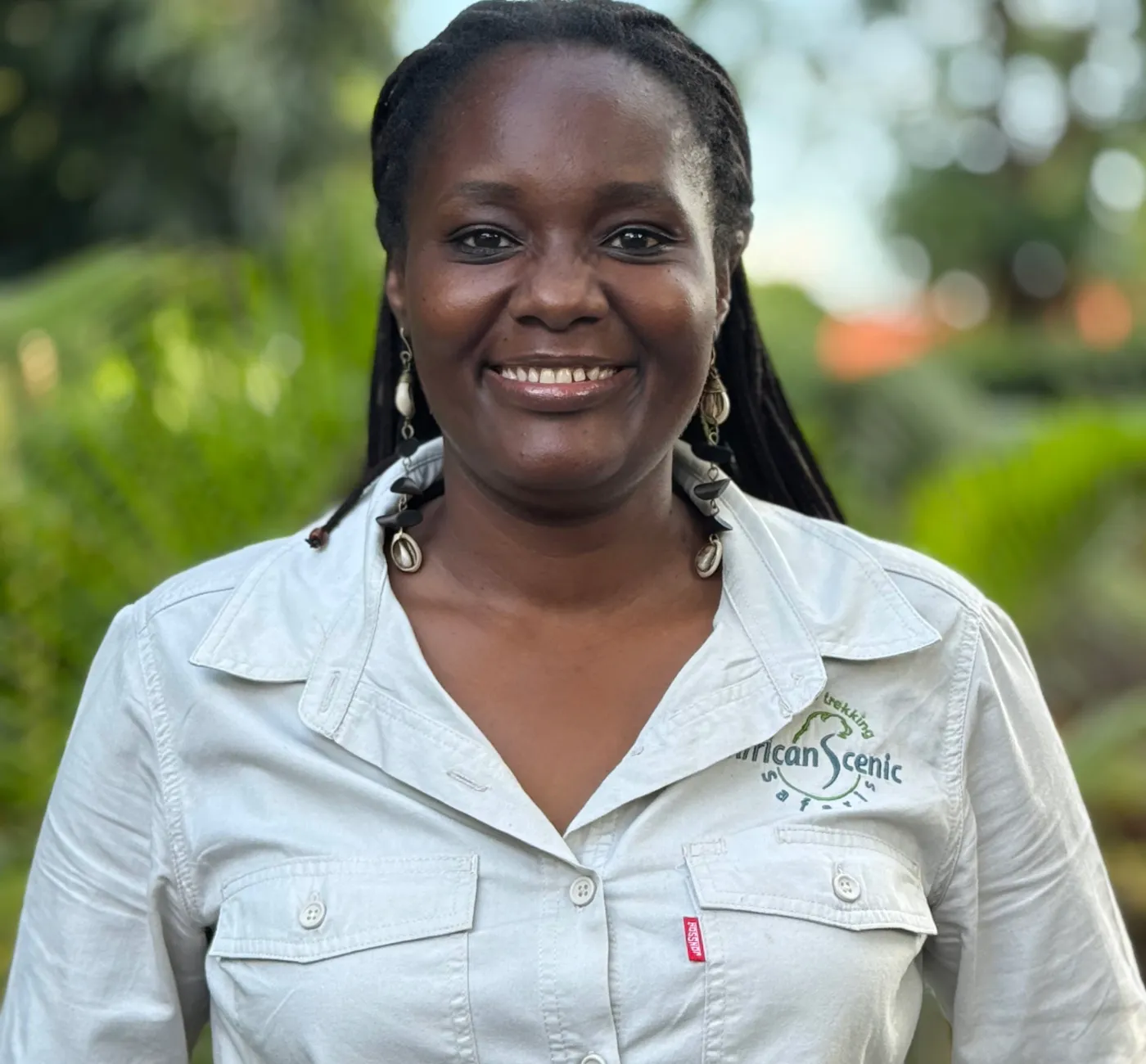
Mary Njuguna
Mary Njuguna

Sustainability coordinator

mary@africanscenicsafaris.com

Talk to Our Sustainability Coordinator

"If you would like to know more about how we approach responsible tourism, conservation, community support, or sustainability on your Tanzania journey, please contact Mary directly."
The Tanzania Travel Journal

Tanzania, delivered to your inbox

Get practical travel tips, safari inspiration, Kilimanjaro advice - everything you need to plan your trip with confidence.

×