African Scenic Safaris
  • Instagram
  • Facebook
  • You Tube
  • Linkedin
  • X
Skip To

African Scenic Safaris & Carbon Tanzania Partnership for a Greener Future

African Scenic Safaris has taken a clear step toward more responsible travel through its ongoing partnership with Carbon Tanzania. For a company that arranges Tanzania Safari experiences and Mount Kilimanjaro Climbing trips, this partnership is more than a sustainability statement. It is a practical way to measure, offset, and take responsibility for the emissions created through daily tourism operations.


African Scenic Safaris & Carbon Tanzania

African Scenic Safaris & Carbon Tanzania

How African Scenic Safaris Is Taking Carbon Accountability

Over the last three years, African Scenic Safaris has offset carbon emissions associated with safari vehicles, cooking gas, electricity use, and broader company operations. These offsets are made through Carbon Tanzania, a conservation company that supports verified forest protection projects in Tanzania. The work is connected to real landscapes, including the Ntakata Mountains and the Yaeda–Eyasi Landscape, where forest conservation also supports local communities.

This is what makes the partnership stronger. It is not built around vague green promises or polished marketing language. It is based on measured emissions, verified carbon credits, forest protection, and community benefit. African Scenic Safaris is not claiming to be a zero-emissions business. Instead, it is showing something more honest: it measures what it produces, offsets what it can, and keeps improving that effort year after year.

That kind of progress is significant in tourism. Every safari vehicle, every mountain operation, every camp kitchen, and every transfer leaves an environmental footprint. Through its work with Carbon Tanzania, African Scenic Safaris is choosing to face that footprint with more care and accountability.

What Is Carbon Tanzania?

Carbon Tanzania is a conservation company based in Tanzania. It works with local communities to protect forests and reduce carbon emissions through verified carbon projects.

In simple terms, Carbon Tanzania helps businesses offset emissions by supporting forests that are already storing carbon. When these forests are protected from cutting, burning, or other damage, the carbon stored in trees, roots, soil, and vegetation remains locked away rather than being released into the air.

But the work does not stop with trees. Carbon Tanzania’s projects also support communities living around these forests. Carbon credit revenue helps fund things like land-use planning, forest patrols, education, healthcare, salaries, and local development work.

That is what gives this partnership more weight. It is not only about buying carbon credits. It is about supporting places where forests, people, wildlife, and climate action are tied together.

What Is Carbon Tanzania?

What Is Carbon Tanzania?

How the Carbon Offsetting Works

For African Scenic Safaris, the process begins with its own operations. The company looks at emissions generated by safari vehicles, electricity use, LPG, and other day-to-day travel activities.

Then it offsets those emissions by purchasing verified carbon credits through Carbon Tanzania. These credits support forest conservation projects that help prevent carbon from being released through deforestation and land degradation.

The idea is simple:

  • Safari and mountain operations create emissions.
  • Carbon finance supports the communities helping protect those forests.
  • Forests store carbon naturally.
  • Protecting forests helps keep that carbon in the land.

Offsetting does not make emissions disappear. It should never be used as an excuse to avoid better choices. But it does help a company take responsibility for emissions that are still being created. And in tourism, that kind of honesty is needed.

How the Carbon Offsetting Works

How the Carbon Offsetting Works

Why Forest Protection is Needed?

A forest is not just a group of trees. It is a living system that quietly does a lot of work. It stores carbon. It holds soil in place. It supports water systems. It gives wildlife a home. It also supports communities that depend on land and forest resources for local livelihoods.

When forests are cleared, the damage goes beyond the loss of trees. Stored carbon is released. Soil becomes weaker. Water patterns can change. Wildlife loses habitat. People living close to the land feel the effect too.

That is why forest protection has real climate value. It helps in two ways at once. It prevents carbon from being released, and it keeps natural carbon sinks active for the future.

For a safari company, this connection is not abstract. Tanzania Safari experiences depend on healthy landscapes. Mount Kilimanjaro Climbing also depends on fragile natural environments that need care. Protecting forests supports the wider system that makes these journeys possible.

Why Forest Protection is Needed?

Why Forest Protection is Needed?

The Tanzanian Landscapes Behind the Partnership

African Scenic Safaris’ carbon-offsetting work has supported Carbon Tanzania projects in the Ntakata Mountains, Yaeda Valley, and Yaeda–Eyasi Landscape. These are actual places with real importance.

The Ntakata Mountains in western Tanzania protect large areas of miombo woodland. These woodlands store carbon, support biodiversity, and help communities manage land with more long-term security.

The Yaeda–Eyasi Landscape in northern Tanzania is also important. It is a dryland forest area connected to communities such as the Hadza and Datoga, whose lives and traditions are closely tied to the land.

This matters because conservation works better when local people are part of it. Forest protection cannot be strong if communities are pushed aside. It becomes stronger when people have rights, income, responsibility, and a reason to keep the land healthy.

That is one of the better parts of this partnership. It keeps climate action close to the people and places most connected to the forest.

African Scenic Safaris’ Carbon Offset Progress

African Scenic Safaris has not treated carbon offsetting as a one-time announcement. The company has built a growing record over three years.

It's reported offset progress includes:

66 tonnes55 Reasons to Choose African Scenic Safaris

CO₂ offset in 2023

117 tonnes55 Reasons to Choose African Scenic Safaris

CO₂ offset in 2024

169 tonnes55 Reasons to Choose African Scenic Safaris

CO₂ offset in 2025

The 2025 offset is the company’s largest single-year offset so far. It covered emissions from vehicles, electricity, and LPG gas. It also helped protect about 169 trees in the Yaeda–Eyasi Landscape of northern Tanzania.

There is a clear rise here. From 66 tonnes to 169 tonnes, African Scenic Safaris has increased its offsetting by 156%. That kind of growth says more than a polished sustainability sentence ever could.

The number shows a pattern.

Measure the impact. Offset it. Learn from it. Increase the effort.

That feels more real than claiming perfection.

Our Carbon Certificate

What the Carbon Credits Support

The carbon credits purchased through Carbon Tanzania support forest conservation, but they also reach into daily community life.

According to the details shared by African Scenic Safaris, the offsetting support contributes to:

  • Forest protection
  • Forest communities
  • Community health funds
  • Children’s education
  • Salaries
  • Local development projects
  • Wider climate action

This is where the partnership becomes more human.

A protected forest is not only a climate asset. It is also part of someone’s home area, grazing land, history, and future. When conservation brings support for education, healthcare, income, and community planning, people have a stronger reason to keep protecting the land.

That is how conservation becomes more than a project on paper. It becomes part of real life.

What the Carbon Credits Support

What the Carbon Credits Support

Why is this important for Tanzania Safari Travel

Most travelers think of a Tanzania Safari in terms of the big moments. A lion moving through the grass. Elephants crossing the track. A guide stops the vehicle because he has seen something everyone else missed. The quiet before sunrise in the Serengeti.

Those moments are powerful. But they depend on something larger.

They depend on healthy ecosystems.

Safari travel requires protected habitats, robust wildlife corridors, clean water systems, and communities that value keeping land wild. Climate change and deforestation put pressure on all of that.

So when a Tanzania Tour Operator starts measuring and offsetting its emissions, it is not doing something separate from safari travel. It supports the conditions that enable safari travel to continue more effectively.

African Scenic Safaris’ work with Carbon Tanzania shows that a safari company can be part of that wider responsibility.

Why is this important for Tanzania Safari Travel

Why is it important for Kilimanjaro Climbing Too

Mount Kilimanjaro Climbing often feels like a personal journey. People think about the route, the altitude, the summit push, the cold nights, the training, and the moment they finally stand at Uhuru Peak.

But behind every climb, there is an operation. Vehicles move people and equipment. Crews cook meals. Gear is prepared. Offices plan routes and logistics. Energy is used before the climber even reaches the trailhead.

That does not make the climb bad. It just makes the footprint real.

By offsetting emissions from its operations, African Scenic Safaris is demonstrating that travel to Kilimanjaro also requires environmental care. The mountain is not just a challenge to complete. It is a place that needs long-term protection.

Why is it important for Kilimanjaro Climbing Too

A More Honest Kind of Responsible Tourism

Responsible tourism should feel practical. It should not be built only on soft words, pretty photos, or broad promises.

This partnership feels stronger because it includes real steps:

  • Emissions are measured.
  • Carbon credits are purchased through Carbon Tanzania.
  • Offsetting has continued for three years.
  • The projects are based in Tanzania.
  • Forest protection is linked to community benefit.
  • The company is open about still producing emissions.

That last point is significant. African Scenic Safaris is not pretending to be perfect. And honestly, that makes the story more believable.

A zero-impact safari company does not really exist. Travel has a footprint. The better question is whether a company is willing to examine that footprint, measure it, and take meaningful action.

Here, the answer is yes.

A More Honest Kind of Responsible Tourism

A More Honest Kind of Responsible Tourism

A Greener Future Built on Real Action

Mount Kilimanjaro Climbing often feels like a personal journey. People think about the route, the altitude, the summit push, the cold nights, the training, and the moment they finally stand at Uhuru Peak.

But behind every climb, there is an operation. Vehicles move people and equipment. Crews cook meals. Gear is prepared. Offices plan routes and logistics. Energy is used before the climber even reaches the trailhead.

That does not make the climb bad. It just makes the footprint real.

By offsetting emissions from its operations, African Scenic Safaris is demonstrating that travel to Kilimanjaro also requires environmental care. The mountain is not just a challenge to complete. It is a place that needs long-term protection.

A Greener Future Built on Real Action
Simbo Natai

SIMBO NATAI

Director

Simbo Natai, founder of African Scenic Safaris, crafts meaningful Tanzanian journeys through local knowledge. His experience as a former Kilimanjaro guide influences how every journey is planned and delivered.

What Our Guests Say

TripAdvisorAfrican Scenic Safaris #1 on TripAdvisor
Hannah W
Hannah W / Sep 2022

The best company out there!

African Scenic Safaris were Amazing. We were a large group of students who climbed Kilimanjaro with them and went on a safari in Tarangire National Park.

Johanna S
Johanna S/ Apr 2025

Great experience on Safari.

The guide was absolutely fantastic. Emanuel was present answering questions and not least telling a lot like the animals.

Gabriella M
Gabriella M/ Feb 2025

Amazing experience

We relied on African Scenic Safaris for organising a 5 days safari. Nembris provided us with suggestions for the itinerary through Serengeti.
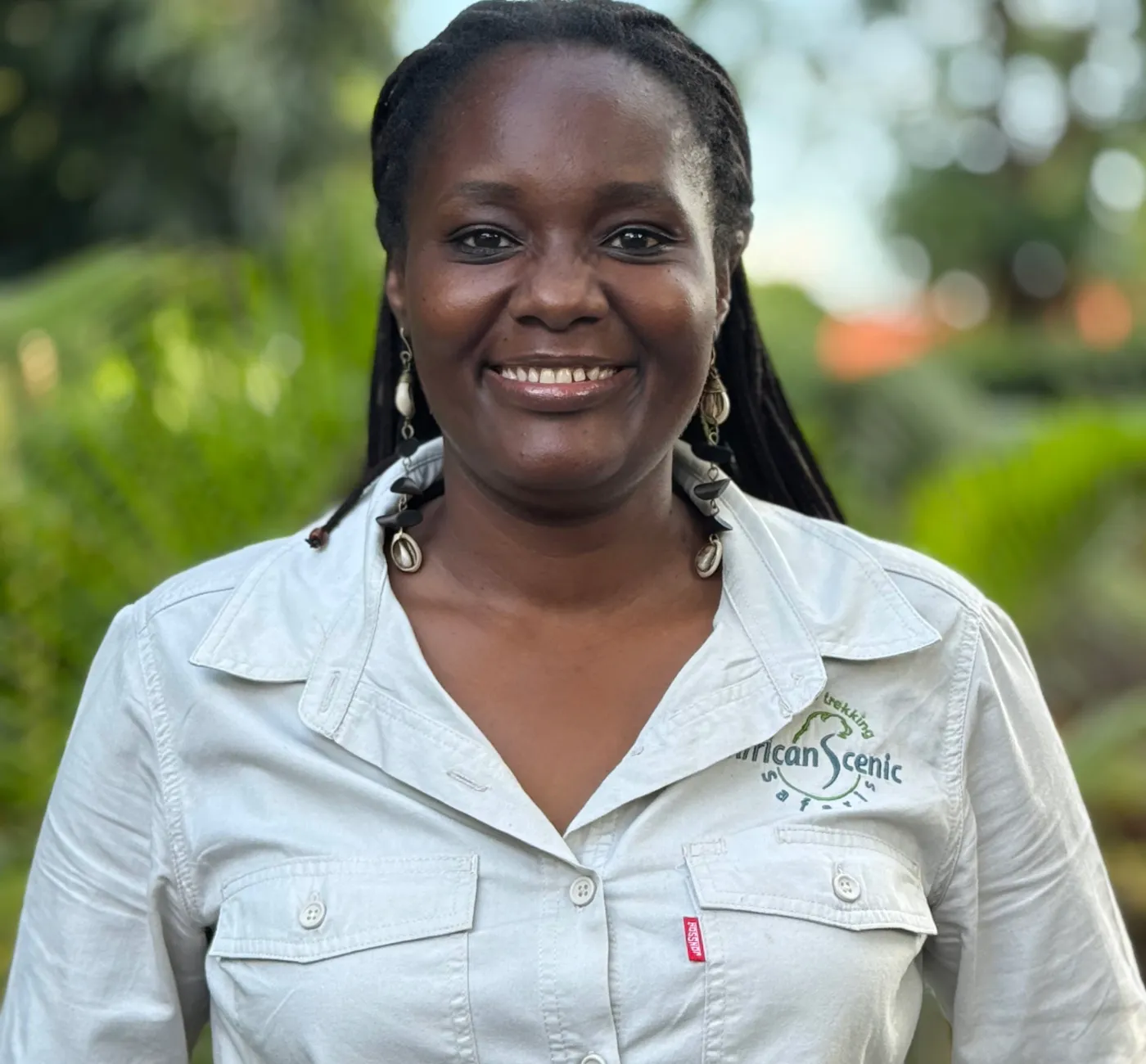
Mary Njuguna
Mary Njuguna

Sustainability coordinator

mary@africanscenicsafaris.com

Talk to Our Sustainability Coordinator

"If you would like to know more about how we approach responsible tourism, conservation, community support, or sustainability on your Tanzania journey, please contact Mary directly."
The Tanzania Travel Journal

Tanzania, delivered to your inbox

Get practical travel tips, safari inspiration, Kilimanjaro advice - everything you need to plan your trip with confidence.

×