African Scenic Safaris
  • Instagram
  • Facebook
  • You Tube
  • Linkedin
  • X
Skip To

African Scenic Safaris & IMEC: Ethical Trekking Collaboration

African Scenic Safaris is a listed Responsible Travel partner with the International Mountain Explorers Connection (IMEC), supporting ethical trekking practices on Mount Kilimanjaro. This collaboration reflects our commitment to fair porter treatment, responsible mountain operations, and a more honest way of climbing Africa's highest peak.


African Scenic Safaris & IMEC

African Scenic Safaris & IMEC

Every Kilimanjaro trek depends on a strong mountain crew. Guides lead the route, cooks prepare warm meals in cold camps, and porters carry tents, food, luggage, and equipment across long trails, steep sections, and changing weather.

So, when planning a Kilimanjaro Climb, the route, price, number of days, and summit success are not the only things to consider. Travelers should also ask how the people behind the climb are treated. With IMEC-supported ethical standards, African Scenic Safaris helps ensure that every climb respects the crew, protects their dignity, and keeps responsible trekking at the center of the journey.

What Is IMEC?

The International Mountain Explorers Connection, or IMEC, supports fair and responsible treatment of mountain crew members worldwide.

IMEC created the Partner for Responsible Travel Program to recognize tour operators that treat their mountain crew fairly. The program began in Tanzania, where Kilimanjaro Porters have long played a major role in trekking experiences.

What Is IMEC?

For Kilimanjaro climbs, acceptance into the IMEC Partner Program is based on a company's ability to meet the Guidelines for Proper Porter Treatment. KRTO monitors these standards through its local initiative, the Kilimanjaro Porters Assistance Project (KPAP).

The purpose is simple. Climbers should be able to choose trekking companies that are checked, accountable, and committed to fair crew treatment.

African Scenic Safaris supports IMEC's work because ethical trekking should not be a hidden promise. It should be seen in how porters are paid, fed, equipped, sheltered, and respected throughout the climb.

Consider a direct link to KPAP's/IMEC's published Guidelines for Proper Porter Treatment here. It backs up the claim and is a natural, credible outbound link for SEO.

What the Partner for the Responsible Travel Program Does

IMEC's Partner for Responsible Travel Program recognizes climbing companies that follow fair treatment practices for their crew.

Companies do not pay to join the program. No listing fee or required donation. Participation is voluntary, and acceptance is based on whether the company meets the required treatment standards.

Acceptance is based on whether the company meets the required treatment standards, which are covered in full below under "How IMEC Partners Are Accepted."

This gives climbers a more honest way to choose a Kilimanjaro Tour Operator. It also helps responsible companies stand apart from operators that may cut corners behind the scenes.

Why Ethical Trekking Needs Independent Monitoring

Some companies may say they treat porters well. But words alone are not enough.

That is why IMEC works through monitoring systems connected to KRTO and KPAP. These checks help confirm whether a company is actually following fair treatment standards during real climbs.

This is important because poor porter treatment is not always visible to travelers. A climber may enjoy the trek without knowing if the porter behind the scenes was underpaid, overloaded, poorly fed, or sleeping in crowded conditions.

Independent monitoring brings those hidden details to light.

At African Scenic Safaris, we welcome clear standards because they protect the people who work hard on the mountain. A Kilimanjaro climb should not depend on unfair labour or poor crew conditions.

Why Monitoring Helps

The Impact of the IMEC Partner Program

IMEC estimates that around 7,500 porters climbing Kilimanjaro with Partner companies have benefited from the Partner for Responsible Travel Program.

These benefits are not vague. They are linked to real working conditions on the mountain.

Fair Porter Salaries

Although the government has declared a minimum wage, porter salaries across the industry can vary. In some cases, porters may receive as little as 10,000 Tanzanian shillings per day.

IMEC Partner companies must pay at least 20,000 Tanzanian shillings per day.

This difference is important for porters and their families. Many porters depend on work on Kilimanjaro to support their homes, children, food, school fees, and daily needs.

Nice, concrete stat with a source named (IMEC). This is the model for how the other percentage stats below should be cited.

A lower tour price should never be built on an underpaid mountain crew. On our climbs, we pay wages in full and handle them openly with the crew.

Transparent Tipping Procedures

Tipping is part of many Kilimanjaro climbs, but it can become unfair without a clear system.

In some cases, climbers may hand the tip money to one person and assume it will be shared properly. Without transparency, porters may not receive their fair portion.

IMEC requires Partner companies to have transparent tipping procedures. KPAP reviews tipping systems on every monitored climb.

Across monitored climbs, 95.2% of Partner company climbs had transparent tipping procedures.

This helps protect the crew and gives climbers more confidence that their appreciation reaches the right people.

Proper Meals for Porters

A porter's work is physically demanding. Long trekking days, cold camps, heavy loads, and high altitude all take a toll.

Still, in some poor trekking operations, porters may receive only one or two meals a day.

IMEC Partner companies are committed to providing three meals per day with good portion sizes, with proper meal provision reported on 99% of monitored climbs.

That is a major part of basic care on the mountain.

On African Scenic Safaris climbs, food planning includes the mountain crew. Porters, guides, and cooks need proper meals to stay strong, safe, and ready for each day of trekking.

Safe Sleeping Conditions

Porters need proper rest after long days on the trail. Poor sleeping arrangements can leave them tired, cold, and less safe the next day.

In some trekking operations, porters may sleep in overcrowded or poor-quality tents.

According to the IMEC, partner-company porters slept in good-quality tents with adequate sleeping space 97.4% of the time.

This shows how monitoring can improve real-day-to-day conditions for mountain crew members.

The 20 Kilogram Porter Load Limit

Porters carry essential supplies, but there must be a safe limit.

IMEC Partner companies weigh bags before the trek begins. This helps ensure there are enough porters for the expedition and that no porter is forced to carry more than the 20-kilogram weight limit.

Overloaded porters can face injury, exhaustion, and a greater risk at altitude.

African Scenic Safaris checks porter loads before climbs because safe weight limits are a basic part of fair trekking. A porter should never be overloaded to reduce expedition costs.

Minor clarity edit: 'before going to the gate' may be unclear to non-local readers. Consider 'before the trek begins' or 'at the trailhead.'

Impact of the Partner Program

Impact of the Partner Program

How IMEC Partners Are Accepted

All legally licensed climbing companies are welcome to apply for the Partner for Responsible Travel Program.

The program is not based on payment. Companies are not accepted because they pay a fee or make a donation. They are accepted because they meet the standards

To become an IMEC Partner, a company must:

  • Follow the Guidelines for Proper Porter Treatment
  • Allow monitoring through KPAP and KRTO systems
  • Show fair treatment of porters and crew
  • Maintain transparent procedures
  • Continue meeting the required standards over time
  • This keeps the focus on real practice, not marketing claims.
How IMEC Partners Are Accepted

How IMEC Partners Are Accepted

Why Travelers Should Check IMEC Partner Status

Some companies may use IMEC, KPAP, or KRTO names or logos without approval. This can confuse travelers who want to book responsibly.

IMEC clearly states that only companies listed as official Partners should be recognized. If a traveler is unsure, they should check the current list or contact the organization directly.

This is helpful because false claims can hide poor treatment behind responsible-sounding language.

African Scenic Safaris believes travellers should feel confident about the company they choose. Responsible trekking needs honesty, not borrowed logos or unclear claims.

What If a Company Claims to Follow the Guidelines?

Some companies may say they follow ethical trekking guidelines but are not officially listed as IMEC Partners.

This can be difficult for travelers to judge. A company may sound responsible on its website without going through independent verification.

IMEC's position is clear: ethical companies should welcome free third-party monitoring. Since there is no fee to join the Partner Program, responsible operators have a fair path to prove their standards.

This protects climbers from relying only on company claims.

What If a Partner Company Is No Longer Listed?

Sometimes a company may be removed or suspended if it no longer meets the required standards.

If a traveler booked with a former Partner, IMEC encourages them to contact the company and make it clear that ethical crew treatment matters. Traveler feedback can push companies to correct problems and return to better practices.

This shows how climbers also play a role in improving the trekking industry.

Does IMEC Recommend Specific Kilimanjaro Companies?

IMEC does not promote or endorse individual Kilimanjaro Tour Operators as a commercial recommendation.

It acts as an independent third-party organization. Its role is to recognize companies that have demonstrated responsible practices through monitoring and compliance with Porter treatment guidelines.

This distinction is important. IMEC is not selling tours. It helps climbers identify companies that adhere to ethical standards.

Why Very Cheap Kilimanjaro Climbs Can Be Risky

A low Kilimanjaro Climbing Cost may seem attractive at first. But if the price is far below normal, travelers should ask what's been cut.

Government park fees, VAT, transport, food, equipment, staff wages, and safety all have real costs. When operators offer very cheap climbs, the cuts often affect porters first.

This can lead to:

  • Low or delayed wages
  • Poor meals
  • Weak gear
  • Unsafe sleeping conditions
  • Heavy porter loads
  • Poor emergency planning
  • Weak supervision on the mountain

A responsible climb cannot be built by quietly reducing care for the people doing the hardest work.

Honest pricing is part of ethical trekking. Fair wages, proper meals, safe gear, trained staff, and clean mountain operations are not optional extras.

A higher price alone is not proof of good treatment, though. Expensive operators can underpay crews just as cheap ones can, and price is not something a traveller can audit. That is why the Partner list matters more than the quote: a published listing can be checked, and a price tag cannot.

Cheap Kilimanjaro Climbs Can Be Risky

Cheap Kilimanjaro Climbs Can Be Risky

What Ethical Trekking Looks Like with African Scenic Safaris

For African Scenic Safaris, ethical trekking is practical. It shows up before, during, and after each Kilimanjaro climb.

Before the climb, our team checks crew preparation, equipment, food planning, porter loads, and safety arrangements.

During the climb, guides monitor altitude signs, cooks prepare proper meals, and porters work with safe load limits and fair conditions.

After the climb, feedback from the team helps improve future expeditions.

Our approach includes:

  • Fair treatment of porters and crew
  • Respect for load limits
  • Proper food and shelter
  • Clear tipping guidance
  • Safety care for climbers and crew
  • Support for responsible mountain operations
  • Respect for Kilimanjaro's natural environment

This is how an ethical commitment to trekking becomes part of the actual climb.

Ethical Trekking in Practice

Ethical Trekking in Practice

How Travelers Can Support Ethical Trekking

Travelers have real influence. The company you choose affects the people working on the mountain.

You can support ethical trekking by:

  • Choosing a verified responsible operator
  • Checking IMEC Partner status
  • Asking how porters are paid and cared for
  • Following fair tipping guidance
  • Avoiding extremely cheap climbs that may cut porter welfare
  • Treating the mountain crew with respect
  • Sharing responsible trekking information with other travellers

A Kilimanjaro climb should be a good experience for the traveller and a fair one for the people who help make it happen.

African Scenic Safaris supports IMEC's work because fair treatment should be part of every Kilimanjaro climb.

The mountain is beautiful, yes. The summit is powerful. But the people behind the climb deserve just as much attention.

Porters, guides, and cooks carry the practical weight of the journey. They keep camps moving, meals prepared, safety watched, and climbers supported.

That work should be respected.

Through ethical trekking practices, African Scenic Safaris helps travellers climb in a way that supports people, protects dignity, and strengthens responsible tourism in Tanzania.

Climb Kilimanjaro with a Clear Conscience

Your Kilimanjaro climb can be more than a personal achievement. It can support fair porter treatment, responsible tourism, and better working conditions on the mountain.

African Scenic Safaris invites travellers to climb with care, awareness, and respect for the full team behind the journey.

Choose African Scenic Safaris for a Kilimanjaro climb that supports ethical trekking, fair crew treatment, and responsible mountain travel from the first briefing to the final descent.

View our Kilimanjaro Climbs.

Trekking Supports Local Communities

Trekking Supports Local Communities

Simbo Natai

SIMBO NATAI

Director

Simbo Natai, founder of African Scenic Safaris, crafts meaningful Tanzanian journeys through local knowledge. His experience as a former Kilimanjaro guide influences how every journey is planned and delivered.

What Our Guests Say

TripAdvisorAfrican Scenic Safaris #1 on TripAdvisor
Hannah W
Hannah W / Sep 2022

The best company out there!

African Scenic Safaris were Amazing. We were a large group of students who climbed Kilimanjaro with them and went on a safari in Tarangire National Park.

Johanna S
Johanna S/ Apr 2025

Great experience on Safari.

The guide was absolutely fantastic. Emanuel was present answering questions and not least telling a lot like the animals.

Gabriella M
Gabriella M/ Feb 2025

Amazing experience

We relied on African Scenic Safaris for organising a 5 days safari. Nembris provided us with suggestions for the itinerary through Serengeti.

Mary Njuguna
Mary Njuguna

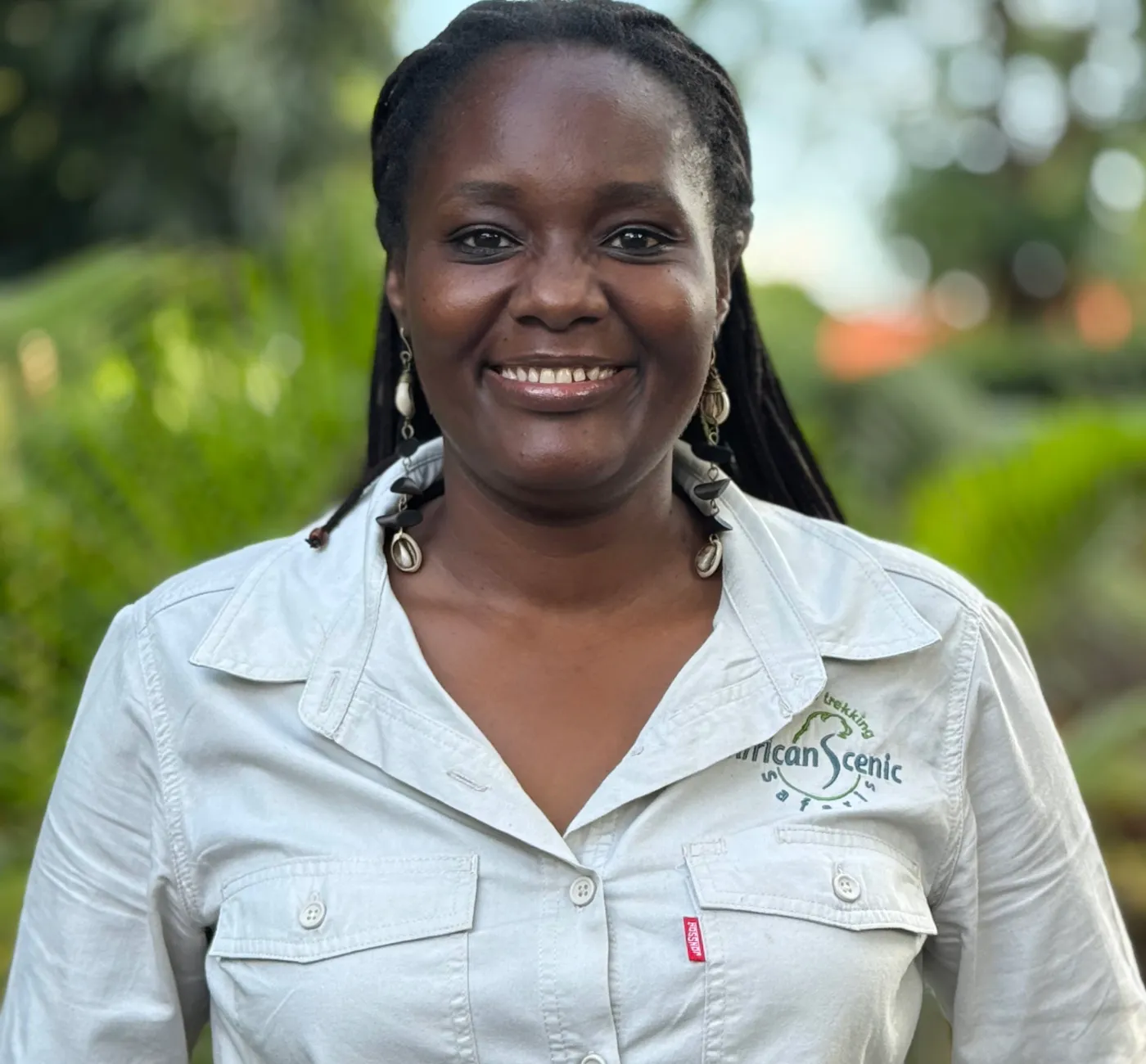
Sustainability coordinator

mary@africanscenicsafaris.com

Talk to Our Sustainability Coordinator

"If you would like to know more about how we approach responsible tourism, conservation, community support, or sustainability on your Tanzania journey, please contact Mary directly."
The Tanzania Travel Journal

Tanzania, delivered to your inbox

Get practical travel tips, safari inspiration, Kilimanjaro advice - everything you need to plan your trip with confidence.

×