
Witness The Circle of Life – Wildebeest Migration and Predators in Serengeti!

Welcome to the home of the Greatest Spectacle on our planet – Serengeti National Park, where migration and predator-prey action go hand-in-hand. This migration is one of the most enthralling phenomena that you’ll get to experience.

The Serengeti Wildebeest Migration is not only an awe-inducing spectacle but also a vital part of the ecosystem. This is because it shapes the lives of both prey and predators in the area.

A Wildebeest Migration safari creates an incredible opportunity to witness the delicate balance of the food chain in the natural world. It also offers a rare opportunity to observe the raw and dramatic interactions between predator and prey.

The Wildebeest Migration

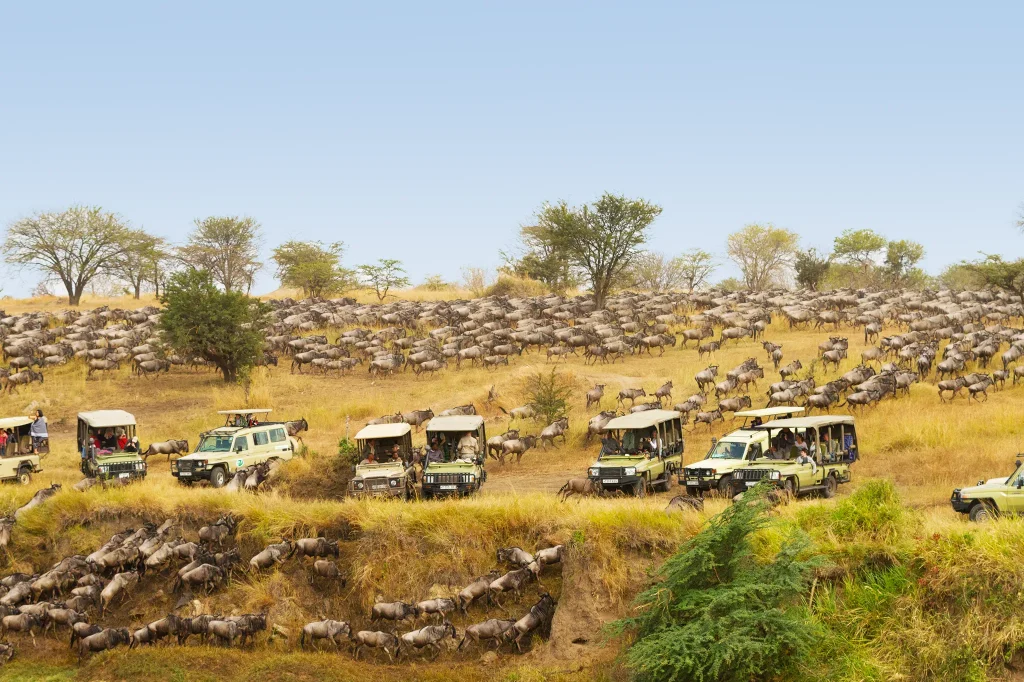
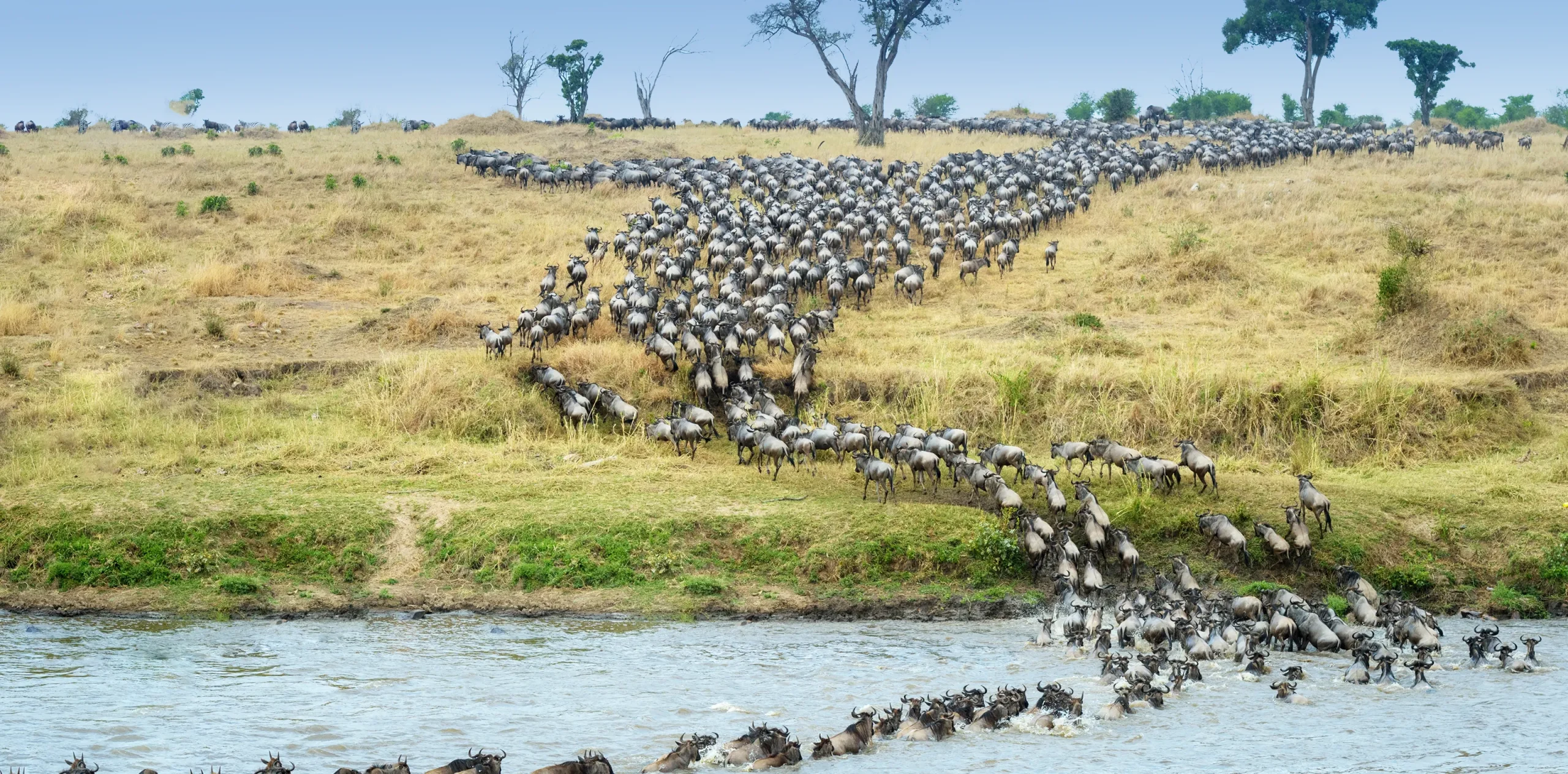
Serengeti Wildebeest Migration is the sprint of life for the herbivore population of the park. This natural phenomenon is referred to as the greatest show on the planet and you can witness the show in all its glory on Tanzania Safari Tours.

This 800 km journey begins in the Southern region of the Serengeti. This natural marvel occurs just after the mass calving season (between January and March). The ambience during this period is filled with new life and enthralling action.

Predators are seen constantly on the lookout for prey and this predator-prey interaction is one of the focal points of the Serengeti Migration. The drought arrives in May and the migrating herds move north, towards the Masai Mara in Kenya.

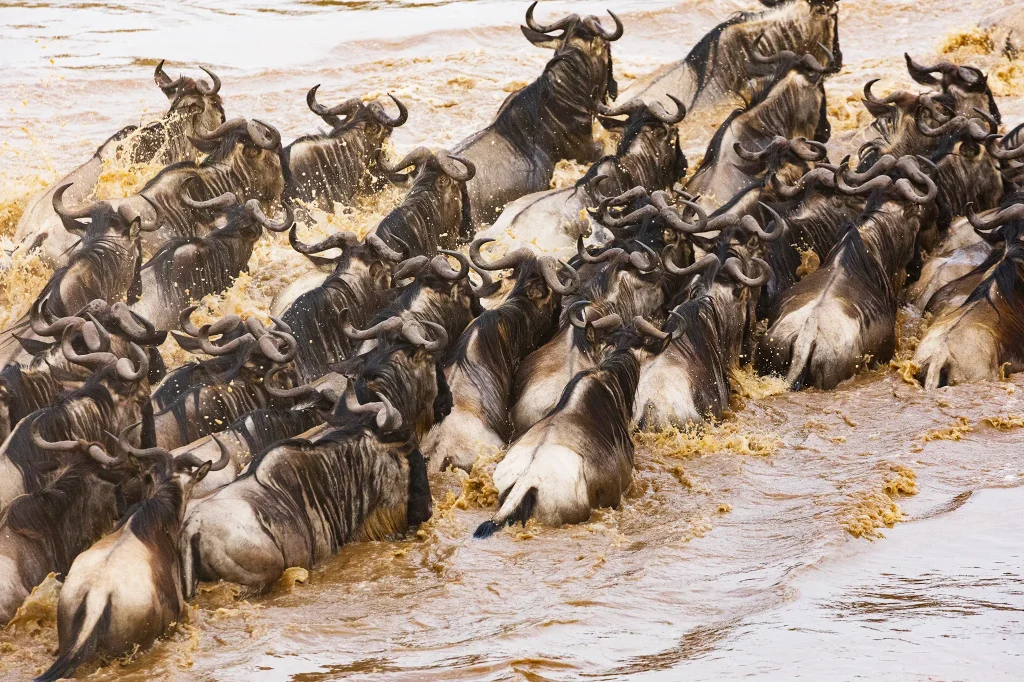
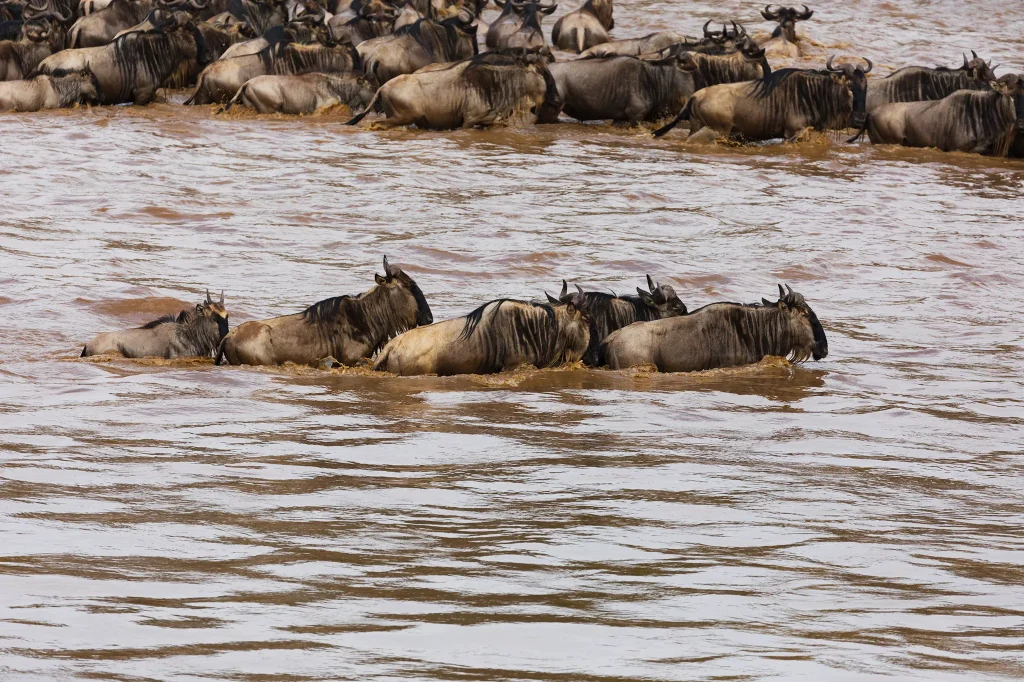
  • Migration isn’t just a smooth journey. It comes with a risk factor, too, and crossing the Mara and Grumeti rivers is no cakewalk.
  • First of all, the herds are confronted by more than 3000 crocodiles waiting patiently below the waters.
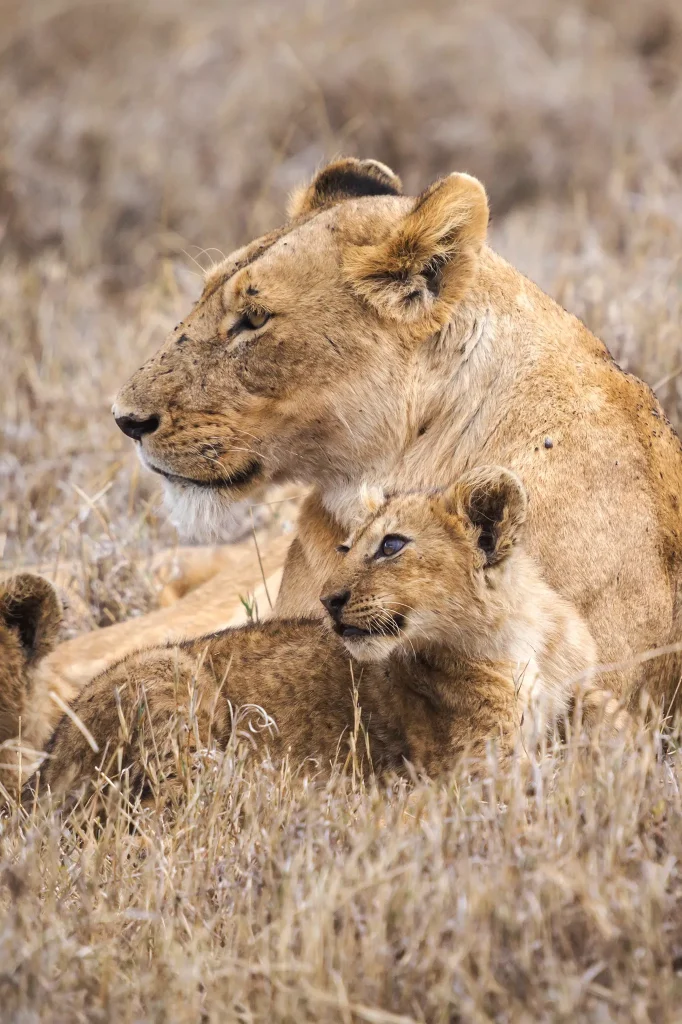
  • Then, the lion population comes in. Despite the abundance of hooved wildlife in the region, life doesn’t come easy for these big cats in this unforgiving landscape.
  • Seeing a group of lions cooperating to hunt down a wildebeest is a sight that few will ever get to see.

With the beginning of the short rains in late October, the herds make their way back to the Serengeti. Finally, by December, the migrating herds trek past the Seronera region to return to their calving grounds. Thus, the Serengeti Wildebeest Migration comes full circle.
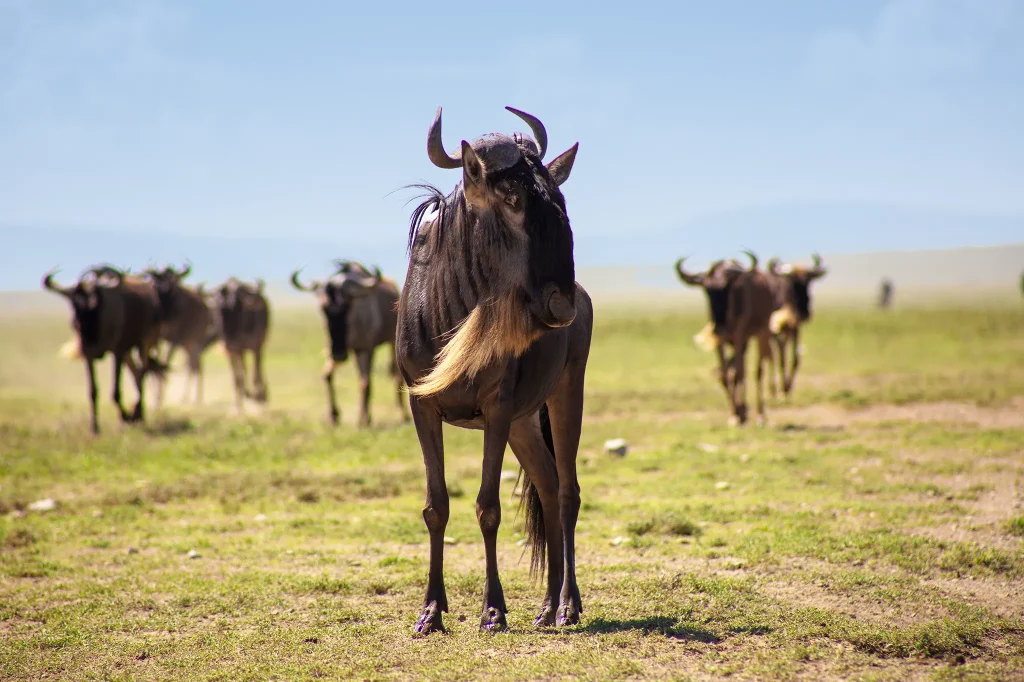
The Wildebeest Migration

Reason For the Migration

The timing of the wildebeest migration matches the wet season (from November to May) in Tanzania. This is the time when the nutritious grasses of the plains are at their longest.

  • Though this doesn’t last long! The grasses soon turn dry and short, and the wildebeests have to move to the Western Corridor in search of greener pastures.
  • The northern section of Serengeti’s ecosystem receives the highest amount of rainfall. Though the grasses are the least nutritious for the herds.
  • This makes for a retreat for the herds during the dry season, at least until the southern region transforms green again.

The result at the end is a clockwise movement of the Serengeti Wildebeest Migration herds from the south, west, north, and again back to the south.

When wildebeests run and crocs wait in silence, the Serengeti doesn’t just entertain, it educates, showing you the wild syllabus of survival written in hoofprints and claw marks.

The Predators of The Serengeti

Among the larger carnivores, cheetahs, hyenas, and lions can be seen in almost all of the Serengeti Safari Areas. The number of leopards in the park is largely unknown, mainly due to their elusive nature.

Spotted hyenas are a common sight in the Serengeti. Canidae species like bat-eared foxes and golden jackals can also be seen around the Seronera plains. Whereas, black-backed jackals are seen around the Lobo region. Other predator populations of the park include servals, civets, African wild cats, and African wild dogs.

The predators of Serengeti play a vital role in the ecosystem. This is because they control the herbivore population, which maintains balance in the food chain. When on a Tanzania Safari in the Serengeti, you can see these predators up close. But keep in mind that you shouldn’t disturb their natural habitat.

This can only be achieved when you have an invaluable asset in your arsenal. These are the safari guides, they will help you maximize your viewing chances while also making sure that you don’t leave an impact on their habitat.
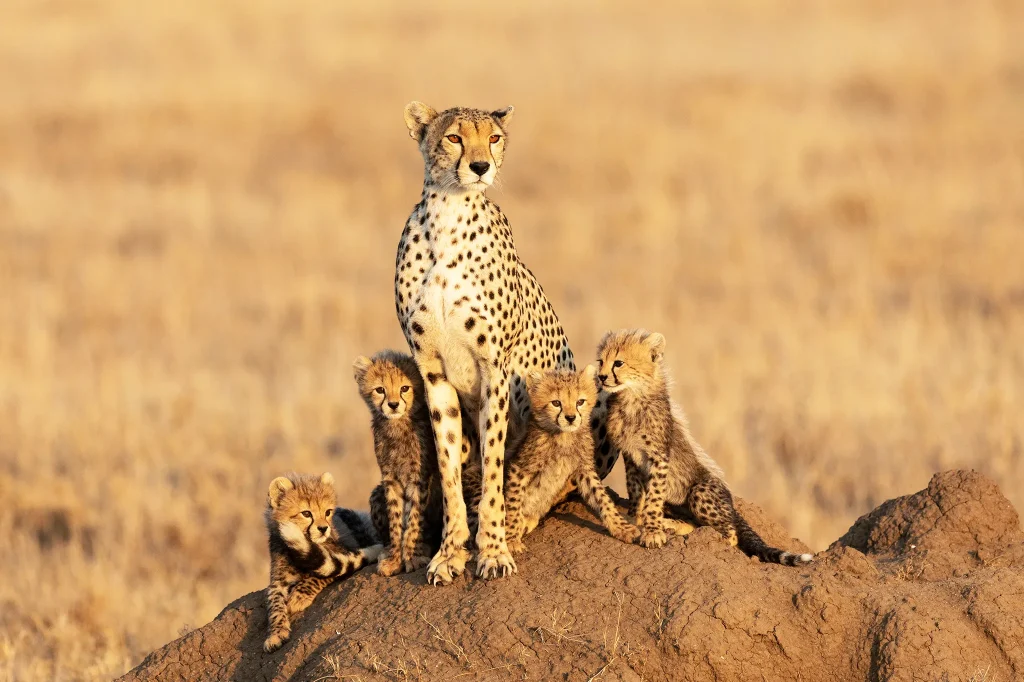
The Predators of The Serengeti

The Circle of Life Serengeti Wildebeest Migration

Serengeti National Park not only represents the ultimate Tanzania Safari spectacle, but it’s also the display of the circle of life. First of all, the migration itself is a rite of passage from birth to death. This is where millions of wildebeests, along with zebras and gazelles, fight for their ultimate survival against the predators.

  • This may seem harsh and cruel at first glance, but this is just the natural course of life.
  • The weaker ones in the ecosystem get taken out, and the strong prevail.
  • This predator-prey relationship contributes to the delicate balance of the Serengeti ecosystem and balances out the natural food chain.

Life in the most literal sense begins where humans began – right back to the Earth. Then, through decomposition, the nutrients get absorbed into the soil that feeds the entire ecosystem. Witnessing the circle of life in the Serengeti Wildebeest Migration will let you reflect on the complexities of life.

Conservation And Sustainability

An equally important part of Safaris in Tanzania that most travellers don’t think about is conservation. The survival of wildlife is a matter of extreme concern! And one that should never be taken lightly. Proper conservation methods will make sure that future generations will enjoy these treasured inheritances.

  • Tourism helps to generate international awareness of conservation issues.
  • Contributing to the local economy and reducing poverty and inequality are other impacts that tourism has also had in Tanzania.
  • The presence of tourists also helps prevent illegal poaching activities and helps park management with game management work.

All the Tanzania National Parks are governed and managed by TANAPA. In Serengeti, TANAPA works closely with the Serengeti Conservation Project organisation. Their primary goal is conservation. They are dedicated to the preservation of the rich natural heritage of Serengeti National Park. They also provide secure breeding grounds where the diverse flora and fauna of the Serengeti can flourish.

You can choose one of our sustainable Tanzania Safari Packages to see how the conservation efforts in the Serengeti have made great strides for the wildlife population.

Moreover, dive into more information regarding Serengeti National Park by clicking the links below:

Witness Wildebeest & Predators Today!

Finally, the  Serengeti Wildebeest Migration is an incredible natural spectacle that offers visitors a rare opportunity to witness the delicate balance of nature.

It also offers insights into the power of the predator-prey relationship and the raw beauty of the natural world. This is an experience that will leave an unforgettable mark on any safari enthusiast’s memory.

You can experience this wonder of nature through various safari packages and tours that cater to your interests. This is where African Scenic Safaris come in! We have a range of Tanzania Safari Packages that include Serengeti National Park.

Simbo Natai
Simbo Natai, founder of African Scenic Safaris, crafts sustainable, meaningful Tanzanian journeys rooted in his deep local knowledge and passion.
Director, African Scenic Safaris

The Drama of Wildebeest Migration in Serengeti – A Survival Story

The Serengeti Wildebeest Migration is one of the world’s most dramatic and awe-inspiring natural events. Every year, millions of wildebeest and other animals journey across the Serengeti plains in Tanzania and the Masai Mara in Kenya in search of food and water.

As the animals tend to navigate treacherous terrain, their endurance and survival tactics are put to the test. They have to evade predators and cross rivers infested with crocodiles. Despite the challenges, wildebeests continue their migration and narrate their epic story of survival.

This incredible journey is not only a spectacle for safari enthusiasts but a testament to the resilience and adaptability of nature. Safaris to Tanzania are the only way to behold this drama.

So, for your next holiday trip, embark on Tanzania Safari Tours to witness the greatest natural spectacle- The Great Serengeti Wildebeest Migration.

Great Migration
Great Migration

The Great Migration

The Serengeti Wildebeest Migration involves the movement of millions of animals, including wildebeest, zebras, and gazelles. It is estimated that over 1.5 million wildebeest, 200,000 zebras, and 350,000 gazelles take part in the migration each year.

These vast herds are an impressive sight to behold. They make their way across the Serengeti plains in search of food, water, and better grazing areas. The sheer number of animals involved in the migration is one of the reasons it is considered one of the most awe-inspiring natural events in the world.

The Great Wildebeest Migration in the Serengeti is driven by several key factors.

  • One of the main drivers is the availability of fresh grazing lands and water sources. As the seasons change, the grass in one area becomes depleted. This prompts the animals to move to another area in search of better feeding grounds.
  • Additionally, the annual rainfall patterns in the Serengeti play a significant role in driving the migration too.  The areas that receive more rainfall are more likely to have better grazing lands.
  • Finally, migration is also influenced by the presence of predators. The animals must balance the risk of encountering predators with their need to find food and water.

All of these factors work together to create one of the most remarkable natural events on the planet.

The Perils Of The Journey During the Serengeti Wildebeest Migration

The Wildebeest Migration Serengeti is one of the largest and most impressive wildlife spectacles in the world. However, the journey these animals undertake is also full of perils and dangers. Let’s go through some of the risks involved.

Perils Of The Journey
  • One of the biggest risks to the animals during the migration is predation. The herds are accompanied by lions, leopards, cheetahs, and other predators that prey on the weaker, older, or sick animals. In particular, the young wildebeest calves are vulnerable. Often, many do not survive the journey.
  • Another significant challenge is the harsh weather conditions that the animals go through. During the migration, the herds must cross vast plains, rocky outcrops, and even rivers.

The animals are exposed to the scorching sun, intense heat, and even flash floods. The weak and slow animals have often washed away and are not able to survive the unpleasant conditions.

  • Perhaps another dangerous part of the migration is the river crossings. The herds must cross crocodile-infested rivers like the Mara River. Here, the crocodiles wait patiently for their next meal.

Many animals are caught and killed by crocodiles. Others might drown or be trampled in the panicked stampede that often occurs during the crossing.

  • Lastly, human activity has also posed a threat to the Serengeti Wildebeest Migration. Habitat loss, hunting, and poaching have all taken a toll on the populations of these animals. This has led to a decline in the number of animals.

Significance Of Serengeti Wildebeest Migration

This migration cycle is a critical part of the ecosystem. It helps to disperse nutrients, control plant growth, and sustain predator populations. It is also a significant tourist attraction.

  • Overall, the circle of life during the Serengeti Wildebeest Migration is an awe-inspiring display of nature’s resilience and complexity.
  • It highlights the delicate balance between predator and prey.
  • Also, the intricate relationship between wildlife and the environment and the profound beauty of the natural world are on display at Serengeti National Park.

Check our Tanzania Safari Packages for the best Serengeti experiences during the peak season.

It’s not just a migration; it’s a thundering stampede of survival where every leap dodges jaws and every gallop rewrites nature’s rawest reality in real time.

Human Impact On The Serengeti Wildebeest Migration

Human impact on the Serengeti Wildebeest Migration and the surrounding ecosystem has significant consequences for the long-term survival of the wildlife and the local communities.

  • Habitat destruction, overgrazing, hunting, and poaching can negatively impact the natural balance and biodiversity of the Serengeti ecosystem.
  • It can also lead to disruption of the circle of life during the wildebeest migration.

Fortunately, sustainable tourism can play a vital role in supporting conservation efforts in the Serengeti. By promoting responsible and ethical tourism practices, travellers to the Serengeti can help to protect the natural environment and the wildlife that depend on it.

  • Small efforts such as reducing waste, conserving water, supporting local communities, and promoting sustainable tourism can help protect the natural environment of the Serengeti.
  • Additionally, sustainable tourism can provide economic benefits to local communities, incentivizing them to protect the wildlife and habitats in the area.

This, in turn, can help to reduce the pressure on the environment. Also, it can promote the long-term conservation of the Serengeti ecosystem.

Serengeti Wildebeest Migration

Ready To Witness the Drama of Migration

The  Serengeti Wildebeest Migration is a crucial part of the natural world. It highlights the beauty and complexity of the ecosystem. By supporting sustainable tourism practices, we can help to ensure the long-term survival of the wildebeest and other wildlife in the Serengeti.

It can also help in providing economic opportunities for local communities. African Scenic Safaris recognises the human impact on the environment.

Therefore, we have taken steps to support conservation by adopting sustainable tourism practices. We are committed to the protection of biodiversity so that future generations can continue to witness the incredible spectacle of the wildebeest migration.

Simbo Natai
Simbo Natai, founder of African Scenic Safaris, crafts sustainable, meaningful Tanzanian journeys rooted in his deep local knowledge and passion.
Director, African Scenic Safaris

How To Train for A Successful Kilimanjaro Climb on The Northern Circuit Route?

The Northern Circuit Route is one of the newest and least travelled routes on Mount Kilimanjaro. This Kilimanjaro Route is known for its excellent acclimatisation profile, scenic views, and low traffic. It is a longer route that offers a more gradual climb and a higher chance of summit success.

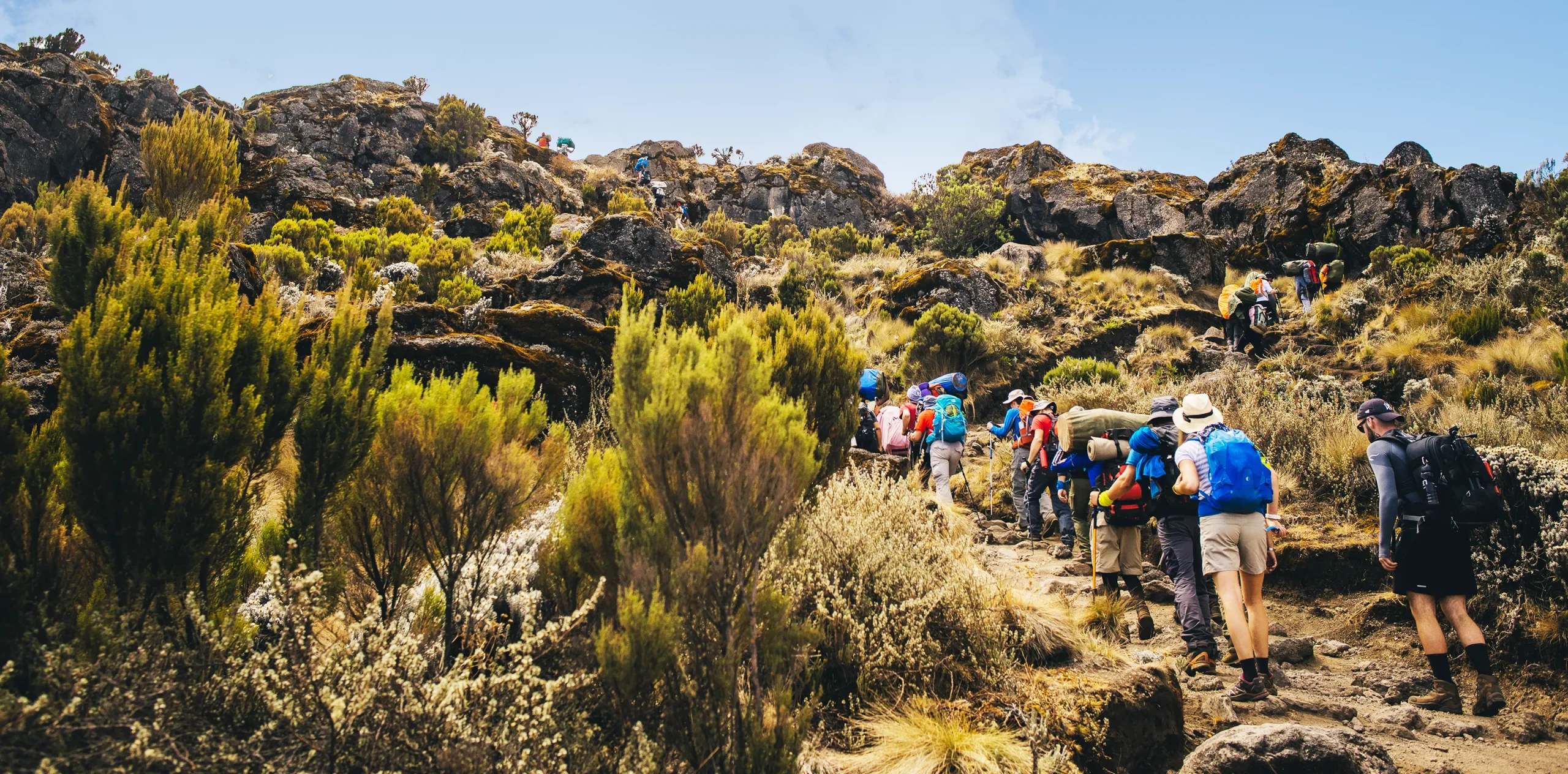
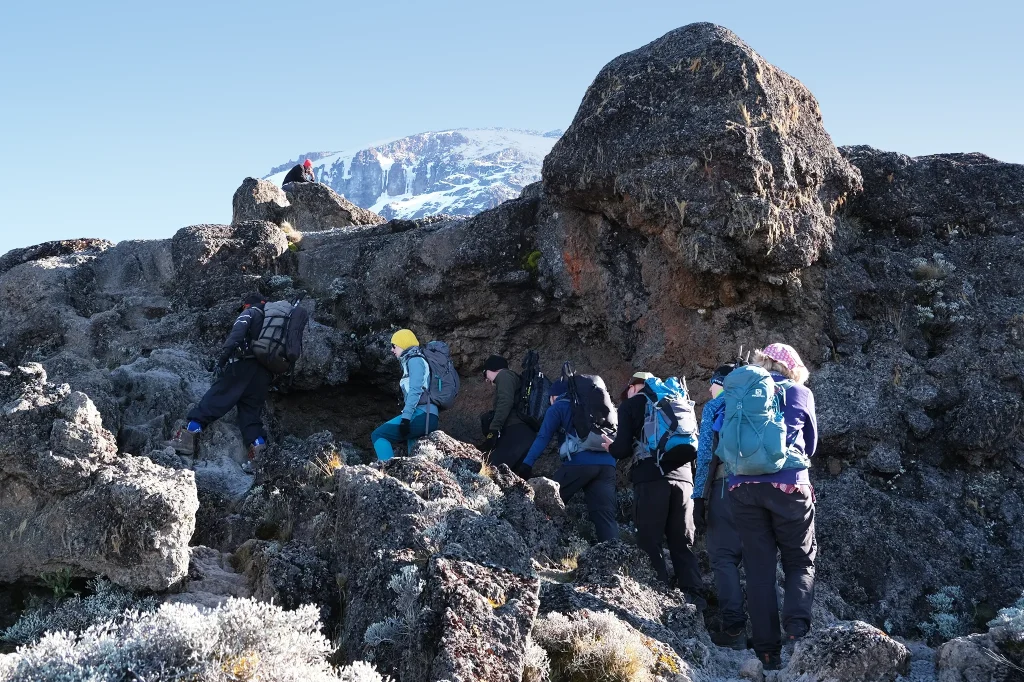
Proper training is required for a successful Kilimanjaro climb on the Northern Circuit Route. As it is a long and challenging route, it requires physical and mental preparation. The steep inclines and exciting terrain can be very demanding for even the most experienced hiker.

Only proper training can improve your physical endurance, build strength, and acclimate your body to high-altitude conditions. Training correctly can also reduce the risk of altitude sickness and reduce injuries. In the end, this will increase the chances of a successful and enjoyable climb on the Northern Circuit Kilimanjaro.

Understanding The Northern Circuit Route

The Northern Circuit Route is the longest route on Mount Kilimanjaro. It takes around 9 days to reach the summit following the route. But there is a hidden advantage here, too.

This extended duration allows for better acclimatization and a more gradual ascent. Thus, reducing the risk of altitude sickness.  

Understanding The Route

Let us highlight some advantages of choosing the Northern Circuit Route over other Kilimanjaro Routes:

  • Excellent acclimatisation profile allows trekkers to adapt to high altitude conditions.
  • The route has the highest success rate. Your chances of reaching the summit are high.
  • It is a long route (around 9 days). The extended period is only better for acclimatisation.
  • The Route is less travelled, which makes it a quieter and more intimate experience.
  • This route offers some spectacular views of Kilimanjaro. Panoramic views of the northern slopes, the Kenyan plains, and Mount Meru are some of the notable features of the route.
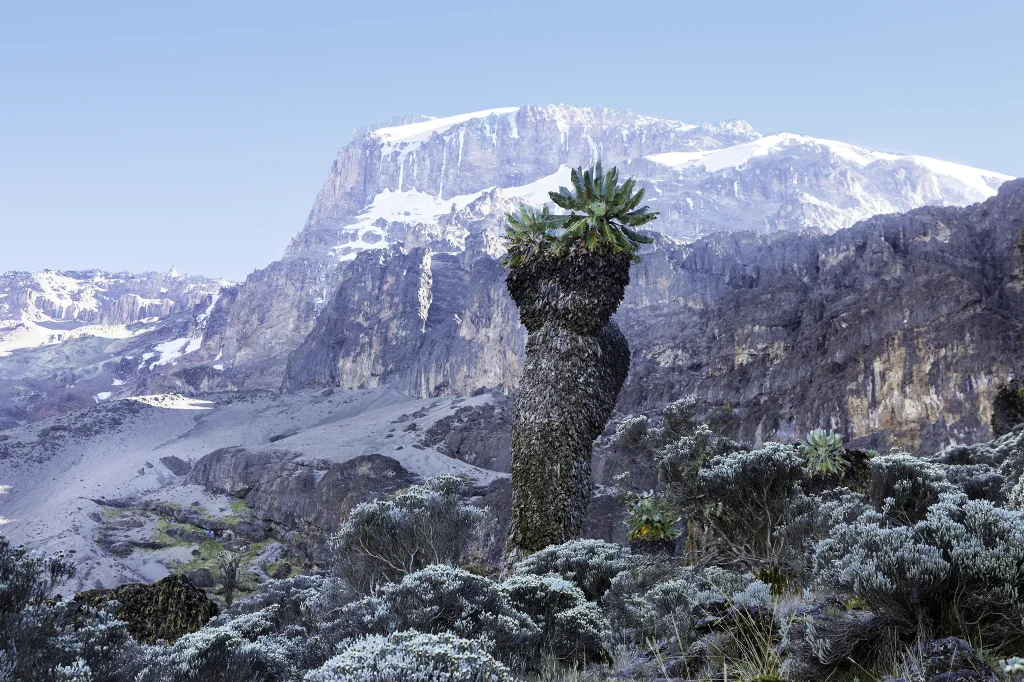
  • Trekkers will encounter various ecosystems on their trek up to Mount Kilimanjaro.

Looking at the highlights might seem that the trek to Kilimanjaro is a trek without challenges. But that’s not true. 

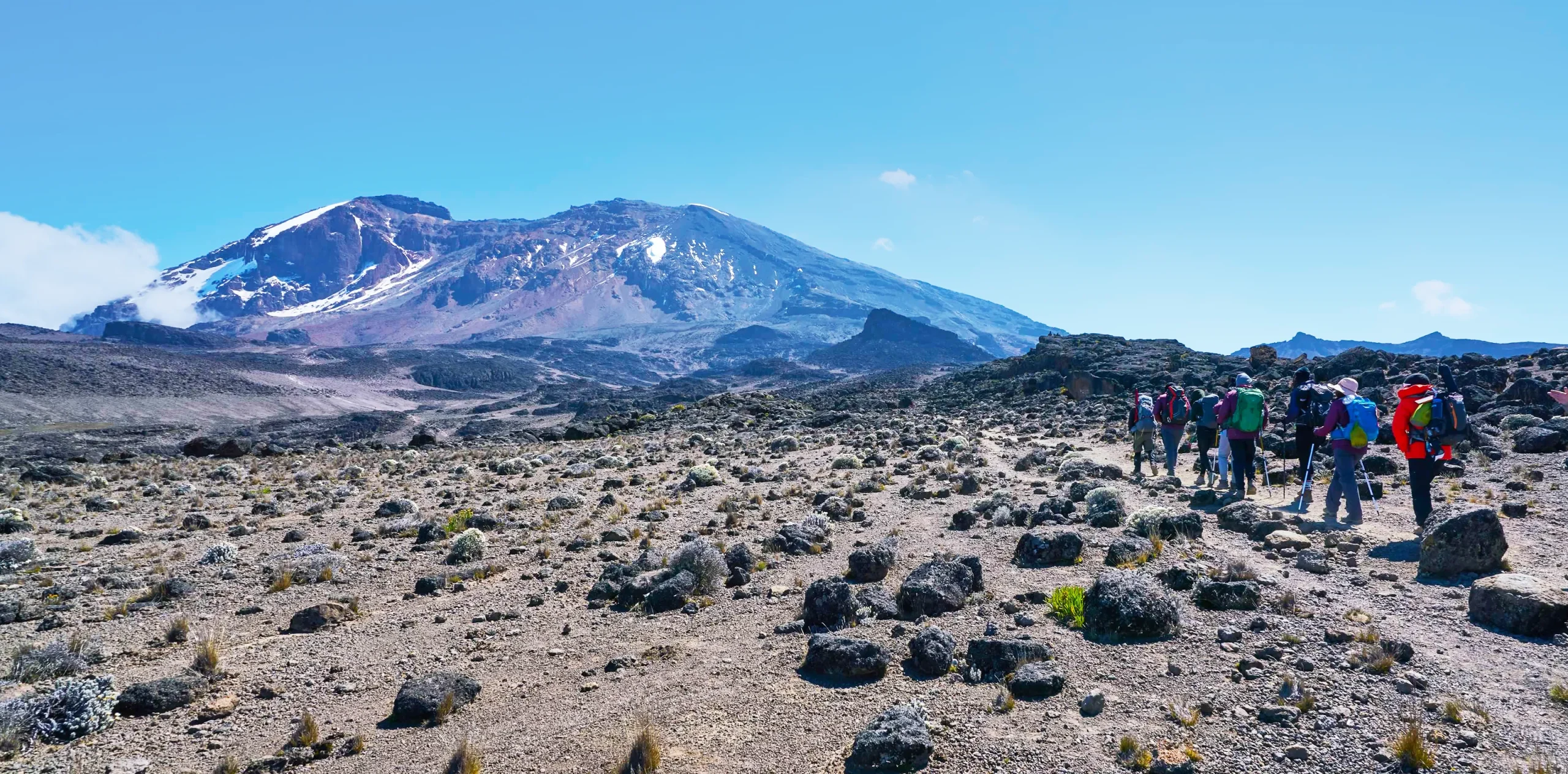
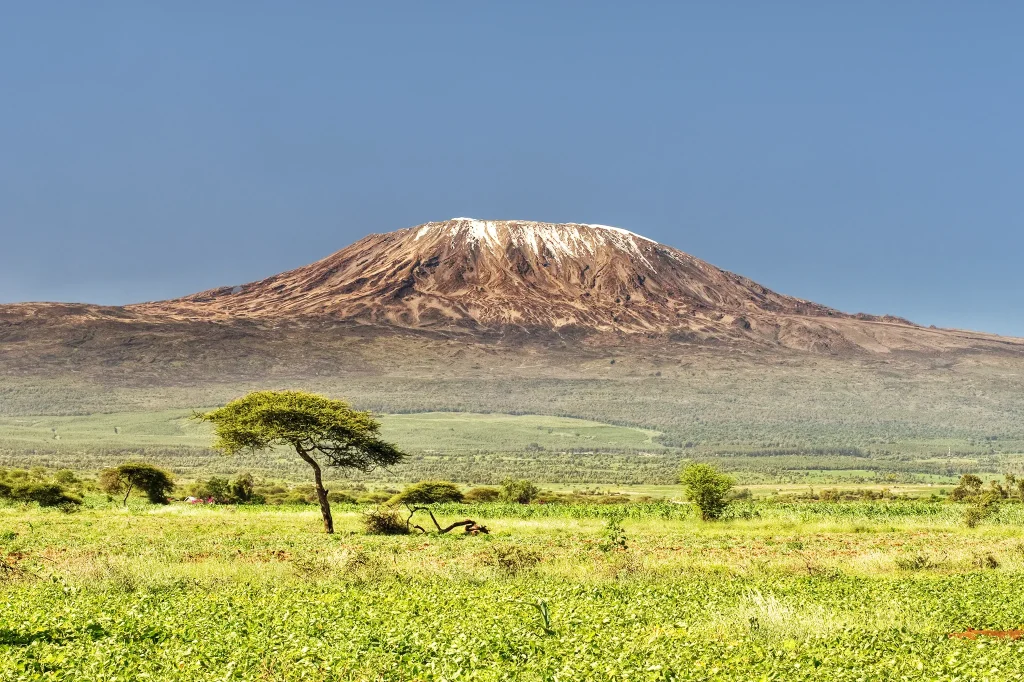
Northern Circuit Route on Kilimanjaro is an inspiring trek. High altitude (5895 meters) and lower oxygen levels can cause altitude sickness. This may be severe in some cases.

Sometimes, the weather conditions can change rapidly, too. Trekkers may encounter rain, snow, hail, high winds, and extreme temperatures.

The combination of steep ascents and descents, and rocky and uneven terrain can be physically demanding. This is where you will realise the importance of training properly before summiting Kilimanjaro.

Trekkers must get into proper physical training and become well-prepared to cope with these challenges.

Preparing For the Climb on Northern Circuit Route

Preparing for a Kilimanjaro Northern Circuit climb requires careful planning and physical conditioning. Here are some important things to consider when preparing for the climb:

Preparing To Climb
Preparing To Climb

Training for the challenging climb

The Northern Circuit Route is a challenging climb. So, it’s important to train your body for the physical demands of the climb. This includes cardiovascular exercise and strength training.  You can also practice hiking on steep and uneven terrain with a backpack.  Taking up the Training for Kilimanjaro program will simulate the weight you will carry during the climb and acquaint you with it.

Proper acclimatization to prevent altitude sickness

The high altitude of Mount Kilimanjaro requires proper acclimatisation. Being a 9-day trek, the  Kilimanjaro Northern Circuit Route offers excellent opportunities for acclimatisation. The gradual ascent allows you to spend more time at higher altitudes and lets you get acquainted with climatic conditions.

Gears are an essential safety equipment

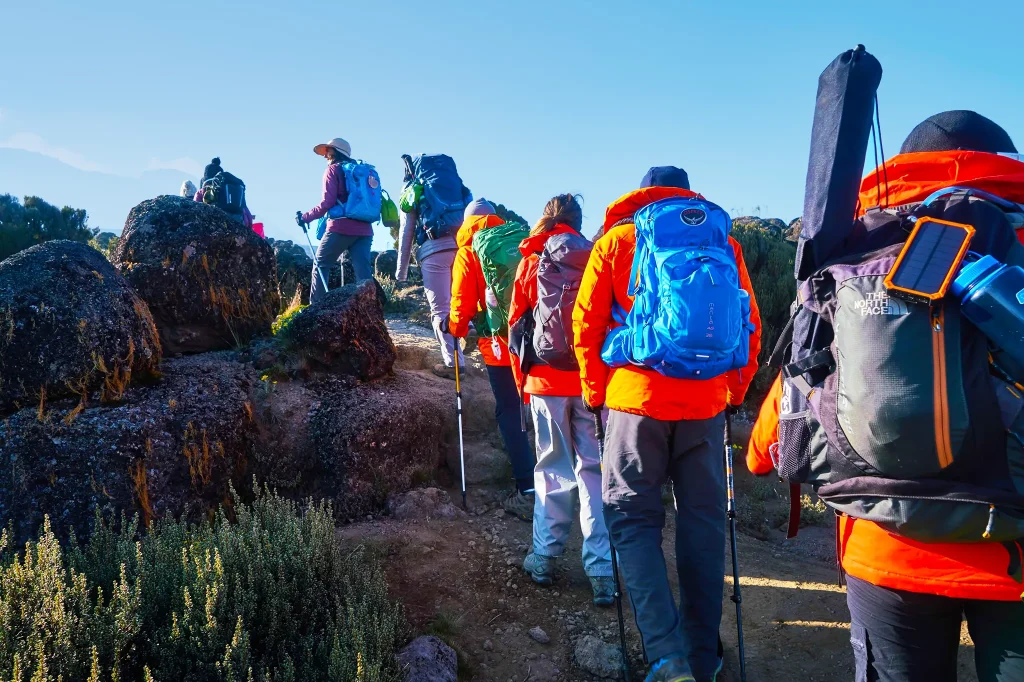
Proper gear is essential for a successful and safe climb. This includes warm and waterproof clothing, sturdy hiking boots, a good-quality sleeping bag, and a backpack. It’s also important to pack enough food, water, and snacks for the climb.

Health should be your priority

It’s essential to be in good physical and mental health before embarking on the climb. This includes consulting with a doctor to ensure you’re healthy enough for the climb.  Taking any necessary medications and getting proper rest and nutrition in the weeks leading up to the climb should be a part of the preparation drill, too.

Mental preparation- Stay positive and motivated

The Northern Circuit Route is a challenging climb, both physically and mentally. It’s important to be mentally prepared for the climb. 

Staying motivated and maintaining a sense of determination will help you in successfully summiting the peak. Also, climbers can try meditation, visualization, and stress management techniques to ensure an unforgettable experience when summiting Kilimanjaro.

Gear And Equipment

Here’s a checklist of gear and equipment for climbers using the Kilimanjaro Northern Circuit to ensure a safe and successful climb.

Clothing essentials

Layering is key to staying warm and dry. You’ll need:

  • Moisture-wicking base layers
  • Warm mid-layers
  • A waterproof and breathable shell jacket
  • Insulated pants
  • Waterproof gloves.

Footwear

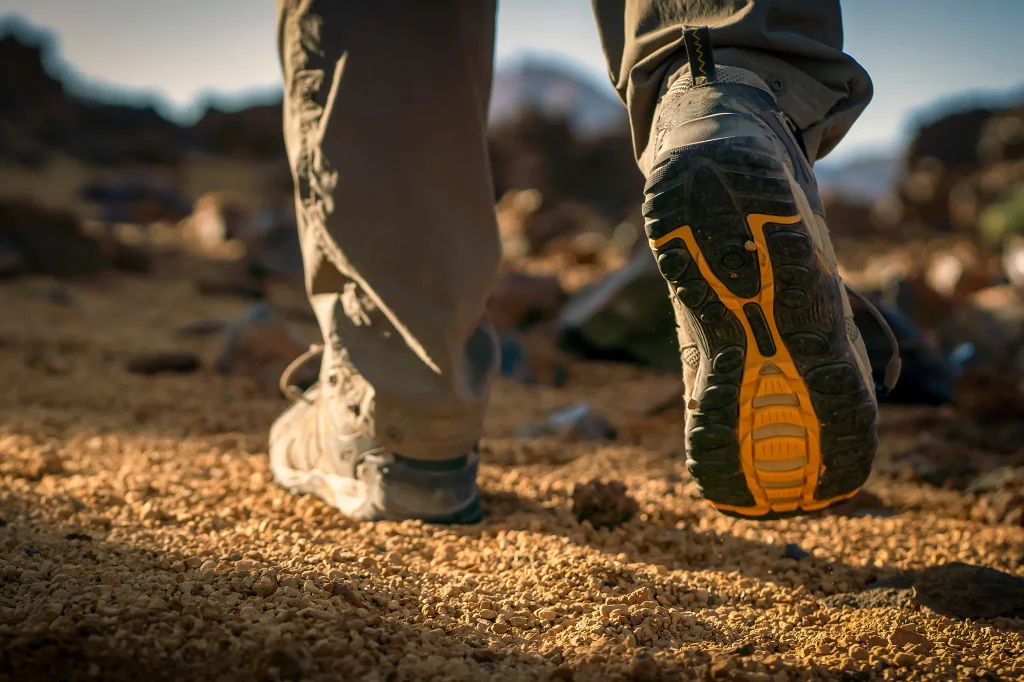
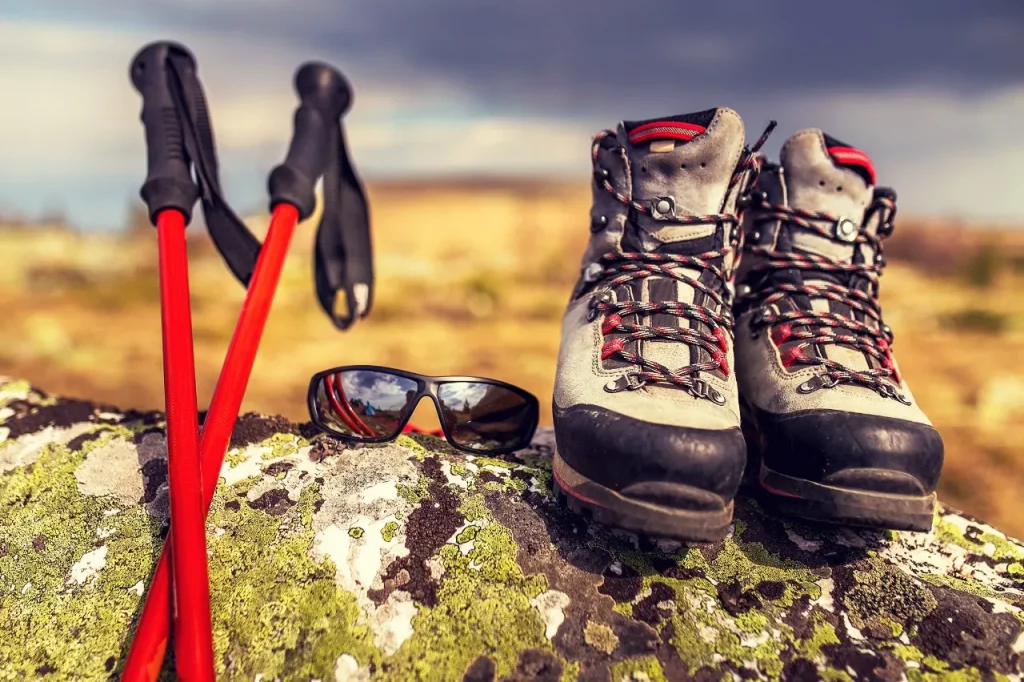
A sturdy pair of waterproof hiking boots with ankle support is essential. Be sure to break them in before the climb.

Backpack

You’ll need a backpack to carry your gear and supplies. The capacity should be at least 30-40 litres.

Sleeping bag

A 3-season sleeping bag rated for at least -10°C/14°F is recommended.

Tent

A good-quality, lightweight tent designed for cold-weather camping is necessary for overnight stays on the mountain.

Headlamp

A hands-free headlamp is essential for early morning and evening hikes.

Trekking poles

These will help with balance and reduce the strain on your knees during the descent.

Water bottles and hydration systems

You’ll need to stay hydrated, so bring at least two 1-litre water bottles or a hydration system with a capacity of at least 3 litres.

Sunglasses

Protect your eyes from the sun’s glare and UV rays with a good pair of sunglasses.

Hat and sunscreen

A wide-brimmed hat and sunscreen with at least SPF 30 will protect your skin from the sun.

First-aid kit

Be prepared with a basic first-aid kit that includes bandages, pain relievers, and altitude sickness medication.

Personal items

Bring personal toiletries, including wet wipes, hand sanitiser, and toilet paper.

Note: Some of these items can be rented in Tanzania, including sleeping bags and trekking poles. But it’s recommended to bring your own if possible for comfort and hygiene reasons. For more details, download our Kilimanjaro Packing List.

Climbing Kilimanjaro via the Northern Circuit isn’t just a hike, it’s a high-altitude hustle where strong lungs, grit-packed legs and a steady mindset turn thin air into summit celebrations

Altitude Sickness Prevention

When climbers ascend to high altitudes too quickly, it is difficult for the body to acclimatise to reduced oxygen levels at such high altitudes. This leads to a condition that is commonly known as altitude sickness or acute mountain sickness (AMS).

Altitude Sickness Prevention
  • To prevent altitude sickness when climbing Mount Kilimanjaro, it is recommended to follow a gradual ascent and acclimatisation schedule.
  • This involves spending a day or two at certain elevations to allow the body to adjust to the altitude.
  • Climbers can also take medication, such as Diamox, to help prevent altitude sickness.
  • Other prevention measures include staying hydrated and avoiding alcohol and tobacco during the climb. Eating high-carbohydrate meals and resting when needed can also help.

If you have taken the mighty task of scaling Kilimanjaro, these challenges are just a part and parcel of the game. But recognising the symptoms and descending to lower levels immediately will help alleviate the symptoms. So, adopt all preventive measures and increase your chances of Climbing Northern Circuit Kilimanjaro.

Tips For A Successful Climb On The Northern Circuit Route

Here are some tips for a successful Mount Kilimanjaro climb on the Northern Circuit route:

  • Choose the right time to climb the mountain. The best time is during the dry season from June to October or from December to February.
  • Proper training and physical fitness are important for a successful climb. Focus on building endurance and strength, and practice hiking at high altitudes
  • Pack light. But make sure to bring all the necessary gear and equipment. This includes warm clothing, rain gear, a sleeping bag, and a headlamp.
  • Drink plenty of water and bring a water filtration system or purification tablets to treat water on the trail.
  • Follow a gradual ascent and acclimatisation schedule to help prevent altitude sickness.
  • A licensed guide and porter can provide valuable support and help ensure a safe and successful climb. Make sure to be friends with them.
  • Mental preparation is just as important as physical preparation. Stay positive and motivated, and enjoy the experience.

Train For Climb Via The Northern Circuit Route

As the Northern Circuit Route is an exciting trek, proper training is important for a successful climb of Mount Kilimanjaro. Climbers are going to face challenges. But taking necessary precautions and following all the survival tips will only assist you in your endeavor to successfully climb the mountain.

At African Scenic Safaris, we have specifically designed Kilimanjaro Climbing Packages that are incredibly useful for individuals or groups planning to climb Mount Kilimanjaro. Make sure you check them out for a comprehensive and all-inclusive experience that ensures a successful and enjoyable climb.

Simbo Natai
Simbo Natai, founder of African Scenic Safaris, crafts sustainable, meaningful Tanzanian journeys rooted in his deep local knowledge and passion.
Director, African Scenic Safaris

Off-The-Beaten-Path Tanzania Safari Packages You Need to Experience

Off-the-beaten-path Tanzania Safari Trips Packages offer travellers a chance to explore some of the country’s lesser-known parks and reserves. These isolated and little-known places are as impressive, if not more, than the other popular Tanzania destinations.

Far away from crowds, these Tanzania Trip Packages allow visitors to experience the African wilderness in a more secluded setting. They take visitors to some of the country’s most beautiful and remote locations. Wildlife enthusiasts and adventurers will get a unique and unforgettable experience when visiting these locations.

These locations let you witness the true wild side of Tanzania that remains undisturbed by human activity.  Let’s see what these off–the–beaten Tanzania Safari Packages have in store for you.

Tanzania Trip Packages
Tanzania Safari Packages

Multi-Day Walking Tanzania Safari Packages

Tanzania offers a variety of multi-day walking safaris that allow visitors to experience the beauty and wildlife of the country on foot. These safaris can range from a few days to several weeks. They offer an immersive experience of the local landscape and wildlife while taking you to some of the remote locations.

Some of our popular multiday walking safaris included in our Tanzania Trip Package are:

  • Walking Safari in Serengeti allows visitors to observe wildlife like lions, elephants, and giraffes on foot. The safari is led by an experienced guide and offers a unique perspective on the Serengeti ecosystem.
  • Ngorongoro Highlands Walking Safari takes visitors through the Ngorongoro Crater area, where they can observe the area’s diverse wildlife and stunning scenery. The safari also includes visits to local villages and cultural experiences.

Further Reading:

10 Best Tanzania Tours & Vacation Packages 2023/2024

Cultural Experiences on Off-The-Beaten-Path Tanzania Safaris

Off-the-beaten-path Tanzania Safari Trips offer unique cultural experiences for visitors looking to immerse themselves in the local way of life. Here are some examples of cultural experiences that can be included in your Tanzania Trip Itinerary to gain a unique taste of their tribes’ authentic lifestyle:

Tanzania Cultural Experiences

Maasai Cultural Experience

The Maasai people are one of the most well-known ethnic groups in East Africa.  Our Tanzania Safari Day Trips offer visits to their villages where travellers can experience the Maasai way of life. Visitors can watch as the tribe goes about their daily routines and can participate in activities like herding cattle, making traditional crafts, and participating in cultural dances.

Hadzabe Bushmen Experience

The Hadzabe people are one of the last remaining hunter-gatherer tribes in Africa. Our off-the-beaten Best Tanzania Safari Trips include a visit to their villages.  This gives an insight into their daily routines, including hunting, gathering, and making traditional crafts.

Meeting With Local Artisans and Craftspeople

Travellers to Tanzania can take the unique opportunity to meet with local artisans and learn about their craft. Visits to traditional textile weavers, woodcarvers, and jewellery makers are all included in our Best Tanzania Safari Trips Packages. You can also purchase these items as souvenirs when visiting the local artisans.

Cultural Village Tours

Cultural tours to local villages are a great way to learn about the daily life and customs of the local people. Our Tanzania Safari Packages include tours that allow travellers to engage in traditional dance performances, food tastings, and visits to local schools and community centres.

Tanzania Cultural Village Tours

Further Reading:

Festivals Of Tanzania – Discover Cultural Diversity On Tanzania Safaris!

Adventure Activities Off-The-Beaten-Path Tanzania Safaris Packages

Travelling off the beaten track in Tanzania gives adventure enthusiasts a chance to participate in many activities. Some of the adventure activities included in our off-the-beaten Tanzania Safari Trip Packages 2023 are mentioned below.

Hot Air Balloon Safaris

The hot air balloon safaris are a unique and unforgettable way to experience the wildlife and landscapes of Tanzania. You get to see some stunning views while soaring high up in the sky. These rides are the best option to get a different perspective of the parking area.

Hot Air Balloon Safaris

Mount Meru Trekking

Mount Meru is the second-highest mountain in Tanzania, which offers travellers a challenging trekking experience. These 3-4 days trek up the mountains is a great warm-up for those planning to climb Mount Kilimanjaro.

Canoeing on Lake Duluti

A canoeing ride in the tranquil water of Lake Duluti lets you experience the wide variety of bird species and other wildlife in and around the lake.

Discover the chimpanzees of Mhale

A day trip to the Mhale Mountains near the shore of Tanganyika lets you encounter the wild chimpanzees.

See the “Big Five” at Saadani National Park

Avoid the crowds at bigger national parks in Tanzania and visit the lesser-known Saadani National Park to see Africa’s Big Five.

Engage in Water Sports Activities in Zanzibar

When you Plan a Trip to Tanzania, don’t miss out on the Zanzibar islands,    where thrilling water sports activities are available. Zanzibar, part of Tanzania, is renowned for its crystal-clear waters and vibrant marine life. Whether it’s snorkelling, diving, or kite surfing, these islands offer unforgettable experiences. Make your Trip to Tanzania and Zanzibar truly remarkable by exploring these aquatic adventures.

Further Read:

Find The Best Things To Do In Tanzania For Nature Lovers And Adventurers

When you leave the crowds behind, Tanzania whispers its wildest secrets through barefoot trails, big cat tracks, tribal tales and sunsets you won’t find in the brochures.

Luxury Off-The-Beaten-Path Tanzania Safaris Packages

Luxury off-the-beaten-path Safaris In Tanzania offer a range of experiences, including private luxury camping, private luxury villas, fly-in safaris, and private game reserves. These high-end lodges and game reserves include luxurious amenities and services, including private chefs, spa treatments, and private game drives

Luxury Tanzania Safari Packages

Our off-the-beaten Luxury Tanzania Safari Packages are designed to provide a more secluded and personalised experience in some remote locations in the country. So, create memories in some luxurious locations during the Tanzania Safari Trip with our luxury packages.

Further Read:

Luxury Tanzania Safari Packages – Experiencing The Best Of Tanzania In Style

Family-Friendly Off-The-Beaten-Path Tanzania Safaris Packages

Family-friendly off-the-beaten-path safaris cater to families with children of all ages. They provide a range of activities and accommodations tailored to families’ needs and preferences.

The all-inclusive Tanzania Safari Trips Packages offer activities that can be enjoyed by all the members of the family together. These safari activities include game drives, walking safaris, cultural experiences, and adventure activities. Cultural interactions can be a great learning experience for both children and elders in families.

Accommodations on family-friendly off-the-beaten-path Safaris in Tanzania are designed to cater to the needs of families. We have got your options, including private villas, luxury camps, and lodges. So, choose the accommodations wisely as per the needs of your family. 

Keeping in mind the needs of the families, amenities such as swimming pools and game rooms are also provided. Also, meals are often tailored to the preferences of children. Special attention is also given to picky eaters, and special diets are taken care of.

A little information on Tanzania Safari Cost: As you plan your unique Tanzania safari experience, consider the cost factor. Our Tanzania Safari Packages are designed to offer the best value, balancing luxury and adventure. The Tanzania Trip Cost varies based on duration, activities, and accommodation choices. Feel free to contact us for detailed pricing and tailor your dream safari within your budget.

Further Read:

12-Day Tanzania Family Safari Tours – Explore the Best Family Safari Adventure In Tanzania

Get The Best Tanzania Safari Packages

Tanzania Safaris Packages offer a wealth of benefits that set them apart from traditional safari packages. Here you get more opportunities to explore lesser-known regions. You also encounter wildlife in a more natural setting and get a chance to immerse yourself in the local culture. So, for a truly immersive and unforgettable experience, opt for our off-the-beaten-path Safaris in Tanzania with us.  We at African Scenic Safaris have customized itineraries for a unique and worthwhile experience in the wildest places of Tanzania.

Simbo Natai
Simbo Natai, founder of African Scenic Safaris, crafts sustainable, meaningful Tanzanian journeys rooted in his deep local knowledge and passion.
Director, African Scenic Safaris

Tanzania Safari Packages – Exploring the Finest Wildlife and Nature of Africa

Tanzania Safari Packages offer visitors an unforgettable and elevating experience that combines adventure, culture, and nature uniquely and incomparably. Whether you’re looking to explore the vast plains of the Serengeti, witness the great migration, or immerse yourself in the local culture, Tanzania has a lot to offer.

With our sustainable Tanzania Safari Packages, you’ll get to discover some of the finest African wildlife and scenic surroundings. That’s not all, though, because these packages are suitable for just about any traveller. It won’t matter if you want a budget, luxury, or group Tanzania Safari, as you can choose your option according to your needs.

Types Of Tanzania Safari Packages

There are many unique ways to experience the breathtaking wildlife and landscapes of Tanzania. At African Scenic Safaris, we specialise in private and luxury Tanzania Safari Packages—designed exclusively for travellers seeking comfort, personalisation, and authentic adventure.

Our safaris are ideal for solo explorers, couples, families, and small private groups who want a more exclusive journey without the limitations of group travel. Below, we highlight what makes our private  Tanzania Safari Tours truly exceptional.

Tanzania Safari Packages

Private Safaris

A Private Tanzania Safari delivers a personalised and flexible experience where every detail is tailored to your preferences. From the moment you arrive, your dedicated guide and private safari vehicle ensure the freedom to explore at your own pace.

Wake up in a luxurious lodge, enjoy a peaceful breakfast, and head out on a customised game drive, away from the crowds.

Key highlights of Private Safaris in Tanzania:

  • Full control over your itinerary
  • Exclusive access to remote, crowd-free areas
  • Privacy for families, couples, or solo travellers
  • Deeper connection with your guide and surroundings

Tanzania Private Safaris offer the freedom to shape your journey and make spontaneous stops for rare wildlife sightings or scenic views—just the way a safari should be.

Luxury Safaris

Our Luxury Tanzania Safari Packages combine five-star comfort with immersive wildlife experiences. These safaris include top-tier accommodations, gourmet dining, and exclusive activities that bring you closer to nature in style.

You’ll travel in customised safari vehicles, enjoy bush picnics, sip sundowners with a view, and dine under the African sky—all while supporting conservation and community-based tourism.

Other highlights of Luxury Tanzania Safaris include:

  • Personalised service and attention to detail
  • Elegant camps and lodges in iconic locations
  • Exclusive safari activities with expert guides
  • Strong focus on responsible and sustainable travel

With Luxury Safaris to Tanzania, you get more than just a holiday—you get a beautifully curated experience that blends wildlife, culture, and indulgence in the best way possible.

Wildlife And Nature Experiences In Tanzania

Tanzania has one of the most unique and diverse ecosystems on the African continent. This includes flora like sausage and baobab trees that offer some great natural surroundings. The diverse habitat also supports a range of astonishingly varied wildlife. The following are some major highlights of Tanzania in terms of nature and wildlife.

WITNESS THE GREATEST SHOW ON OUR PLANET!
The Great Wildebeest Migration is, without a doubt, the first thing that comes to mind when you think of Tanzania. This is a natural spectacle where two million wildebeests, along with zebras and gazelles, traverse the Serengeti-Mara ecosystem.
THE MOST FEROCIOUS OF TANZANIA’S WILDLIFE
Tanzania is also the perfect safari destination to spot the Big Five. This is where you’ll get to see lions, buffalo, leopards, elephants, and rhinos up close in their natural habitats. Serengeti National Park and the Ngorongoro Crater are the places to visit for the best big five sightings.
THE SOARING AVIANS OF TANZANIA
If you want a distinctive birdwatching experience, then Tanzania won’t let you down one bit. The country has one of the largest concentrations of birds. Over 1,100 species of birds have been recorded, of which more than 800 are resident. 22 unique endemic bird species also call Tanzania home. To spot migrant species, visit Tanzania from November to April.
EXPERIENCE A BIRD’S EYE VIEW OF TANZANIA’S NATURE AND WILDLIFE
A hot air balloon safari over the endless plains of the Serengeti is the perfect way to experience the vastness of Tanzania. Just picture floating above the skies touching treetops in utter silence while animals roam on the ground below – an essential Tanzania Safari experience indeed.

Tips For Planning A Tanzania Safari

The Dry Season (from June to October) is generally considered the best time to go on Safaris in Tanzania. So, you should also plan your visit during this time. Though, if you want to capture Tanzania’s scenic panoramas and witness flocks of migrant birds then the wet season (from November to May) is recommended.

Choosing the right Tanzania Safari Package is one of the most essential components of a safari. You can counter this step by figuring out your personal preferences. Identify whether you want a private and exclusive adventure or a cost-effective or a luxury experience.

You should also know what to pack for a safari to Tanzania. The following packing checklist will help you with that.

CLOTHING ESSENTIALS AND FOOTWEARESSENTIAL DOCUMENTSMISCELLANEOUS ITEMS
Comfortable shirts and trousers (we recommend a pair of both half and long-sleeved shirts)Passport and VisaSunscreen (SPF 30 or higher)
Lightweight safari shoes (for nature walks and safari activities)Identification DocumentsInsect repellent (with DEET)
Few pairs of underwearTravel Insurance PapersPrescribed Medications
A Rain jacket/ponchoSafari ItinerarySunglasses
Scarfs/A wide-brim hatHealth Surveillance FormsReusable Water Bottles

Our Suggestion – In Tanzania, there’s a risk of malaria in some areas. Therefore, take all the necessary safety precautions like taking anti-malaria pills/tablets and having a DEET-based mosquito repellent.

Tanzania is where binoculars become your best friend, sunsets steal the spotlight, and every dusty trail leads to a story written in paw prints and sung by the wild.

Sustainable And Responsible Tanzania Safari Packages

Our team at African Scenic Safaris agree wholeheartedly committed to crafting authentically unique Tanzania Safari Tours. We work dedicatedly so that your safari experiences leave a positive impact on the native communities.

All of our sustainable Tanzania Safari Packages are created and tailored based on your travel style, interests, and preferences. We put a prime focus on uniting conservation, communities, and responsible travel by creating experiences that have an impact.

Thus, you will be able to fully immerse yourself in the enriching Tanzanian culture that few get to experience, while also making a difference at the same time.

Don’t forget to check out some of our other blogs related to Tanzania Safaris! Simply follow the links below:

Ready To Witness Wildlife & Nature of Africa

To wrap things up neatly, Tanzania Safari Packages offer a truly immersive and unforgettable experience for those seeking to explore the finest wildlife and nature of Africa. With its diverse landscapes, abundant wildlife, and vibrant local culture, Tanzania provides a unique and captivating safari experience that is sure to leave a lasting impression.

With so much to see and experience, our range of safari packages is an ideal choice for those seeking an unforgettable Tanzanian Bush adventure.

Simbo Natai
Simbo Natai, founder of African Scenic Safaris, crafts sustainable, meaningful Tanzanian journeys rooted in his deep local knowledge and passion.
Director, African Scenic Safaris

5 Reasons to Choose All-Inclusive Kilimanjaro Climbing Packages

If you want to take on the challenge of climbing Kilimanjaro, you must be wondering the best way to go about it. One option that many travellers think is the appropriate way is to opt for all-inclusive Kilimanjaro Climbing Packages.

In the following read, we’ll explore the top five reasons why selecting all-inclusive Kilimanjaro Climbing Packages is the right choice for your Kilimanjaro adventure.

Some major benefits are the convenience of having everything taken care of, the peace of mind that comes with expert guides, etc.

An all-inclusive package can make your journey to the top of Africa’s highest mountain safer and more enjoyable.

Reason 1: Convenience

The number one reason all-inclusive Kilimanjaro Climbing Packages work is convenience. If you choose this option, you will not have to worry about any other factors apart from just enjoying your Mount Kilimanjaro Climbing experience.

Convenience
Convenience
  • Everything will be sorted out, especially for you.
  • This includes things like food and drink costs, setting up tents, porters, and the best Kilimanjaro Climbing Routes selection, among others.

Another key aspect of all-inclusive Mount Kilimanjaro Packages is that you’ll have a single point of contact for all arrangements. This means not having to bounce back and forth between Kilimanjaro Climbing Operators and worrying about your experience.

Reason 2: Cost-Effectiveness

With an all-inclusive Kilimanjaro Climbing Package, you’ll realise that you just need to budget for spending money. And all the hassles of otherwise typical climbing packages will be gone. This means that everything you’ll need on the mountain will already be paid for.

With all-inclusive Kilimanjaro climbs, your journey becomes simpler, your focus becomes sharper, and every step takes you closer to the summit without the stress of planning holding you back.

Reason 3: Safety And Quality Assurance   

Worried about altitude sickness and other health conditions you may face on the mountain? Don’t be, with an all-inclusive Kilimanjaro Climbing Package, you’ll be accompanied by an experienced guide who knows everything about handling someone who has Acute Mountain Sickness symptoms.

Porters and support staff won’t be far behind either when it comes to looking after you. One of the major reasons why climbers tend to miss out on experiencing the majesty of Mount Kilimanjaro is that they’re scared of health conditions and the challenges that high-altitude conditions bring. But when you choose an all-inclusive package, these things won’t bother you.

Our team puts a special emphasis on responsible and sustainable trekking, meaning that you’ll have a strong safety net and just focus on enjoying your Mount Kilimanjaro climbing experience to the fullest.

Safety
Safety

Reason 4: Customizability

A major plus of all-inclusive Mount Kilimanjaro Climbing Tours is customizability. When you select this option, you will be able to tailor-make your Kilimanjaro Climb according to your needs and preferences.

Want a shorter route? Or maybe a longer one so that you can have a comprehensive trekking adventure? All will be taken care of by our climbing experts.

What’s more is that you’ll have flexibility in terms of itinerary, route, and even accommodation options. Want to set up camp on your own? Yes! Or possibly sleep in huts designed for the best comfort and luxury? You’ve got it!

Thus, choosing all-inclusive Kilimanjaro Climbing Packages will offer a more personalised and, not to mention, a more enjoyable trekking experience.

Want to find out how you can maximize your chances of reaching Kilimanjaro’s summit? Then, the following blog will help:https://africanscenicsafaris.com/staging-optimized/blog/reaching-the-top-of-kilimanjaro-a-day-by-day-approach/

Reason 5: Peace Of Mind

One of the primary advantages of choosing an all-inclusive Kilimanjaro Climbing Package is the lack of stress. Yes, this may come across as obvious, but it’s one of the major factors why some people don’t make it to the summit of the mountain. This will also result in increased confidence, meaning that you will increase the success rates all by yourself.

Another plus will be that you’ll get to fully immerse yourself in the climbing experience and not get bogged down by unnecessary stuff. All the logistical details will also be covered, so that’s another stress factor being taken out. Improved well-being and personal growth will go hand in hand after you conquer the summit, so that’s another win for all-inclusive Kilimanjaro Tours.

Peace Of Mind
Peace Of Mind

Choose All-Inclusive Kilimanjaro Climbing Packages

To conclude things, choosing all-inclusive Kilimanjaro Climbing Packages can be a smart and rewarding decision for several reasons. An all-inclusive package includes everything from experienced guides and high-quality equipment to, accommodations and meals. So, you can enjoy the peace of mind that comes with knowing that all aspects of your climb have been covered.

Simbo Natai
Simbo Natai, founder of African Scenic Safaris, crafts sustainable, meaningful Tanzanian journeys rooted in his deep local knowledge and passion.
Director, African Scenic Safaris

From Clothing to Mountaineering Gear – How to Pack for The Northern Circuit Route Kilimanjaro

The Northern Circuit Route is the longest and newest route up Mount Kilimanjaro, taking 9-10 days to complete. It attracts thousands of adventure seekers and trekking enthusiasts each year. The route takes hikers through diverse landscapes, from dense rainforests to arctic-like terrain, offering stunning views.

However, one must pack the right gear and clothing to fully enjoy and conquer this epic journey. Below, we will provide you with a comprehensive guide on how to pack for the Northern Circuit Route Kilimanjaro.

It covers everything from clothing and sleeping gear to footwear and other miscellaneous items. Whether you’re a seasoned hiker or a first-time trekker, this Kilimanjaro Packing List will help you prepare for the trek of a lifetime.

Clothing And Footwear for The Northern Circuit Route

Mount Kilimanjaro has its micro-climate above the cloud levels and this climate is extremely cold and variable. Throughout your trek, you’ll be exposed to the natural elements and your body will experience a range of different temperatures. This will vary from 18 Celsius in the rainforest zone to -5 Celsius at higher altitudes.

So, having the right clothing when climbing via Northern Circuit Route on Kilimanjaro will be essential. The trick is to use multiple layers that you can add on to or remove as the conditions vary. And, because the Northern Circuit has an itinerary of 9 days, you will need to bring more layers than is typical.

Packing for the Northern Circuit Route up Mount Kilimanjaro

LAYER (S)DESCRIPTION
Windproof Jacket and TrousersA breathable outer shell layer is advised. This will help wick out any moisture and will keep you dry.
Mid Layer Fleece or JacketThis layer will go over your shirt and under the jacket.
Down JacketRecommended during the night of the summit and evenings.
Base LayerThey add a crucial warm layer on cold evenings and during the summit night.
Trekking TrousersA couple of pairs of quick-dry trousers will be a major plus.
UnderwearA pair of clean underwear for every day on the mountain is highly advised.
Insulated GlovesYou can’t go wrong by choosing fleece gloves that have a waterproof outer layer.

Equally as important as clothing is looking after your feet while Climbing Mount Kilimanjaro Routes. The right preparation will save you from a lot of unwanted troubles like blisters and pain. Remember to cut your nails properly before your trek and keep your feet dry.

We recommend a sturdy, waterproof pair of trekking boots and a few pairs of socks. A talcum powder for your feet is also highly advised, though do remember to wash it off at the rest stops.

Sleeping Equipment

This is one of the major components to keep in mind when on the Northern Circuit Route Kilimanjaro. You need to be fully refreshed for the following days on the mountain.

And, for this, you need the most comfortable sleeping equipment. Though it can be hard to gauge what the right supplies are. So, for your convenience, below are some of our recommendations:

EQUIPMENTDESCRIPTION
Sleeping BagA soft and comfortable sleeping bag will go a long way to make your nights on the mountain cosy.
Sleeping Mats/PadsThese are not fully required, but are a good choice if you want some added insulation for your bag.
Travel PillowA small and soft pillow is highly advised because who wants to use clothes as a headrest?
Sleeping ClothesThermals will combine well with your sleeping bag. Lightweight clothing is the way to go at night on the mountain.
Liner for the BagA cotton or silk liner is recommended for extra warmth.

Backpack And Daypack for The Northern Circuit Route

This is probably the most important gear for your Kilimanjaro Climb on the Northern Circuit Route. Do remember to keep the weight of your bag below 15 kg. You won’t have to worry about lugging your bags up the mountain because porters will help you with this. Below are some backpack and daypack recommendations for the Kilimanjaro Northern Circuit Route:

ELEMENT(S)DESCRIPTION
Primary Rucksack/Duffel Bag (65-70 litres)Make sure that your primary backpack doesn’t exceed the weight limit (15 kg).
Day Pack (30-40 litres)This is the bag that you’ll carry every day up the mountain. So, ensure that you have enough space for bottles and spare layers.
Waterproof Bag CoversYou can rent these out, but it never hurts to bring your pairs.

To have the best trekking experience, you can pick one of our handpicked Kilimanjaro Climbing Packages. And, don’t forget to read some of our other Kilimanjaro Climbing blogs for further information:

Kilimanjaro Packing List

Other Miscellaneous Items for The Northern Circuit Route

Now that we’ve got the packing essentials of the Northern Circuit Route Kilimanjaro out of the way, it’s time to cover some other miscellaneous items. The following list will help you with this.

ITEM(S)DESCRIPTION
FlaskOn cold summit nights, a hot drink will keep you warm. So, a half or one-litre flask is recommended.
Trekking PolesAnyone who has knee issues should certainly bring a pair of trekking poles. Even those who don’t will benefit greatly from these, especially during descents.
Hand WarmersA pair of these will help greatly in terms of circulation.
Mosquito RepellentThere are no mosquitoes in the mountain, but there are mosquitoes in some regions of Tanzania, so you’ll need mosquito repellent before and after your climb.
Water BottlesThis is a crucial item that you should never forget. You’ll need water to stay hydrated on the mountain.
Travel TowelsThis is optional. We recommend ones that are lightweight and dry quickly.
A Note – Those who are experienced and regular climbers may already have their pieces of equipment, so they won’t need to buy new ones. But novices looking to save a few bucks can rent some essential equipment.

Let’s Pack for the Northern Circuit Route

In conclusion, proper packing is crucial for a successful and safe climb up the Northern Circuit Route. From warm and waterproof clothing to essential mountaineering gear, packing the right items can help ensure your comfort, safety, and enjoyment of the climb.

By following the tips and advice outlined in this article, you’ll be well-equipped for the challenges and unique experiences of trekking up Kilimanjaro.

Remember to plan, pack light, and stay flexible, and you’ll be well on your way to an unforgettable adventure on one of the world’s most iconic mountains.

Happy climbing, fellow trekkers!

Simbo Natai
Simbo Natai, founder of African Scenic Safaris, crafts sustainable, meaningful Tanzanian journeys rooted in his deep local knowledge and passion.
Director, African Scenic Safaris

Create Lifelong Memories with Our Family-Friendly Tanzania Safari Packages

Creating lifelong memories during Safaris In Tanzania can be a precious experience.  The memories you will make will stay with you for generations. You can achieve this by choosing family-friendly Tanzania Safari Packages with your near and dear ones.

Tanzania is a magnificent destination that offers an incredible range of wildlife, landscapes, and cultural experiences. It is perfect for families looking to experience the finest wildlife and wilderness together.

Our family-friendly Tanzania Safari Packages are designed to provide an unforgettable adventure for families of all ages. We do understand that travelling with children requires careful planning and attention to detail. Hence, we have taken special efforts to pay attention to every detail to meet everyone’s needs and expectations.

Lifelong Memories
Lifelong Memories

Benefits Of Family-Friendly Tanzania Safari Packages

Are you still wondering about the risks involved in taking your family on Safaris In Tanzania? Don’t worry! Let’s take you through some amazing benefits of going on a family safari in Tanzania.

Family-Friendly Tanzania Safari

Opportunities for Children to Learn About African Wildlife and Culture

The family-friendly Tanzania Safari Packages provide unique opportunities for families to learn about local culture, its history, and stunning wildlife. You visit the Maasai Village and where you can learn about the nomadic tribes It will give insights into their rich culture and traditions.

Accommodations and Activities Tailored For Families with Children

The family-friendly Tanzania Accommodations provide many activities, especially for the children within the families. Some of the tailor-made safari activities include tracking small animals, making bows and arrows, and going on walks around camps. These small but interesting activities engage the children. They help them learn about African wildlife in a fun but interactive way.

Expert Guides Who Can Cater To the Needs and Interests of Families

Our Tanzania Safari Packages are designed to cater to the needs and interests of families. These packages include expert guides who understand animal movement well. They can guide all the members of your family, including elders and kids.

Safety Considerations for Families with Young Children

Travelling with children might seem a daunting experience initially. But, proper planning and opting for the right Tanzania Safari Packages will take care of you and your family’s needs and reduce all your worries.

Top Family-Friendly Tanzania Safari Packages Destinations

Here is our pick for the top family-friendly Tanzania Safari destinations:

Serengeti National Park

The most famous national park in Africa is a perfect place for family safaris. It offers opportunities for families to witness the Great Migration and see a diverse range of big cats. You also see Africa’s Big Five (lions, elephants, leopards, buffalo, and rhinos).

Ngorongoro Conservation Area

The awe-inspiring views from the crater rim are sure to have you and your little ones gasping with wonder. The crater is home to a variety of animals, including lions, elephants, zebras, and wildebeests.  Besides being one of the best places to see wildlife, the crater is also a great spot for a family picnic.

Tarangire National Park

This national park is well-known for its huge herds of elephants and is home to other wide variety of animals like giraffes, zebras, and antelopes. The park offers plenty of activities for children, such as guided walks and cultural visits.

Selous Game Reserve

Being one of the largest game reserves in Africa, Selous Game Reserve is the best place for a quiet family safari. Its boat cruises and wonderful wildlife are some of the activities that families coming on a Tanzania safari can try out together.

Lake Manyara National Park

Lake Manyara National Park is a small but beautiful park and a great destination for spending time with families. The park is also home to a treetop walkway that offers a unique perspective on the park’s wildlife.

Zanzibar: A visit to the Zanzibar Islands will ensure a great time for families who love spending time on the beach. That’s why a vacation to these islands is often recommended post-safari to unwind and relax along their white sandy beaches.

Our Top Recommended Activities For Families On Tanzania Safaris

Safaris to Tanzania offer a wide range of activities that are suitable for you and your family. Our Tanzania Safari Packages have been curated in such a way that you get to spend a great and memorable time together.  You can also participate in the plethora of activities that the place has to offer. Some of our top activities that you can enjoy on Tanzania Family Safaris:

Game Drives

Game drives are the most popular activities that you will get to do on a Tanzania Family Safari. These drives allow you and your families to see a wide range of wildlife up close and personal. Many national parks and game reserves across Tanzania offer game drives in 4×4 safari vehicles in the presence of experienced guides.

Cultural Visits

Being home to a variety of cultures, Tanzania offers unique opportunities for families to learn about their local culture and traditions. Some of the top cultural visits during Tanzania Safari Tours include visiting a Maasai village, meeting the Hadzabe tribe, and exploring the historic town of Zanzibar.

Hot Air Balloon Rides on Tanzania Safari Packages

These safaris are a unique way to see the African landscape from a bird’s eye perspective. This will be the ultimate thrilling experience for you and your family.

Beach Holidays

After all the excitement a Tanzania Safari offers, many families choose to end their trip with a perfect beach holiday. Some of the favourite beach destinations of Tanzania include Zanzibar and Pemba islands in East Africa. These beaches have got a huge number of options for activities including swimming, snorkelling, and trying out other water sports.

Wildlife Conservation Activities

Various wildlife projects are ongoing in Tanzania. These conservation projects allow opportunities for families to get involved. You can either choose to visit elephant sanctuaries, participate in anti-poaching patrols or learn about wildlife rehabilitation. Many lodges across Tanzania offer a variety of playful activities for your children. They can help them appreciate Africa’s unique wildlife ecosystem. So, watch out for your kids to get inspired and turn into budding conservationists on your next Tanzania Safari Tours.

Choosing The Right Tanzania Safari Package for Your Family

Though choosing the right Tanzania Safari Package for your family can be a little overwhelming. Still, careful planning and understanding of your needs can help you find a package that suits your needs and justifies your requirements.

Some of the considerations that should be kept in mind to find the right Tanzania Safari Package for your family are:

  • Look for a package that would include the types of activities that you and your family would enjoy on a Tanzania Safari Tour.
  • The packages should include accommodation options that would contribute towards making your stay comfortable and hassle-free.

Families travelling with children and elders generally opt for lodges and camps with interconnected rooms. This can help them access the other rooms in their time of need.

  • If travelling with children, look for a package that includes shorter drives and plenty of breaks for rest and snacks. If teenagers are present in your family, then you can buy those packages that include adventure activities.

Lastly, as Tanzania Safari Packages can vary in price, it’s important to set a budget when choosing a package for your family safari. A general tip is to look for packages that can bring good value for money, and also, you can book in the off-season to avail of some discounts.

Sustainable And Responsible Tourism On Tanzania Safaris Packages

Sustainable and responsible tourism has recently become an essential aspect of Tanzania’s travel industry. So, it has become all the more important for travellers coming on Tanzania Safari Tours to adopt certain measures that can contribute towards protecting Tanzania’s delicate ecosystem, wildlife, and communities.

Now, families on Safaris to Tanzania can also promote sustainable and responsible tourism. They can practice this by opting for various measures like staying in eco-friendly accommodations, supporting local communities, and participating in community development projects.

During the Tanzania Safaris, families can also teach their children to support conservation practices. They can inspire them enough to be responsible towards nature and natural resources. Additionally, participation in responsible activities like cultural visits and activities that do not harm the wildlife and environment can also be done.

Also, the safari operators can make it a point to promote responsible tourism practices.  These can include techniques such as waste reduction, the use of renewable energy, and the support of local businesses. So, on your next trip to Tanzania, look for safari packages that adopt some of the above-mentioned measures and leave with a positive impact and sense of responsibility.

Ready For Tanzania Safari Packages With Your Family!

Lastly, our family-friendly Tanzania Safari Packages offer a perfect blend of adventure, education, and relaxation for the entire family.

With customizable itineraries, knowledgeable guides, and a focus on sustainable tourism, we offer a unique and unforgettable experience that will create lifelong memories for your family.

To know more about Tanzania Safaris, you can check out our latest blog posts.

The Best Tanzania Safari Packages for your next African Safari Adventure

The Best Time to Book a Tanzania Safari Package – Tips and Recommendations.

Off-beaten path Tanzania Safari Packages you need to Experience

Simbo Natai
Simbo Natai, founder of African Scenic Safaris, crafts sustainable, meaningful Tanzanian journeys rooted in his deep local knowledge and passion.
Director, African Scenic Safaris

Exploring The Northern Circuit Route – Kilimanjaro’s Hidden Gem

Approaching from the south direction, the Northern Circuit Route Kilimanjaro is a relatively new and less crowded trek. It has the highest success rate of summiting the mountain, which is about 98%.

This Kilimanjaro Climbing Route is gaining popularity among trekkers. Its unique features, such as stunning views, comfortable camping facilities, and opportunities to spot Kilimanjaro’s wildlife, have made it popular. A gradual ascent on Kilimanjaro’s Northern Circuit Route increases the chances of successfully reaching the summit. Even the risk of altitude sickness is reduced while summiting.

Let’s go through the blog and understand the features of the Northern Circuit Route Kilimanjaro. We will also find some reasons behind its popularity among climbers seeking a more rewarding experience on Mount Kilimanjaro.

What Is the Northern Circuit Route of Kilimanjaro

The Northern Circuit Route is the newest and longest route to the summit of Mount Kilimanjaro in Tanzania.

This route is relatively remote and less travelled. It offers trekkers a unique and peaceful experience with stunning scenery.

The route has a higher chance of summiting due to its more extended acclimatisation period.

Northern Circuit Route

Description Of the Northern Circuit Route

The Northern Circuit Route on Kilimanjaro takes around nine days to reach the peak. Some variations take up to ten days.

The route starts on the western side of the mountain at the Londorossi Gate. Then, it follows a path that circles the north before heading to the summit from the east.

This Route is a challenging trek that requires a good level of fitness. You need the strength to hike for several hours each day at a high altitude.

However, it offers a unique and unforgettable experience. The stunning scenery, a diverse range of ecosystems, and a sense of remoteness are some of the features unique to the Kilimanjaro Northern Circuit Route.

Comparison To Other Kilimanjaro Climbing Routes

Mount Kilimanjaro is a majestic mountain with an elevation of 5895 meters above sea level. It is a popular destination for trekkers and mountaineers from around the world. There are several routes to the summit. Each one has its unique characteristics and challenges.

Kilimanjaro Trek Showdown: Northern Circuit vs. Other Routes

Northern RouteMachame Route
Less steep and has a more gradual ascent. This makes it a good choice for those who want to acclimatize well.This route is more challenging as it involves steep inclines and long days of hiking.
Northern Circuit RouteMarangu /Coco-Cola Route 
It is one of the most scenic routes on Kilimanjaro. It offers stunning views of the mountain and the surrounding landscape.This route is less scenic as it involves walking through forests and moorlands.
Northern Circuit RouteLemosho Route
The Northern Route takes around seven days to complete. It is a bit easier than the Lemosho Route.It is one of the newer routes on Kilimanjaro and is known for its remote and wild landscapes. It is the longest route and takes around 8 days to complete.
Northern Circuit RouteRongai Route
The Northern Route is similar to the Rongai Route in terms of difficulty. It is more scenic and has a higher success rate. The Rongai Route is one of the quieter routes on Kilimanjaro.  It is known for its remote and untouched landscapes. It is also one of the easier routes, as it involves a gradual ascent to the summit

Overall, this Route is a good choice for those who want a slightly easier and more scenic route to the summit of Kilimanjaro. However, keep in mind that all Kilimanjaro Routes are challenging. It requires proper preparation and acclimatization is essential for a safe and successful climb.

Highlights Of the Northern Circuit Route

The Northern Circuit Route gives one of the best chances to summit the mighty Kilimanjaro. Some of the route’s highlights include beautiful scenery along the trek, a good acclimatisation profile, and a very high success rate. Other key highlights and their description are described in the table below:

HIGHLIGHTDESCRIPTION
Longer routeThe Northern Circuit Route is the longest route on Kilimanjaro, taking approximately 9-11 days to complete.
More acclimatization timeThe longer route allows for more time to acclimatize to the altitude, increasing the chances of summiting.
Remote and less crowdedThe Northern Circuit Route is less traveled than other routes, providing a more remote and peaceful experience.
Varied landscapesThe route passes through a variety of landscapes, including rainforest, heath, moorland, alpine desert, and glaciers.
Wildlife viewingThe route passes through the Kilimanjaro National Park, providing opportunities to see wildlife such as elephants, buffalo, and monkeys.
Summit via Gilman’s PointThe route approaches the summit via Gilman’s Point on the crater rim, providing a different and less crowded perspective.

How To Prepare for The Northern Circuit Route

It is a challenging and rewarding trek that takes you to the summit of Mount Kilimanjaro. Here are some tips on how to prepare for the Kilimanjaro Northern Circuit:

How To Prepare
How To Prepare

Physical Fitness: The Northern Circuit Route Kilimanjaro is a challenging trek, so it is important to be physically fit. You should aim to do regular cardiovascular and strength training exercises at least 3-4 times a week. It will gradually increase your endurance and stamina.

Altitude Acclimatisation: Kilimanjaro’s high altitude is the biggest challenge you will face during the trek. To avoid altitude sickness, you should plan to acclimate properly. For this, you can spend at least one or two nights at each altitude level on the route. It would be best if you also drank plenty of water to keep yourself hydrated.

Gear and Equipment: You will need to have the right gear and equipment for the trek, including good-quality hiking boots, a warm sleeping bag, and layers of warm clothing. You should also invest in a good-quality trekking pole to help you balance difficult terrain.

Mental Preparation: Mount Kilimanjaro climbing is not just a physical challenge;         it is also a mental one. You should mentally prepare yourself for the challenge by setting realistic expectations and goals. Also, you can try staying positive throughout the trek.

Guided Tour: It is highly recommended to go on a guided tour with an experienced company that has a good track record of leading successful treks to Kilimanjaro’s summit. They will provide you with all the necessary information and support you need to prepare for and complete the trek.

What To Expect On The Northern Circuit Route Kilimanjaro

The Northern Circuit Kilimanjaro is a popular safari itinerary that takes visitors through some of Tanzania’s most famous national parks and wildlife reserves. Here is a breakdown of your journey to Mountain Kilimanjaro when following the Northern Circuit Route. 

What To Expect
What To Expect
  • The first few days of the trek are spent in the lush rainforest, where trekkers can see a variety of plant and animal life, including black and white colobus monkeys. As the route climbs higher, the landscape changes to moorland, with giant heather trees and unique flora and fauna.
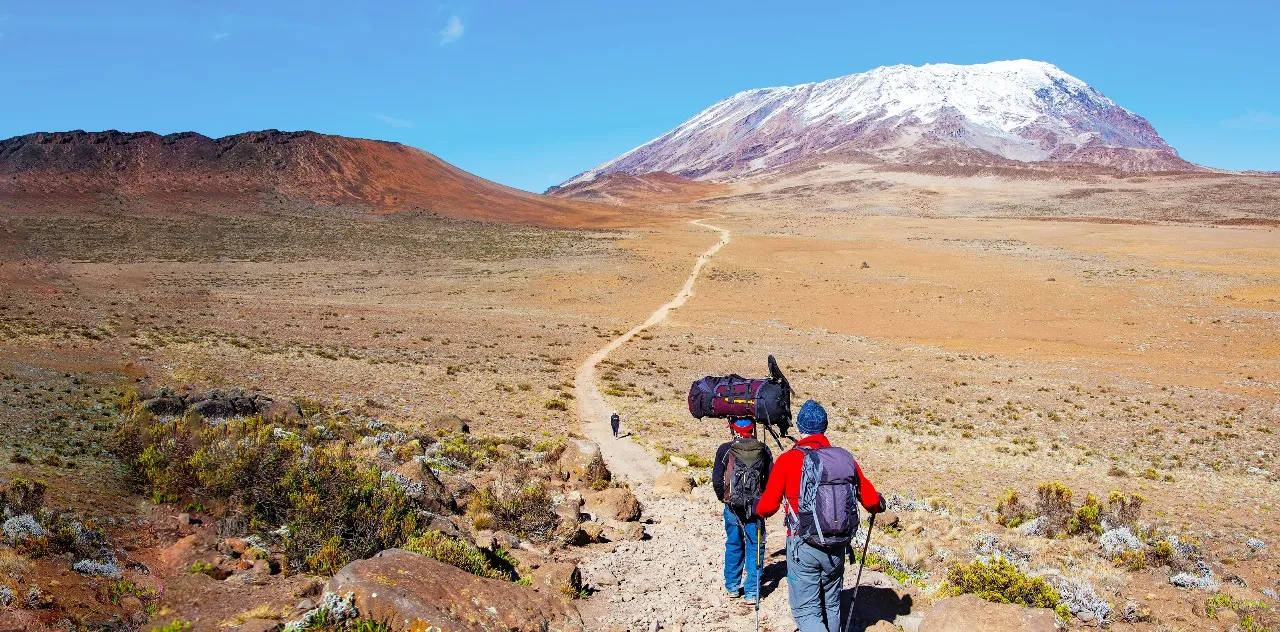
  • On day five or six, the route reaches the Lava Tower, a rocky outcrop that offers stunning views of the surrounding landscape. The route then continues to the Arrow Glacier campsite, which is around 4,800 meters (15,748 feet).
  • From here, the route follows the Western Breach, a steep and challenging ascent to the summit of Kilimanjaro. Trekkers pass through the alpine desert and then the Arctic summit before reaching the highest point, Uhuru Peak, at 5,895 meters (19,341 feet) above sea level.
  • After reaching the summit, trekkers descend the Mweka Route, passing through beautiful and varied landscapes before returning to the park gate on day nine or ten.

Are you ready to climb the Northern Circuit Route?

No doubt, it is a hidden gem that offers a unique and less-crowded trek to the summit. At African Scenic Safaris, we offer exclusive Kilimanjaro Climbing Packages to help climbing enthusiasts successfully reach the summit of Kilimanjaro.

So, if you are seeking a less-crowded and more scenic to the summit of Mount Kilimanjaro, then the Northern Circuit Route  is a perfect choice. So, don’t hesitate to explore this hidden gem and discover the Northern Circuit for yourself under the expert guidance of our guides.

Simbo Natai
Simbo Natai, founder of African Scenic Safaris, crafts sustainable, meaningful Tanzanian journeys rooted in his deep local knowledge and passion.
Director, African Scenic Safaris

Tanzania Safari Packing List for Solo Travellers -Must-Have for Your Travel

Tanzania has plenty for solo travellers to see and do, all on their own. Mountains, beaches, and the African bush will all be a part of your itinerary.

For that, your Tanzania Safari Packing List should be flexible enough to accommodate all the required stuff so that you don’t miss out on anything.`

Also, packing efficiently becomes all the more important when you travel solo. It is because if you miss out on something, you might get into some trouble that could have been avoided otherwise.

So, the only way to ensure that you have the most ideal time is by having all the essential clothes and gear with you. Hence, we have tried to curate a Packing List for Tanzania Safari , which is specifically designed keeping in mind the needs of solo travellers out there. We are sure the following packing list will help you spend an amazing holiday.

Clothing Essentials for Tanzania Safaris  

The climate of Tanzania varies considerably all across the day. From being hot during the day, it can get cool during the night. Also, there are high chances of occasional showers during the day.

For this reason, your  Tanzania Packing List should be versatile enough to cater to every type of climatic condition. Also, if you are travelling solo, comfort, and practicality are some of the key points that need to be addressed. Here are key items that need to be packed for Tanzania Safari:

Comfortable & Breathable Clothing

Long-sleeved, breathable shirts to protect from the sun and bugs. Pack lightweight, loose-fitting tops and pants made from breathable fabrics like cotton or linen.

Closed-toe shoes

You’ll want to pack a comfortable pair of closed-toe shoes that will provide good support for walking and hiking. Sneakers or hiking boots are also good options.

Warm layers

While it can be hot during the day, the temperature can drop significantly at night. So, a warm jacket or sweater to stay comfortable in the evenings and early mornings during game drives will be handy.

Importance of Neutral Colours 

It’s best to avoid bright colours as they can attract animals or insects. So, it’s better to opt for neutral colours such as khaki, beige, or brown.

Sun protection

Tanzania can be very sunny, so you’ll want to pack a wide-brimmed hat, sunglasses, and sunscreen with a high SPF to protect your skin.

Swimwear

If you plan on swimming or visiting the beach, be sure to pack swimwear.

Quick-drying clothes

Some lodges or tented camps may offer laundry services, but it’s always a good idea to pack quick-drying clothes that you can wash and dry quickly.

Rain gear

Depending on the time of year you visit Tanzania, there may be occasional rain showers. Pack a lightweight rain jacket and a rain cover for your backpack.

Other Miscellaneous Clothing Items

  • Lightweight scarf for extra sun protection and wind coverage.
  • Polarised sunglasses reduce glare and protect eyes from UV rays.
  • Versatile and lightweight neck gaiter (Buff) that can be worn in multiple ways.
Clothing Essentials for Tanzania Safaris  

Equipment & Accessories to Be Included in the Tanzania Safari Packing List

In addition to clothing essentials, there are several pieces of equipment and accessories that you should consider including in your Tanzania Safari Packing List to make your journey safe and memorable. Here are some key items to pack:

Camera and other accessories

Safari in Tanzania is a once-in-a-lifetime opportunity to capture stunning wildlife and landscape photographs. Be sure to pack a good-quality camera with extra batteries and memory cards.

Binoculars

A pair of binoculars will allow you to get a closer look at wildlife and enjoy the details of the beautiful landscape.

Power bank and portable charger

Although most lodges and hotels in Tanzania have outlets in their rooms. Still always better to carry your own charger and power bank.

Flashlight or headlamp

Some camps and lodges may not have electricity at night, so it’s a good idea to pack a flashlight or headlamp to help you see in the dark.
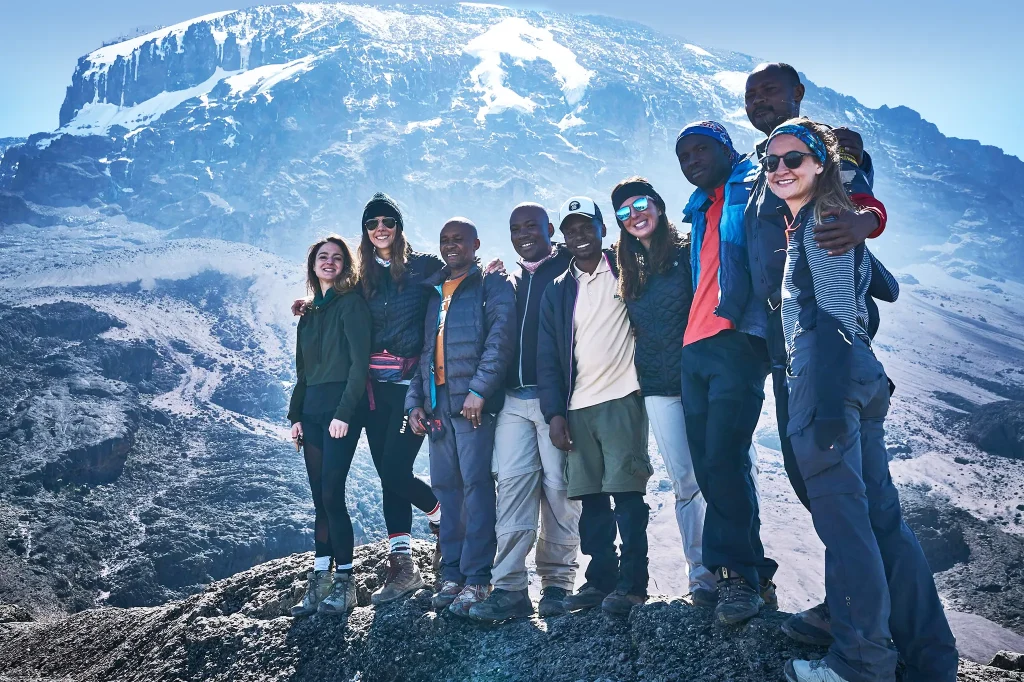
Personal Items To Be Included In The Tanzania Safari Packing List

Going on a solo Safaris To Tanzania can be an exciting adventure, only if you have got your items rightly packed. Here are some personal things you may want to consider for your Packing List For Tanzania Safari.

Insect repellent

Tanzania is home to a variety of insects, including mosquitoes, so it’s essential to bring insect repellent to protect yourself from insect bites and diseases like malaria.

Sunscreen

The sun can be very strong in Tanzania, so it’s crucial to bring sunscreen with a high SPF factor to protect your skin from harmful UV rays.

Personal Medication

If you are taking any personal medication, bring enough to last throughout your trip. You can try to keep the original packaging intact. Also, it’s a good idea to bring a basic first-aid kit with you. Try and include some plasters, pain relievers, and anti-histamines.

Cash and credit card

While most major lodges and camps accept credit cards, it’s always a good idea to bring cash with you for tips and incidentals. It’s also essential to carry some local currency for smaller purchases.

Travel Documents

Don’t forget to pack your passport and necessary visas. Also, pack all the copies of important documents like travel insurance and emergency contact information.

Water bottle

Staying hydrated is important on safari, so pack a reusable water bottle to refill with safe drinking water.

Snacks

Long drives and game drives can be tiring and make you hungry, so make sure to pack some snacks to keep your energy levels up.

Backpack

A good quality backpack will be useful for carrying your camera, binoculars, water bottle, and other essentials during game drives and walks.

Clothing Essentials for Tanzania Safaris  

Survival Tips For Solo Travellers On Tanzania Safaris

Going on a Tanzania Safari alone can be an incredible experience for those who want to experience the wilderness all by themselves, but it’s important to be prepared and take precautions to stay safe. Here are some survival tips for solo travellers on Tanzania safaris:

  • Respectful clothing that covers shoulders and knees is necessary. Also, avoid bright colours during safari drives.
  • Follow the instructions of your guide and do not approach or feed the animals.
  • Stay hydrated and carry enough water with you during game drives.
  • Practice responsible tourism and support eco-friendly accommodations and activities. Our Tanzania Safari Packages include the perfect blend of activities that support conservation measures during Safaris in Tanzania.
  • Stay connected with family and friends using a local SIM card or Wi-Fi at accommodations.
  • Be aware of your surroundings and avoid walking alone in unfamiliar areas, especially at night.

Pack Wisely & Plan Heavily

We understand that packing for a Tanzania Safari as a solo traveller can also be an exciting but daunting task. So, it is important to pack wisely and plan to ensure you have everything you need for a comfortable and safe journey.
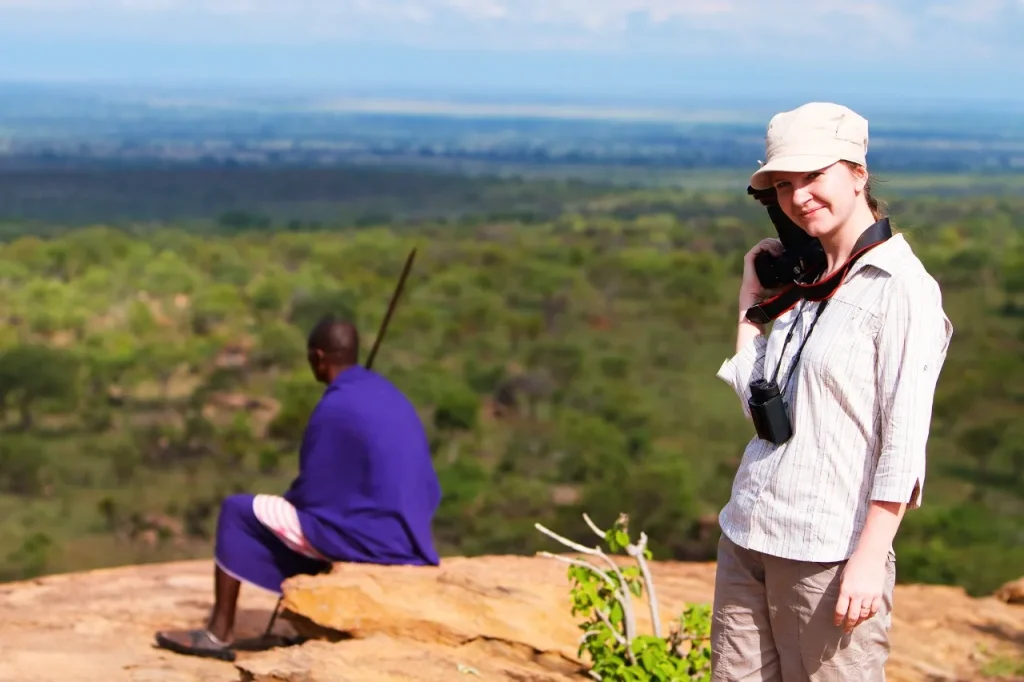
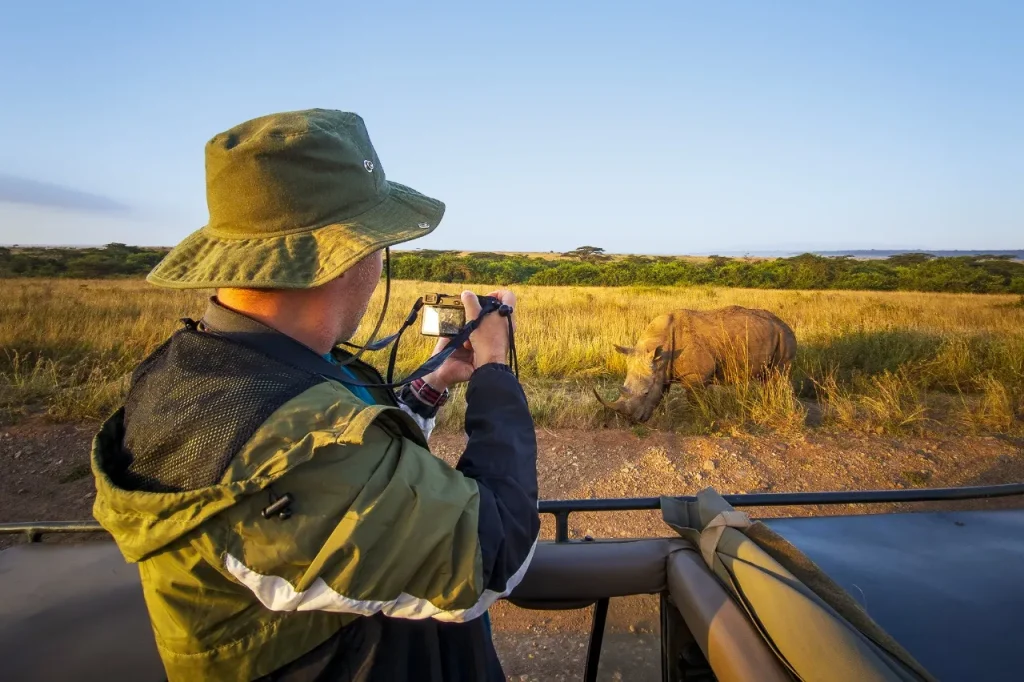
By following these tips and packing accordingly, you can have an unforgettable Tanzania Safari experience as a solo traveller while staying safe, comfortable, and prepared for any situation.

We hope this Tanzania Safari Packing List has got you sorted and will help you pack well for your next solo travel.

If you have further queries on packing for Tanzania Safaris, you can ask one of our experts at African Scenic Safaris or download our Tanzania Safari Packing List PDF.

Simbo Natai
Simbo Natai, founder of African Scenic Safaris, crafts sustainable, meaningful Tanzanian journeys rooted in his deep local knowledge and passion.
Director, African Scenic Safaris
×