What Makes Tarangire National Park Special?
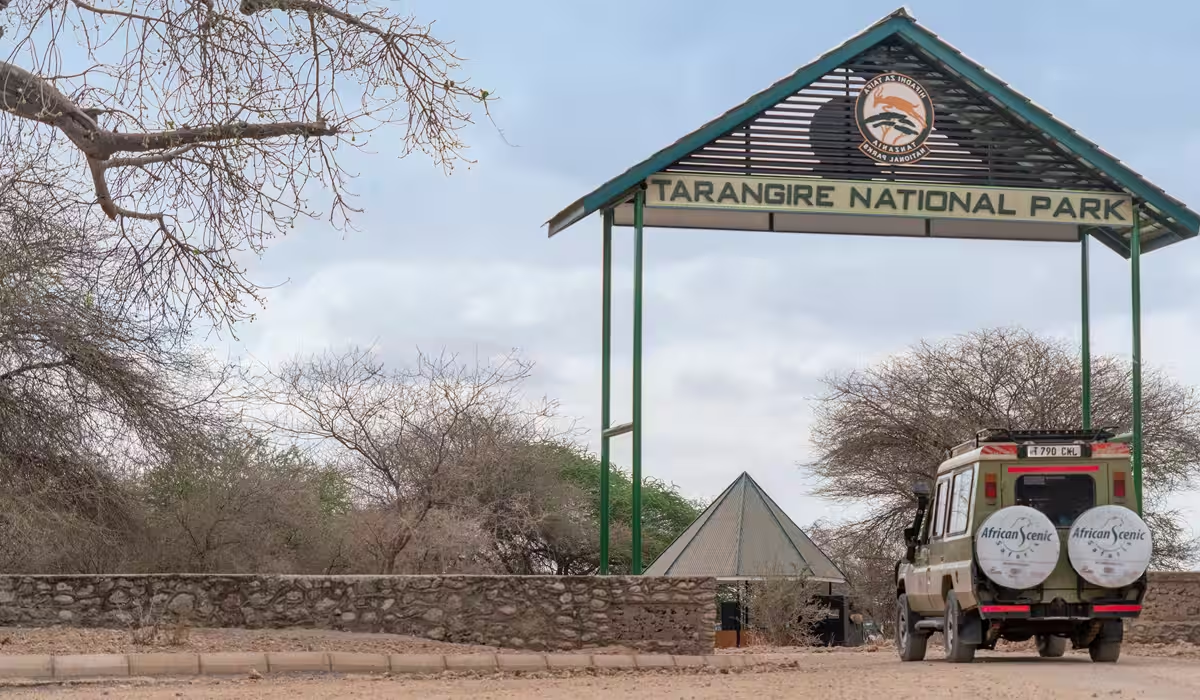
Named after the Tarangire River which winds through its northern section,
Tarangire National Park is a vital refuge during the dry
season - when the river becomes the main water source for wildlife.
Covering an area of 2,850 square kilometres, it ranks as the sixth-largest park in
Tanzania. Nestled between the Masai Steppe in the southeast and the rift valley
lakes in the north and west, its landscapes range from granite ridges and river
valleys to swamps and iconic baobab-dotted plains.
Known as one of the most seasonal parks in northern Tanzania, Tarangire
National Park experiences a high volume of migratory wildlife,
especially during the dry months. If you're planning Tanzania
Safari Packages, this park is a must-include for witnessing the
raw rhythm of seasonal movement and unique ecosystems.
Tarangire National Park at a Glance
- Area : 2,850
sq. km. (1,100 sq. miles)
- Established in
: 1970
- Coordinates :
4.0057° S, 35.9788° E
- Opening Hours
: 6 am to 6 pm (open every day)
- Famous For :
Large elephant herds & Iconic Baobab Trees
- Activities :
Guided Walking Safaris, Day Game Drives, Birdwatching
Where Is Tarangire Located?
Tarangire National Park is located in the northern section of
Tanzania, just south of Lake Manyara. The park lies among the meadows of the Masai
Steppe (to the southeast) and the Great Rift Valley Lakes (to the west and north).
It’s an important highlight on most Tanzania Safari Packages,
especially for those seeking fewer crowds and rich wildlife.
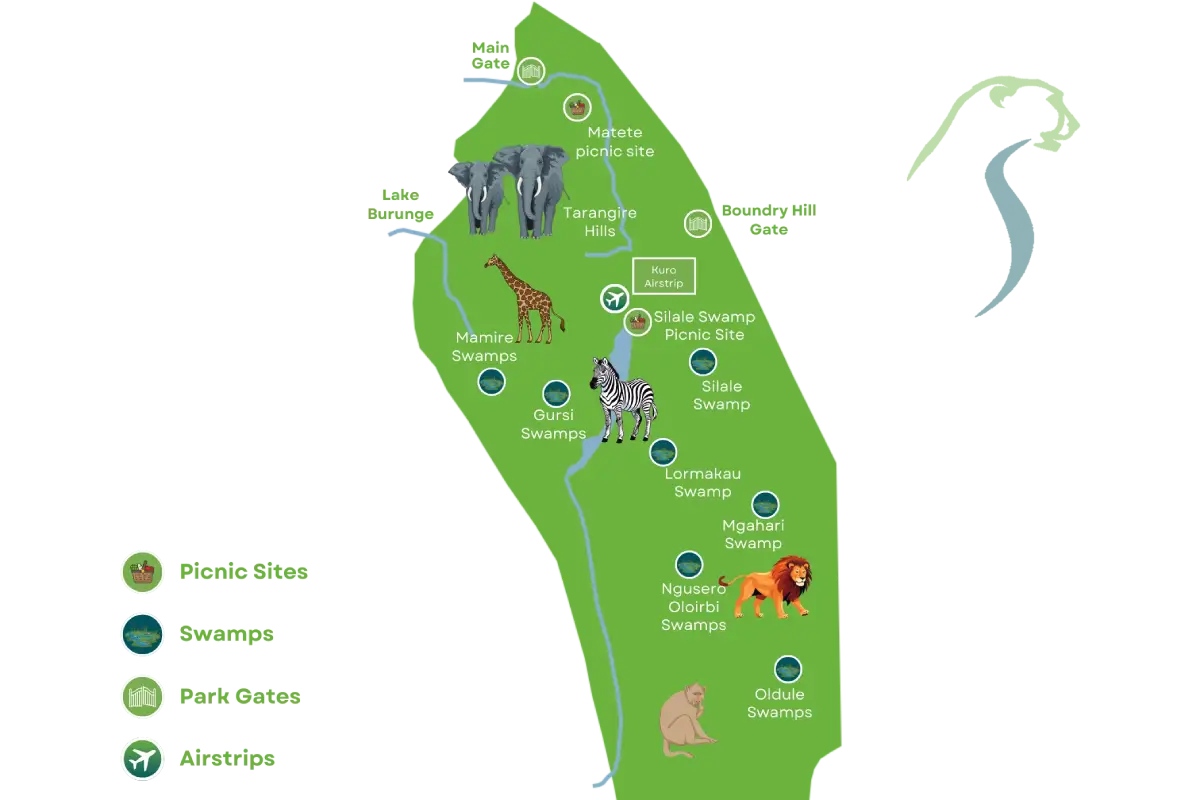
In the northern region of the park is its lifeline – the permanently flowing
Tarangire River. The river flows northwards until the exit, in the northwestern
corner and pours into Lake Burunge. During the dry season, this becomes the main
water source for animals, drawing large herds to its banks and creating perfect
scenes for game viewing on a Tarangire
National Park Safari.
The 2850 sq. km. plains of the park’s landscapes are dominated by Commiphora
bushlands, open grasslands, and acacia woodlands. This is a key habitat for several
different savannah mammal species.
Tarangire's Diverse Landscapes
The surroundings of Tarangire National Park vary greatly as one moves about the large
area. To begin with, there are lots of grasslands dotted with giant baobab trees.
You also have rugged channels, rocky hills, bushlands, and riverine woodlands. Due
to the Tarangire River running across the park, there are several floodplains and
swaps too.
An Interesting Tarangire Fact
Kigelia or sausage trees are also an important habitat of the park. These trees have
thick canopies and large sausage-shaped hanging fruits. They are a favourite resting
place for lions and leopards in the park.
| Name Of The Habitat |
Highlights |
| Red Termite Mounds |
Huge red termite mounds are spread throughout Tarangire
National Park.
Some are twice the height of an adult human.
|
| Baobab Trees |
Known as the “Tree of Life.”
The trunk of an ancient baobab can grow over 100 ft. in
circumference.
One tree here is over 1,000 years old.
|
| Tarangire River and Lake Burunge |
Both are hotspots for migratory bird sightings.
Wildlife gathers here to drink, offering excellent scenes for
Tarangire Safari Holidays.
|
How to Get to Tarangire
Tarangire National Park is part of the renowned Northern Safari
Circuit of Tanzania and most safaris here start from the town of Arusha. The park is
just a couple of hours away from Arusha. Below are the different ways you can access
the park:
Getting to Tarangire by Air
This is the best way to get to Tarangire National Park. You can fly into Kilimanjaro
International Airport (JRO), which is just 46 km. away from the town of Arusha.
- Another option is to fly to Julius Nyerere
International Airport (DAR) in Dar es Salaam.
- And, then book a domestic flight to
Kilimanjaro International Airport (JRO) or Arusha Airport (ARK).
Or you could go a different way and book a charter flight, though it’s a long
process. You’ll first hop on a flight from Arusha then to Serengeti
National Park, and finally to Tarangire.
Getting to Tarangire by Road
From the town of Arusha, it takes around three hours to drive to Tarangire National
Park. This route is popular among visitors because of the great sceneries along the
way plus access to other Tanzania
Safari destinations like the Serengeti and Lake Manyara
National Park.
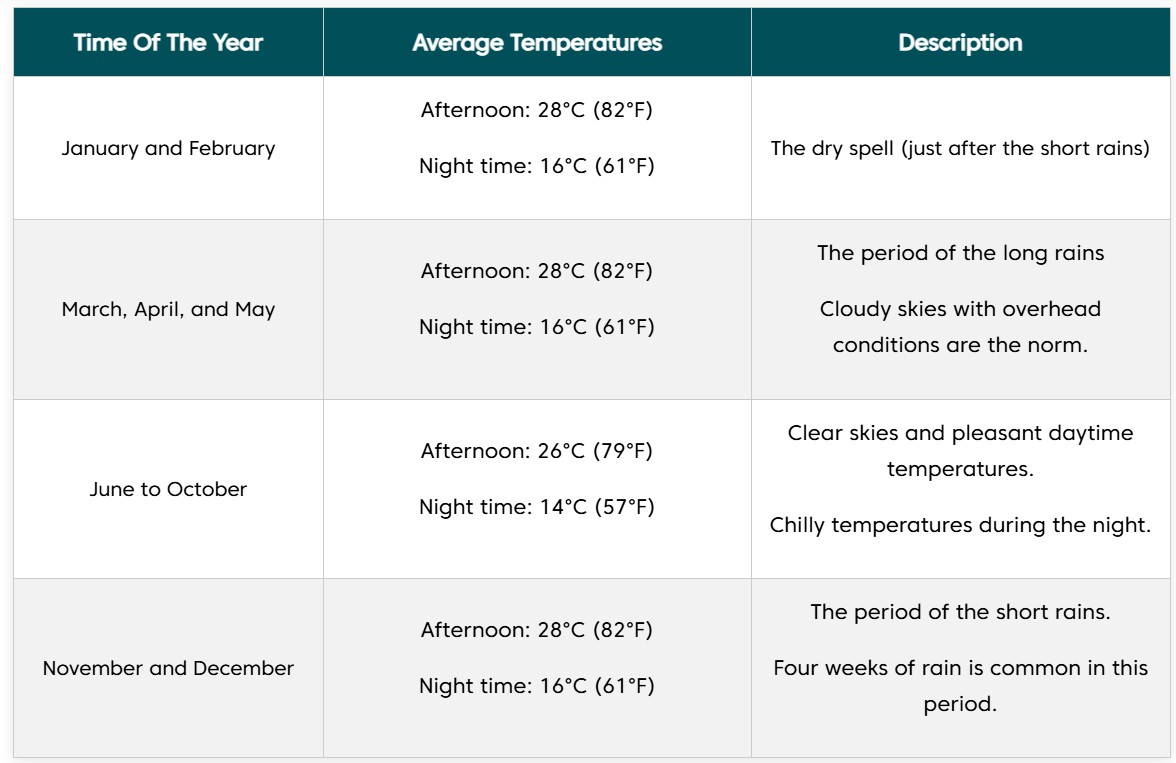
What Is Tarangire’s Climate Like?
The weather in Tarangire National Park is mild and nice all year.
There are two parts to the wet season: short rains from November to December and
longer rains from March to May. January and February are usually drier months, with
only a few rains here and there. It rains most of the time in the afternoon and
rarely all day. The weather is comfortable and not too hot during the day, but it
can get cool in the mornings and nights. Especially for early morning game drives,
it's smart to bring warm clothes.
| Time Of The Year |
Average Temperatures |
Description |
| January and February |
Afternoon: 28°C (82°F)
Night time: 16°C (61°F)
|
The dry spell (just after the short rains) |
| March, April, and May |
Afternoon: 28°C (82°F)
Night time: 16°C (61°F)
|
The period of the long rains
Cloudy skies with overhead conditions are the norm.
|
| June to October |
Afternoon: 26°C (79°F)
Night time: 14°C (57°F)
|
Clear skies and pleasant daytime temperatures.
Chilly temperatures during the night.
|
| November and December |
Afternoon: 28°C (82°F)
Night time: 16°C (61°F)
|
The period of the short rains.
Four weeks of rain is common in this period.
|
Rainfall Period
The wettest month in Tarangire National Park is April and
the driest months are July and August. The following is a monthly breakdown of the
amount of rainfall Tarangire receives:
| Month(S) |
Amount Of Rainfall (In Millimetres) |
| January |
85 mm |
| February |
97 mm |
| March |
130 mm |
| April |
166 mm |
| May |
46 mm |
| June |
5 mm |
| July |
0 mm |
| August |
0 mm |
| September |
1 mm |
| October |
14 mm |
| November |
71 mm |
| December |
99 mm |
Some of our useful Insights : Rainfall in Tarangire happens for
113 days and collects up to 714mm of precipitation. The highest UV index (12) in
the park is in the months from January to April and August to December. And,
June has the lowest UV index (10).
When Is the Best Time to Visit Tarangire?
The Best Time to Visit Tarangire National Park is during
the middle and towards the end of the dry season (from late June to October). These
months have the perfect conditions for game viewing.
During the wet season, much of Tarangire’s wildlife moves to other regions,
making game viewing more challenging. However, this time of year is excellent for
birdwatching, with migratory species adding to the diversity.
When Is The Best Time To Visit Tarangire National Park
Tarangire National Park experiences a verdant season in
January. With over 500 species visible, the lush greenery
and picturesque surroundings provide ideal settings for
birdwatching.
The park comes to life with a kaleidoscope of colours and the
swooping of migrating birds. There will be fewer people and
more peace if you book your Tarangire safari package during
this time of year.
An avian game drive is one of the top January activities in
Tarangire. Those who enjoy nature photography and
birdwatching will have a very fruitful month.
- Average temperature reaches 28°C (82°F), hot and
sunny days.
- Chance of short thunderstorms, mostly dry with lush
green views.
- Fewer visitors make game drives quieter and more
peaceful.
- Excellent time to see birds and nesting wildlife
behavior.
- Landscapes are vibrant; great for photos and light
adventure walks.
Our Overview
A good time to
visit
In February, Tarangire National Park is home to a plethora of
colourful birds and breathtaking landscapes. Thick
vegetation, blossoming trees, and innumerable bird species,
such as steppe eagles and hornbills, are all signs of the
green season, which is still ongoing.
Without the typical throngs of visitors, this is the perfect
time for a tranquil safari drive in the park. Birdwatchers
and those looking to unwind will love the February Tarangire
tour packages.
Even though game viewing isn't at its best, visitors focusing
on nature will have a particular, immersive, and
personalised experience throughout this month.
- Daily temperatures stay around 28°C (82°F), hot
and comfortable.
- Low rainfall, occasional short showers in the afternoon.
- Ideal month to pair with Serengeti’s calving
season tours.
- Wildlife viewing is strong, with increased predator
activity.
- Among the best months to visit Tarangire National Park.
Our Overview
A good time to
visit
Weather in February
Cloud
March marks the tail end of Tarangire’s green season.
The landscape remains lush, and migratory birds are still
plentiful. Although some early rains may begin, it’s
still a good time for birdwatching and enjoying quieter
trails.
Tarangire Safari Packages this month offer scenic photo
opportunities with thick vegetation and vibrant colours.
Game viewing becomes more challenging, but the tranquillity
of the park makes up for it.
For those who prefer fewer crowds and are looking for relaxed
Things to do in Tarangire, March offers a
calm and nature-rich escape.
- Temperatures remain around 28°C (82°F) early in
the month.
- End-of-month sees start of long rains and cloudy skies.
- Vegetation thickens, reducing visibility but enhancing
landscape beauty.
- Great for dramatic skies and lush photo opportunities.
- Fewer tourists; quieter, introspective safari
atmosphere.
Our Overview
A good time to
visit
Tarangire National Park gets a lot of rain in April, which
makes the park a green paradise. It's harder to see animals
because of the thick vegetation, but birdwatching is great
and photography is very satisfying.
Tarangire Tour Packages are cheaper and more peaceful now
that it's not as busy with tourists. There won't be many
people around, so this is a great time for travellers who
want to be alone.
Some of the most interesting things to do in Tarangire in
April are to go on walks to watch birds and take drives
through flower-filled scenery. Just be ready for rain in the
afternoon and muddy trails.
- Temperatures steady at 28°C (82°F), with
increased humidity.
- Peak of long rains—expect frequent showers and
muddy tracks.
- Landscape turns emerald green, perfect for
photographers.
- Wildlife harder to spot but birding remains rewarding.
- Lodge rates are lower; great for budget Tarangire
safaris.
Our Overview
A good time to
visit
In May, Tarangire National Park will still have wet
weather. Birds are active, and the scenery feels
untouched because of the lush plants and cloudy skies.
Tarangire Safari Packages aren't as busy this month, making
it a great time for travellers on a budget who want to see
fewer people.
Because of the thick growth, seeing wildlife is less common,
but the park's beauty can't be beat.
In Tarangire in May, you can go on quiet walks through
nature, watch birds, and take pictures of the area's
dramatic scenery. Some people might not like this
strange month, but real nature lovers will.
- Temperature cools to 25°C (77°F), comfortable
and slightly crisp.
- Rain still falls, but skies begin to clear up.
- Fewer crowds, quiet safari scenes, and moody green
backdrops.
- Wildebeest rut starts in Serengeti—great for
multi-park combos.
- Not peak season, but very peaceful for repeat travelers.
Our Overview
A good time to
visit
June signals the beginning of the dry season and the Best
Time to visit Tanzania. The vegetation starts thinning,
making wildlife sightings much easier, especially near water
sources.
This is the start of peak season for Tanzania Safari Tours to
Tarangire National Park, with tree-climbing lions,
elephants, and wildebeest frequenting the Tarangire River.
Insects are minimal, and the cool temperatures make it
perfect for full-day game drives. Tarangire Tour Packages in
June focus on classic safari experiences, and Things to do
in Tarangire include walking safaris and predator spotting.
- Temperatures are mild at 24°C (75°F), ideal for
safaris.
- Rainfall drops; dry season begins with clearer skies.
- Start of high season with excellent wildlife viewing.
- River zones attract elephants, giraffes, and lions.
- Pack layers—cool mornings warm quickly by
mid-morning.
Our Overview
A good time to
visit
July is the best month to see wildlife in Tarangire National
Park. Now that the dry season is over, animals gather around
the river, making for great viewing.
This is one of the best times to visit Tarangire to see
lions, elephants, and even leopards, which are hard to spot.
River valley walks and drives at dusk are common parts of
Tarangire safari packages.
This is a great time for family safaris and first-time
safaris because there aren't many mosquitoes and the weather
is warm.
- Cool and dry with temperatures around 24°C
(75°F).
- No rainfall, skies are bright and game viewing superb.
- Wildlife returns in large numbers near the Tarangire
River.
- River crossings begin in Serengeti—combine both
parks in July.
- Book early—this is peak Tarangire safari season.
Our Overview
A good time to
visit
August continues the dry season magic in Tarangire National
Park. The landscape is golden, and the river is a lifeline
for wildlife, making sightings incredibly consistent.
You’re likely to see large elephant herds, big cats,
and various antelope species. Tarangire Tour Packages are
popular this month, especially among photographers and
safari lovers.
Game viewing is exceptional, and various activities you can
do in Tarangire include sunrise drives and night game
excursions. It’s also one of the most comfortable
months weather-wise, with clear skies and fewer insects.
- Average daytime highs around 25°C (77°F),
comfortable all day.
- Rain is unlikely; clear skies dominate the landscape.
- Mini wildebeest migration and elephants flood the park.
- High predator activity as herds become easy prey.
- Peak season—expect more travellers and fully
booked lodges.
Our Overview
A good time to
visit
As the dry season comes to an end in September, it's a great
time to see wildlife. Because there isn't a lot of water,
animals gather in places that can be seen, like near the
Tarangire River.
You can watch the tree-climbing lions, Africa’s Big
Five, and beautiful sunsets on Tarangire Safari
Tours. It's still the busiest time of year, but
not as busy as July or August.
It is one of the Best Times to visit
Tarangire for photographers and people who like
to watch wildlife. All-day drives, photography tours, and
organised walking safaris are some of the most popular
things to do in Tarangire this month.
- Warm and dry with highs near 27°C (80°F).
- Very low rainfall; conditions ideal for walking safaris.
- See rare species like oryx and gerenuk near water.
- Ostrich nesting behaviors visible—great for bird
enthusiasts.
- High season continues; book activities in advance.
Our Overview
A good time to
visit
Weather in September
Cloud
October is the last month that is dry before the green season
starts again. You can still see a lot of wildlife because
animals are still near water. Before it rains, now is a
great time to see big groups of animals and animals that are
hunting.
Before high prices go down, Tarangire Tour Packages are a
great deal. In Tarangire, you can go on early morning game
drives, have lunch in the bush, and watch birds.
October is still a strong time for the Best Time to Visit
Tarangire National Park. There are fewer bugs, the weather
is nice, and you can see a lot of amazing things.
- Temperatures climb to 28°C (82°F), hot and
dusty.
- No rain yet, but distant storms begin appearing.
- Elephants gather in herds; big cats thrive.
- Dust devils sweep across the golden plains.
- Final dry month before the green season returns.
Our Overview
A good time to
visit
November is the start of Tarangire's green season, when the
first rains renew the land. The browns that were dry turn
bright green, flowers grow, and trees come back to life.
Also, many animals are starting to give birth.
For nature lovers, Tarangire Safari Packages in November are
the best time to go because migratory birds are coming back.
In Tarangire, you can watch birds, look at newly grown
plants, and go on quieter safaris. It does rain, but it only
rains for short periods, which makes trips flexible.
- Hot month with 29°C (84°F) highs and afternoon
storms.
- Short rains begin; dramatic skies and greener terrain
emerge.
- River floods renew life across the park’s valleys.
- Great for early greenery and emerging wildflowers.
- Shoulder season—fewer crowds, lively bird and
wildlife scenes.
Our Overview
A good time to
visit
Weather in November
Cloud
Tarangire National Park is full of lush scenery and holiday
spirit in December. The scenery is full of colour, and
people are still seeing a lot of wildlife, especially young
animals and colourful birds.
Now is the time when Tanzania Tour Packages
are popular with families and couples who want to get away
for the holidays. The green season has beautiful views and
fewer people.
This month, birding safaris, bush dinners with lots of food,
and wildlife walks are some of the best activities you can
enjoy in Tarangire. It's a peaceful and beautiful end to the
year.
- Warm and stormy with temperatures around 29°C
(84°F).
- Afternoon thunderstorms rarely affect morning game
drives.
- Migratory birds arrive, improving birdwatching
immensely.
- Greenery returns and large herds spread across the park.
- High season resumes with lively holiday safaris.
Our Overview
A good time to
visit
Weather in December
Cloud
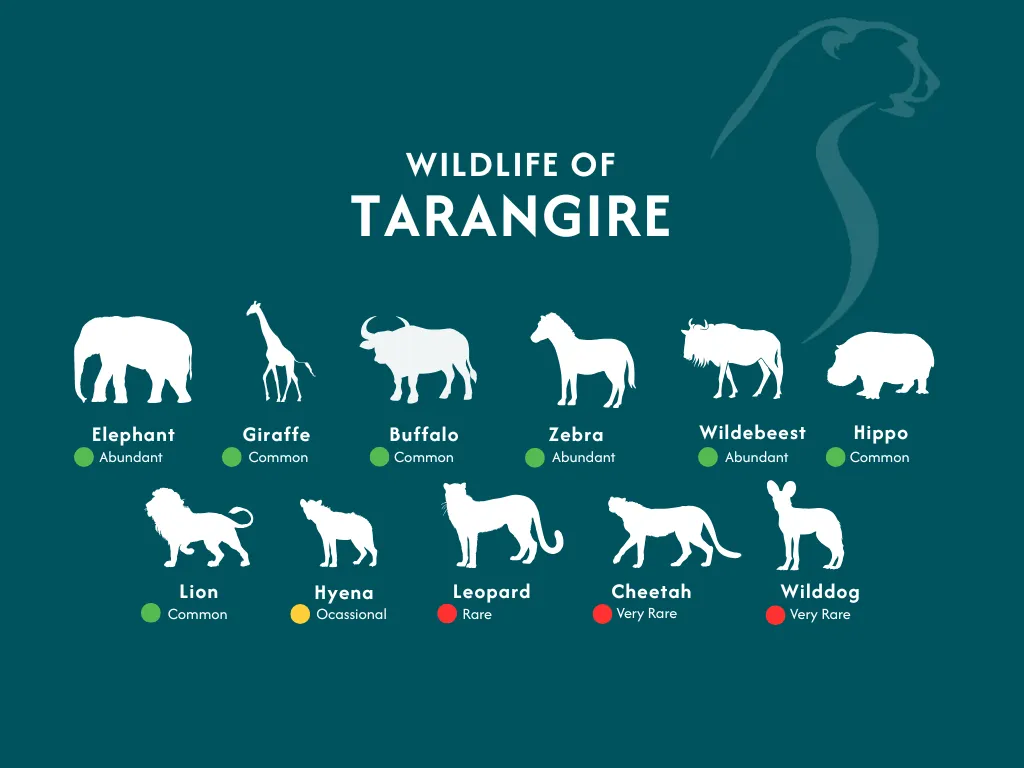
What Wildlife Lives in Tarangire?
If you’re a wildlife enthusiast, then you’d be delighted to learn that the
biodiversity of Tarangire’s wildlife is on another level. During the dry season, the
river from which the park gets its name is a magnet for different animals.
The following are some animals that you’ll have no trouble seeing inside the premises
of Tarangire National Park:
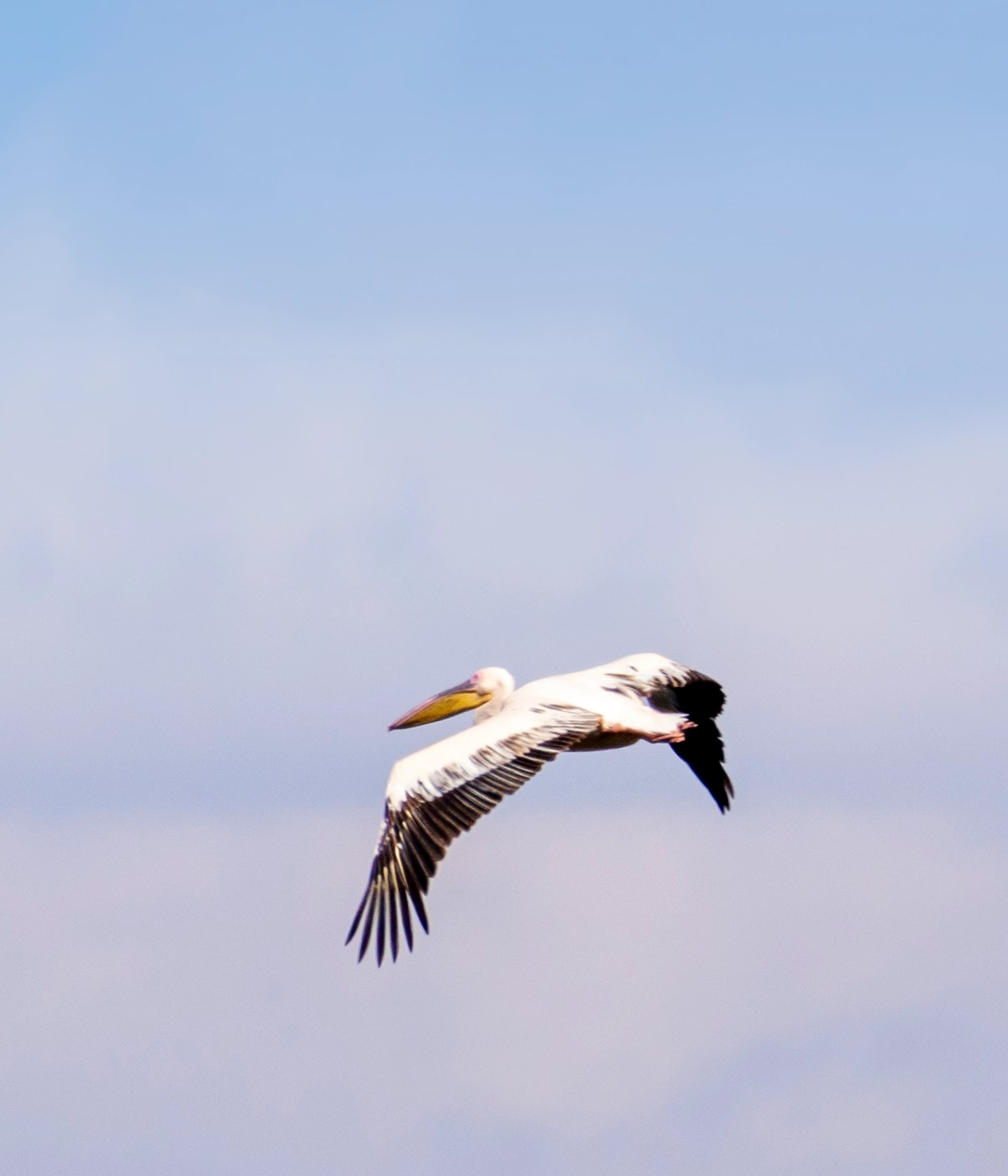
Birdlife in Tarangire National Park
Tarangire is a birdwatching hotspot of Tanzania
Safaris. The park contains more than 550 different species of
birds. Its population of birds are some of the most diverse in the African
continent.
Birds like hornbills and flamingos are drawn to the park for the numerous swamps and
lakes. While other species enjoy the plentiful acacia trees because the trees’
long thorns offer a great foundation for building nests.
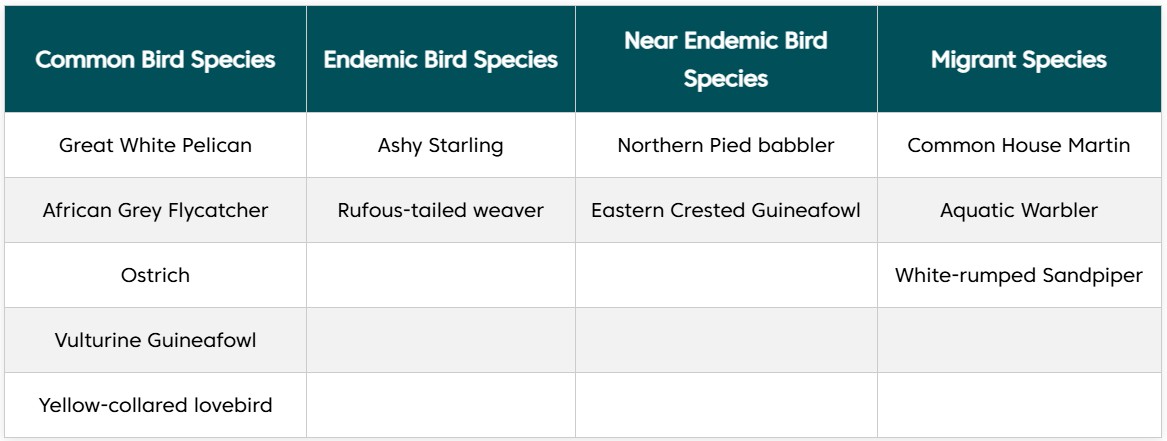
Here are some of the different types of bird species you can spot on a Tarangire
National Park Safari:
| Common Bird Species |
Endemic Bird Species |
Near Endemic Bird Species |
Migrant Species |
| Great White Pelican |
Ashy Starling |
Northern Pied babbler |
Common House Martin |
| African Grey Flycatcher |
Rufous-tailed weaver |
Eastern Crested Guineafowl |
Aquatic Warbler |
| Ostrich |
|
|
White-rumped Sandpiper |
| Vulturine Guineafowl |
|
|
|
| Yellow-collared lovebird |
|
|
|
Scenic’s Point of view :Birdlife in Tarangire is plentiful
throughout the course of the year. But, birdwatching safaris are at their prime
when North African and European migratory birds are present, which is from
November to April.
Why Visit Tarangire National Park?
Want a bunch of reasons why Tarangire National Park has a special spot in the heart
of several visitors on Safaris in
Tanzania? Then, we’re here to clear things up, here are
some reasons why you should consider visiting Tarangire:
- Extraordinary game viewing opportunities
(particularly in the dry season).
- Enormous herds of elephants go upwards of 300
in number.
- Frequent sightings of lions (with the
possibility of seeing them on top of acacia trees).
- The perfect birdwatching destination with more
than 550 bird species.
- Gorgeous sceneries on the backdrop of rich
habitats.
- One of the few places where you can see the
giant, ancient trees of life – Baobabs.
Top Attractions in Tarangire
Now that you’re familiar with the reasons to visit Tarangire National Park, let’s
take a closer look at its important attractions. The following section outlines each
highlight in more detail.
Silale Swamp
The varied ecosystem that co-exists in Tarangire National Park supports a wide range
of vegetation, bird, and wildlife making it all the more alluring for the visitors.
- One such distinct feature of Tarangire is the
distant Silale swamp.
- During the wet season, the swamp tends to soak
up water like a big sponge and slowly releases it during the dry season acting
as a water source.
- This wetland is visited by huge herds of
herbivores and thus attracts predators like lions, leopards, and wild dogs.
The swamp is even home to a good number of cape buffaloes and elephants. Some of the
bird species found here include Donaldson-nightjar, Smith’s vulturine guinea, etc.
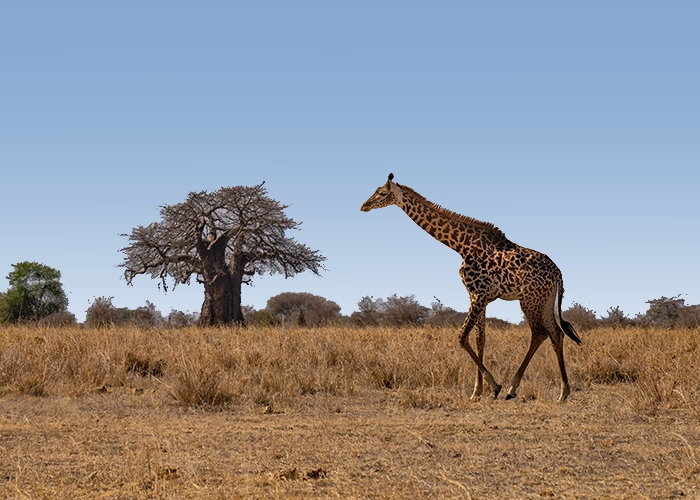
The Giant Baobab Trees
Another distinct feature of Tarangire is the huge number of baobab trees found on its
land.
- These trees are succulents that are capable of
holding a large amount of water in their trunks during the wet season.
- The high water content allows them to produce
nutrient-rich fruit during the dry season.
- Which is like a saviour for birds and animals
flourishing in the park when everything else goes dry and barren.
Thus, justifying the name “The tree of Life”. These trees have a vast life expectancy
of nearly 600 years and their trunks are huge that can retain up to 300 litres of
water. The seeds of these trees are nutritious and are a constant source of food for
the various animals inhabiting the park.
Wildlife Migration
A good number of migratory movements characterize Tarangire National Park. The
seasonal nature of the park facilitates wildlife migration within its ecosystem.
- During the dry season, the whole of Tarangire
dries out.
- Large herds of herbivores can be seen making
their move toward the limited water sources available within the park.
- The Tarangire River continues to be a lifeline
for its inmates during the dry spell. Various animals do migrate into the park
in search of water.
It is quite common to see herds of elephants, wildebeests, gazelles, zebras, and
hartebeests as well as predators like lions, leopards, wild dogs, etc. invade the
park in great numbers. Mark this park into your Tanzania
Safari Packages and we bet you won’t regret it!
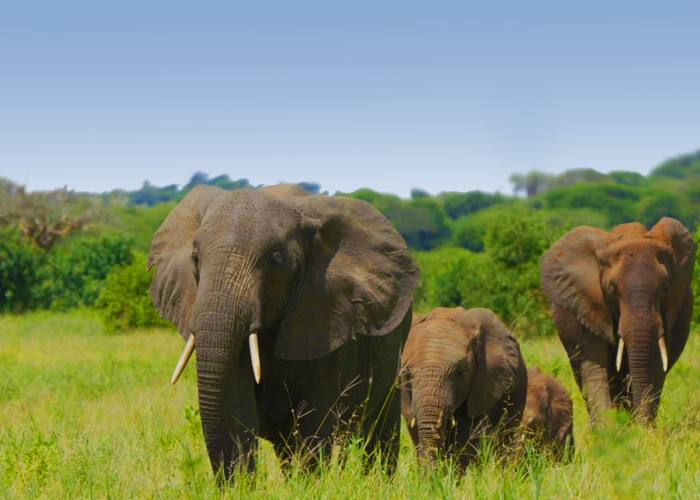
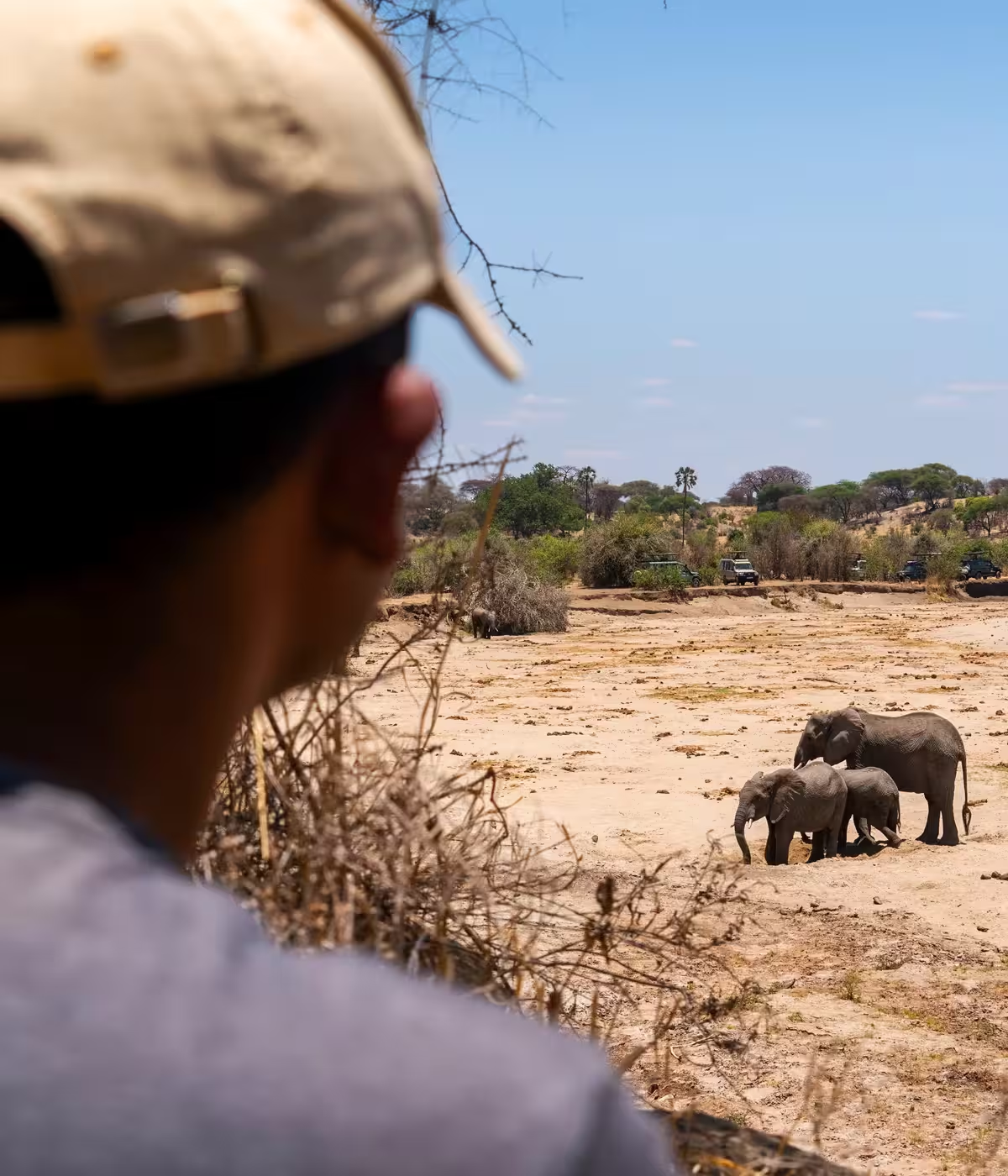
Elephant Population
Tarangire National Park has some of the highest-density of elephant populations as
compared to anywhere in Tanzania.
As the dry season approaches in the month of June through October, large herds of
nearly 300 elephants can be seen digging the dry river beds in search of underground
streams of water. It is quite obvious to spot elephants during
your Safari to Tarangire National Park due to their
presence throughout the park in large numbers.
Poacher’s Hide
There is this huge old baobab tree located a few hundred meters west of the main
north-south track through the Tarangire National Park with a concealed entrance on
one side – leading into a hollow chamber inside its bark.
This served as a hiding place for poachers until the mid-90s. The poachers used this
as a hideout from the animals and patrolling rangers. Though now these are inhabited
by the occasional bees or animals. In the present day, you can visit and see those
epic hideouts on your Tarangire
National Park Safari
Lemiyon Triangle
Lemiyon Triangle is found in the northernmost part of the park. It is bordered by the
Burunge circuit on the west, Lake Burunge, and the Tarangire River on the east of
the road.
- The area forms a triangular-shaped zone with
huge baobab trees along both sides of the road and also includes different types
of acacia trees.
- The Mahogany trees and the toothbrush bushes
also flood the region.
- Nature seems surreal with the presence of a
variety of bird species both prey and predator birds.
The park offers good raptor viewing. Some of the raptors seen here include; the tawny
eagle, the martial eagle, the long-crested eagle as well as the fish eagle. The prey
birds that are seen in this area are the bateleur eagle. Both the zebras and
wildebeests can be seen grazing over this pristine land.
Tarangire River
The great Tarangire River that flows through the park serves as the lifeline for the
bird and wildlife of Tarangire National Park.
- During the dry season which prevails from July
through October, the park attracts many animals that roam far-off places.
- The reason is the water supply of the
Tarangire River and seasonal swamps which retain a good amount of water to
support life forms.
- Zebras, wildebeests, impalas, gazelles,
giraffes, buffalos, hartebeests, and herds of elephants come to this river to
cool off.
As a result, predators like lions, leopards and wild dogs, etc. are also drawn toward
the riverfront. Many birds, both local and migratory, also flock to this wonderful
water source to quench their thirst.
Matete Woodlands
The northwest region of Tarangire is home to Matete Woodlands and the Matete Bridge
which is also called Engelhard Bridge named after the patron whose family helped so
much with the preservation of the park.
- The Matete woodland is a unique land
consisting of tall elephant grass and acacia woodlands.
- A good number of baobab trees are also found
towering over the vast flora and fauna found in the region.
- These woodlands provide habitat for many types
of animals and birds find an ideal resting space on them.
- Vervet monkeys and baboons are also common in
this area and Lions are the major predator inhabiting the woodland.
Kitibong Hill
The Kitibong region of the park surrounds Kitibong Hill in the Tarangire National
Park. The landscape here is enticing and consists of acacia parkland in the eastern
territory and Dalbergia woodland in the western area.
Best Things to Do in Tarangire
Want to know what makes Tarangire tick with the most popular Tanzania
Safari destinations and tours? Then, nothing more can convince you
than the variety of activities that are on offer in the park, we know you
can’t wait to find out what these are, so here’s a comprehensive list:
Spectacular game viewing
Visualize yourself on Tanzania
Safari Tours surrounded by a wide expanse of habitats
including ancient baobabs, acacia and sausage trees. All on the backdrop of large
herds of elephants marching forward or just relaxing by the rivers and lakes.
Don’t you want to experience this too?
We assume that you certainly want to experience exactly this. Thus, simply choose
from our range of Tanzania
Safari Packages that include this marvellous destination
and you’ll be all set.
Birdwatching
Tarangire National Park isn’t just overflowing with an abundance of birds. It
is also home to some of the most diverse birdlife in Tanzania. With this much avian
life, Tarangire National Park Safaris are guaranteed to
turn even the most uninterested into full-fledged birding enthusiasts.
Cultural Tours
Who would’ve thought that enjoyment on your Tanzania
Safari Tour goes hand-in-hand with creating an impact?
Well, it’s us for sure! We at African Scenic
Safaris put a special emphasis on conducting sustainable
and responsible tours as well as fun.
And, you can also experience these impactful experiences by immersing yourself in the
native cultures on cultural excursions to the villages of the local communities.
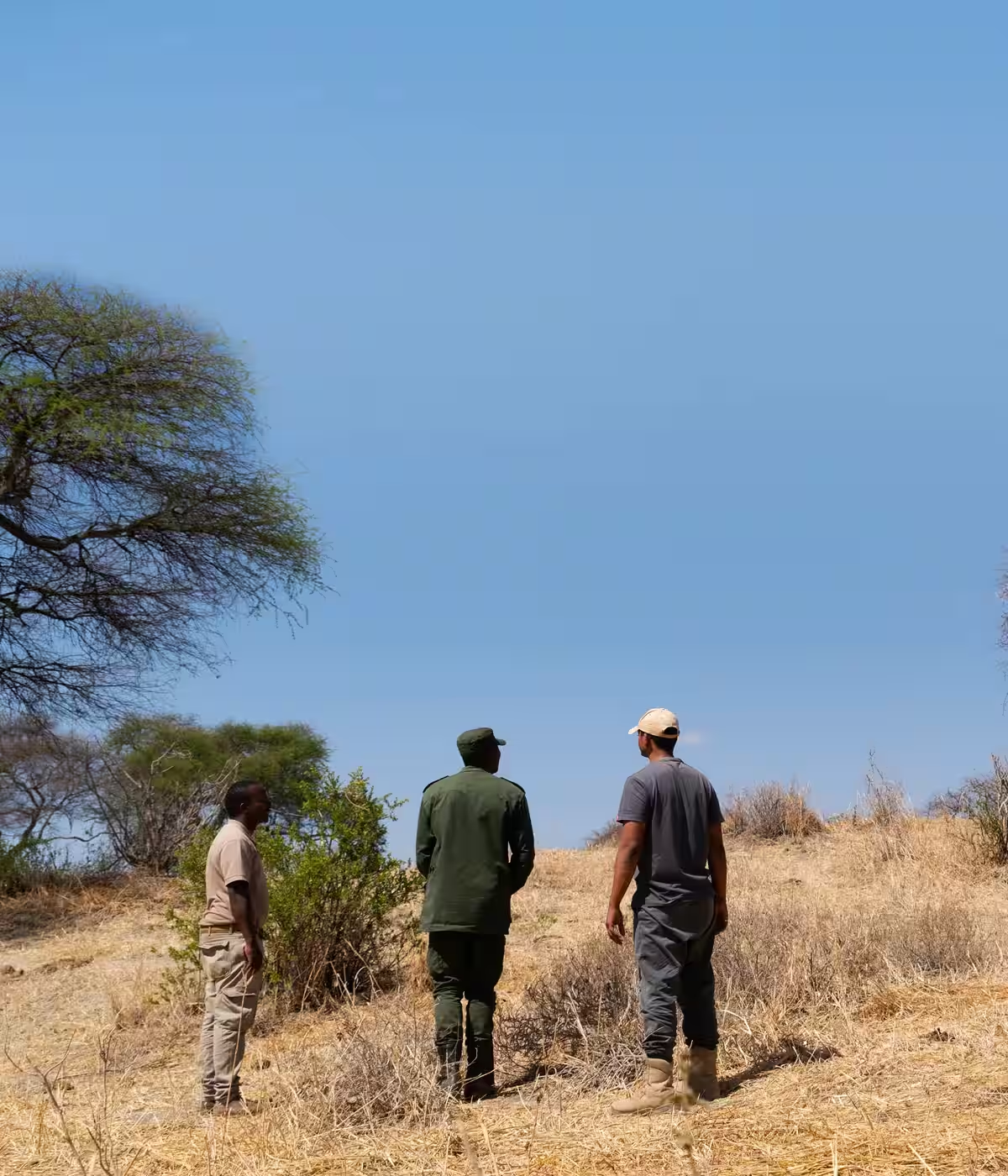
Nature walks
Set off on a guided nature walk in Tarangire National Park toe-to-toe along with one
of the park rangers, and experience the beauty of the park on foot. This allows for
an even more authentic safari adventure as you’ll be able to get up close with the
wildlife and learn fascinating pieces of informational tidbits from your guide.
Recommended Tarangire Safari Tours
We know you can’t contain your excitement and are probably thinking about
experiencing the wonders of Tarangire National Park right away. So, we’ve
decided to assist you further in the process, here are a couple of our
recommended Tanzania
Safari Tours that’ll help you out:
| Name Of The Package(S) |
Central Highlights |
| 8
Days Tanzania Classic Safari |
Set off on a classic adventure of Tarangire on the second day. See
animals along the shores of the Tarangire River. Game drives across
the rich habitats where you’ll see the giant baobab trees in person.
|
| 10 Days
Tanzania Closer To Nature |
Nature isn’t just in the name, it’s in the experience too! Spend 2
days finding out what wonders Tarangire National Park has in store
for you. |
Note : Want some more of our personalized Tanzania Safari Tours
itineraries? We have you there as well! Simply visit this link and discover what
other things Tanzania offers .
Get Connected With The Best Tanzania Safari Operator
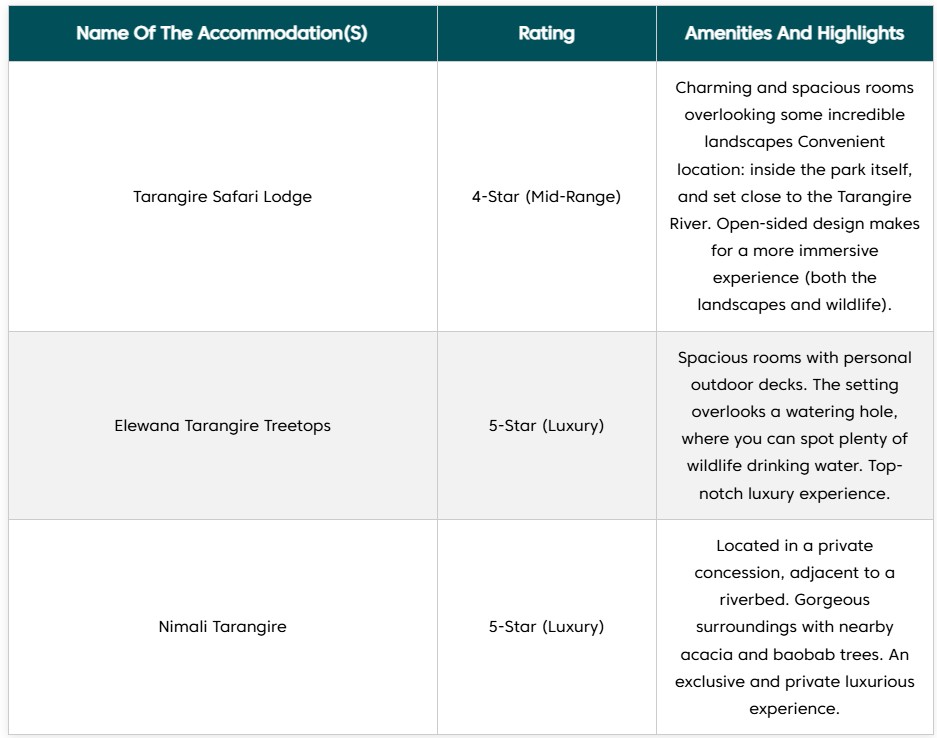
A long day of exceptional wildlife viewing just demands a blissful night of sleep and
Tarangire National Park doesn’t fall short in that regard. We want to assist you in
finding the perfect accommodation, so here are some hand-picked recommendations:
Where to Stay in Tarangire
| Name Of The Accommodation(S) |
Rating |
Amenities And Highlights |
| Tarangire Safari Lodge |
4-Star (Mid-Range) |
Charming and spacious rooms overlooking some incredible landscapes
Convenient location: inside the park itself, and set close to the
Tarangire River. Open-sided design makes for a more immersive
experience (both the landscapes and wildlife). |
| Elewana Tarangire Treetops |
5-Star (Luxury) |
Spacious rooms with personal outdoor decks. The setting overlooks a
watering hole, where you can spot plenty of wildlife drinking water.
Top-notch luxury experience. |
| Nimali Tarangire |
5-Star (Luxury) |
Located in a private concession, adjacent to a riverbed. Gorgeous
surroundings with nearby acacia and baobab trees. An exclusive and
private luxurious experience. |
So, gear up to enjoy refreshing sundowners from your outdoor deck while overlooking a
watering hole where a family of elephants are lazing about, drinking water or
getting their cleanliness on, while gentle breezes sway the giant baobabs! This is
the charm and essence of Tarangire National Park
Accommodations.
Tarangire’s sweeping baobab-studded landscapes, abundant wildlife, and peaceful
atmosphere offer an exceptional safari experience—rich in elephants, rare birds, and
authentic bush walks, far from Tanzania’s more crowded safari routes.
Tarangire Entry Fees Explained
The Tanzania National Parks Authority (TANAPA) is responsible for managing the parks
and promoting conservation activities in all Tanzania
National Parks. They formulate entry fees and other guidelines
to be followed by the visitors visiting the parks in Tanzania.
| Entrance fees |
In High season |
In Low Season |
| Residents |
$29 |
$26 |
| Non- Residents |
$59 |
$53 |
| Children (5 to 15 age)
Residents
|
$8 |
Same price as the high season |
| Children (5 to 15 age)
Residents
|
$17 |
Same price as the high season |
Tarangire National Park PDF
Uncover what makes Tarangire special with our free PDF. Learn about giant
baobabs, elephant herds and seasonal wildlife in this peaceful Tanzania
safari park.
What Is Tarangire Famous For?
There are a bunch of reasons why Tarangire National Park should be on
everyone’s Tanzania
Safari Packages. The following are the distinguishing features
that set Tarangire apart from others:
- Has one of the largest concentrations of
elephants in the whole African continent. Old tuskers are also present, these
are elephants with hugely impressive tusks.
- One of the few Tanzania
National Parks where walking safaris are permitted.
- Extensive biodiversity and high population of
different wildlife species (especially during the dry season – from June to
October).
- Even though it’s not as massive as the Great
Wildebeest Migration in the Serengeti, Tarangire still sets the stage for a dry
season migration, where many animals migrate to the Tarangire River.
- The park is also known for its huge termite
mounds that are dotted throughout the landscapes. Mounds that have been
abandoned are home to dwarf mongooses.
Experience the Land of Elephants
The characteristic skyline of Tarangire, framed by the giant branches of baobab trees
is the background of superb and exclusive wildlife viewing. By and large, this is
the core of Tarangire
National Park Safaris. And that’s without touching on the
fact that walking safaris are the picture-perfect activity that Tarangire offers
safari lovers.
Thus, see the awe-inducing wonders of Tarangire National Park yourself by opting for
one of our set of tailored Tanzania
Safari Packages.
Go on Safari with Us
Discover Tanzania’s untamed beauty with experts who bring every moment to life. From tracking lions to quiet sunset views, we make each day in the wild truly count.
Tarangire National Park FAQ'S
Tarangire National Park is located in northern Tanzania, in the
Manyara Region. The nearest city to the park is Arusha and the
park’s coordinates are - 4.0057° S, 35.9788° E
Tarangire National Park is renowned the world over for its huge
population of elephants. In addition, the park’s landscapes
consist of giant, scenic baobab trees.
The dry season (from June to October) is considered the Best Time
to Visit Tarangire National Park. This is because most animals
head towards the Tarangire River to keep themselves hydrated and
in search of greener pastures, ultimately providing visitors
with great wildlife viewing opportunities.
Certainly, yes! Tarangire National Park is a great safari
destination that offers a great deal of wildlife viewing
possibilities. And, the southern section of the park is great
for a more private and secluded Tanzania Safari experience.
Tarangire National Park gets its name from the long-serving
permanent source of water – the Tarangire River. The river is
one of the primary reasons why the park has a hugely varied
ecosystem.
There are around 2,500 elephants inside the premises of Tarangire
National Park.
The total population of lions in Tarangire National Park is
believed to be around 250.
The total area of Tarangire National Park is 2,850 sq. km. (1,100
sq. miles). The park is the sixth biggest of all
Tanzania National Parks.
The trees of Tarangire National Park include giant baobabs,
sausage trees, acacias (thorn trees), candelabra trees, fan
palms, etc.
The Tarangire Lion Project focuses on reducing the human-lion
conflict while collaborating with local communities and
gathering data about the seasonal movement patterns of the lions
of Tarangire National Park
Simbo Natai, founder of African Scenic Safaris, crafts sustainable, meaningful Tanzanian journeys rooted in his deep local knowledge and passion.
Director













 African Scenic Safaris #1 on TripAdvisor