What Is Ngorongoro Conservation Area Popular For ?
Often called Africa’s Eden, the Ngorongoro Conservation Area
in northern Tanzania spans 8,300 square kilometres of protected wilderness where
wildlife, nature, and people coexist in rare harmony.
A designated UNESCO World Heritage Site, the area is named after the
spectacular Ngorongoro Crater, a vast volcanic caldera that
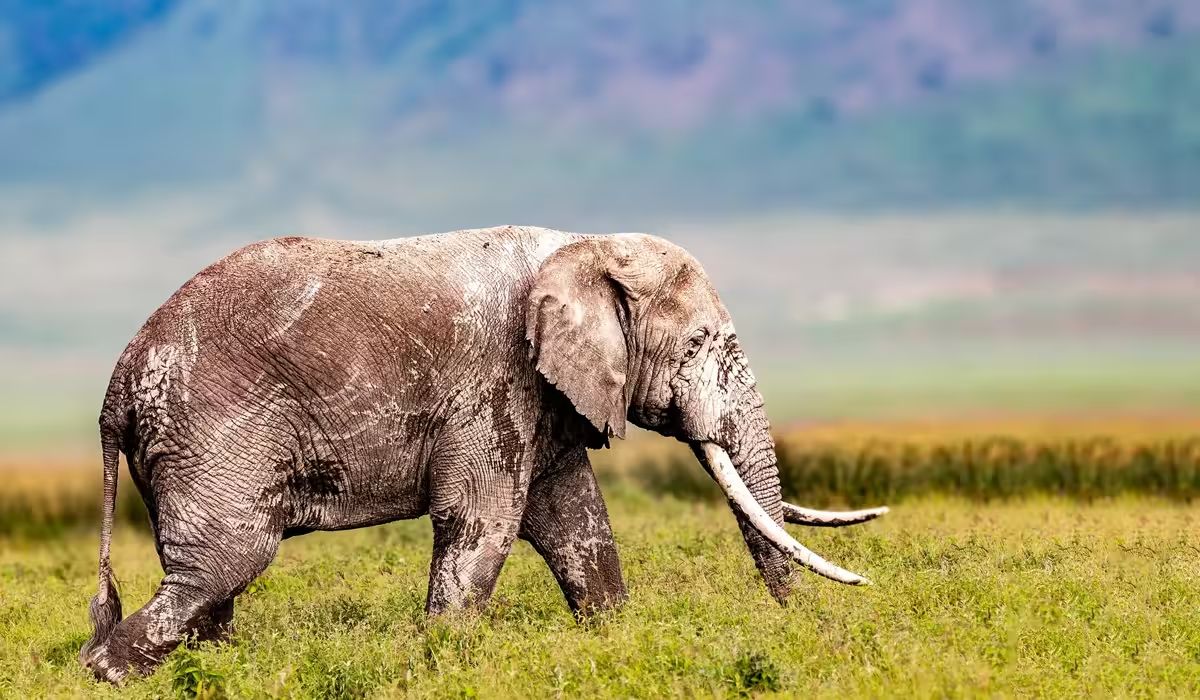
shelters around 25,000 large animals, including lions, elephants, and giraffes.
This multi-use landscape supports both conservation and sustainable human
development, making it one of the few places on Earth where such balance is
achieved. Visitors can hike to the rim of Olmoti Crater for sweeping views or
explore the flamingo-filled soda lake at Empakaai.
A safari in Tanzania isn’t complete without exploring this
natural wonder—one of Africa’s Seven Natural Wonders and a true
highlight of Safari
Tours in Tanzania.
Quick Facts on Ngorongoro Conservation Area
- Location :
Ngorongoro District, Arusha Region, Tanzania
- Area : 8,292
sq. km (3,202 sq. km)
- Year of Establishment
: 1959
- Governing Body
: Ngorongoro Conservation Area Authority (NCAA)
- Total No. of Wildlife
: 25,000 (approx.)
- Total No. of visitors
in a year : 500,000 (approx.)
History of Ngorongoro
Around 2.5 million years ago, powerful volcanic eruptions in the Ngorongoro
Conservation Area led to the formation of massive calderas. One volcano
erupted with such force that it collapsed, creating what is now the world’s
largest intact caldera—the Ngorongoro Crater.
The area is also rich in human history. Fossils discovered in Olduvai Gorge show that
early human ancestors lived here as far back as 3 million years ago. Thousands of
years later, the Datooga and Mbulu communities settled in the region, but they were
eventually displaced by the Maasai in the 18th century. Today, this land remains a
vital link between nature, wildlife, and human heritage.
- In 1892, the first Europeans set foot inside
the rim of the area and started setting up farming grounds. Hunting became
prevalent in the area around this time.
- But, in 1928, hunting was prohibited across
all areas of Tanzania.
- In 1948, an area inside the premises was
created – this was Serengeti
National Park. Some issues however arose for the tribal
communities living on this land.
- So, in 1959, the Serengeti was separated, and
another area of land was created specifically for the tribal communities. This
is now known as the Ngorongoro Conservation Area.
The name was given by the Maasai pastoralists and it resembles the sound a cowbell
makes. Ngorongoro means ‘big hole’ in English. And it’s rather
accurate given it is home to the Ngorongoro Crater.
In the modern era, the land of the NCA is multi-use. It is also the only conservation
area across Tanzania that helps in wildlife conservation as well as allowing human
habitation.
If the volcanic eruption hadn’t happened then, the Crater could have been as
tall as Mount Kilimanjaro. Can you imagine what Safaris in
Tanzania would have looked like then? But, no worries
because what was once upon a time an active volcano is now home to thousands of
wildlife and many tribal communities that coexist in peace.
Difference Between Ngorongoro Crater & Ngorongoro Conservation Area
| Ngorongoro Crater |
Ngorongoro Conservation Area |
| The Ngorongoro Crater is a part of the larger Ngorongoro
Conservation Area. |
The Ngorongoro Conservation Area is the larger part of the
Serengeti-Ngorongoro Biosphere Reserve. |
| This crater was formed due to a volcanic eruption and collapsed on
itself 2 million years ago. |
This crater was formed due to a volcanic eruption and collapsed on
itself 2 million years ago.
|
|
The floor area of this crater is 260 sq. km and 2000 meters deep.
|
The area is 8,292 sq. km. And was declared a UNESCO World Heritage
Site in 1979.
|
|
The Crater is the largest unfilled, inactive, and intact volcanic
caldera on the planet.
|
The NCA is also known as the eighth wonder of the world.
|
|
It was formed when a large active volcano exploded and collapsed
onto itself some two to three million years ago.
|
The area receives more than half a million visitors annually and is
home to about 40,000 people, most of whom are part of the Maasai
communities.
|
Getting Into the Ngorongoro Conservation Area
The Ngorongoro Conservation Area is easily accessible and an
important highlight of many Tanzania
Safari Packages. You’ll have a couple of options to
choose from—by road or by air.
Ngorongoro Conservation area
By Road
The NCA is about 180 km from the town of Arusha. There’s a paved road
connecting the NCA and Arusha which enters the area through the Loduare Gate. The
gate is about 30 km. from the town of Karatu.
Another option which you’ll also have is driving from Serengeti
National Park. There’s a good gravel road through the Naabi Hill
Gate, a common route for those combining Serengeti and Ngorongoro
Safari Tour Packages.
A self-drive is also possible. Though, it can be a bit bothersome. But, if you
don’t mind the long hours, you can take the scenic route of the road less
travelled.
By Air
Flying into the Ngorongoro Conservation Area is by far the most convenient option.
You can get to NCA by charter plane. An airstrip is situated on the rim of the
crater close to the headquarters.
Entrance Gates
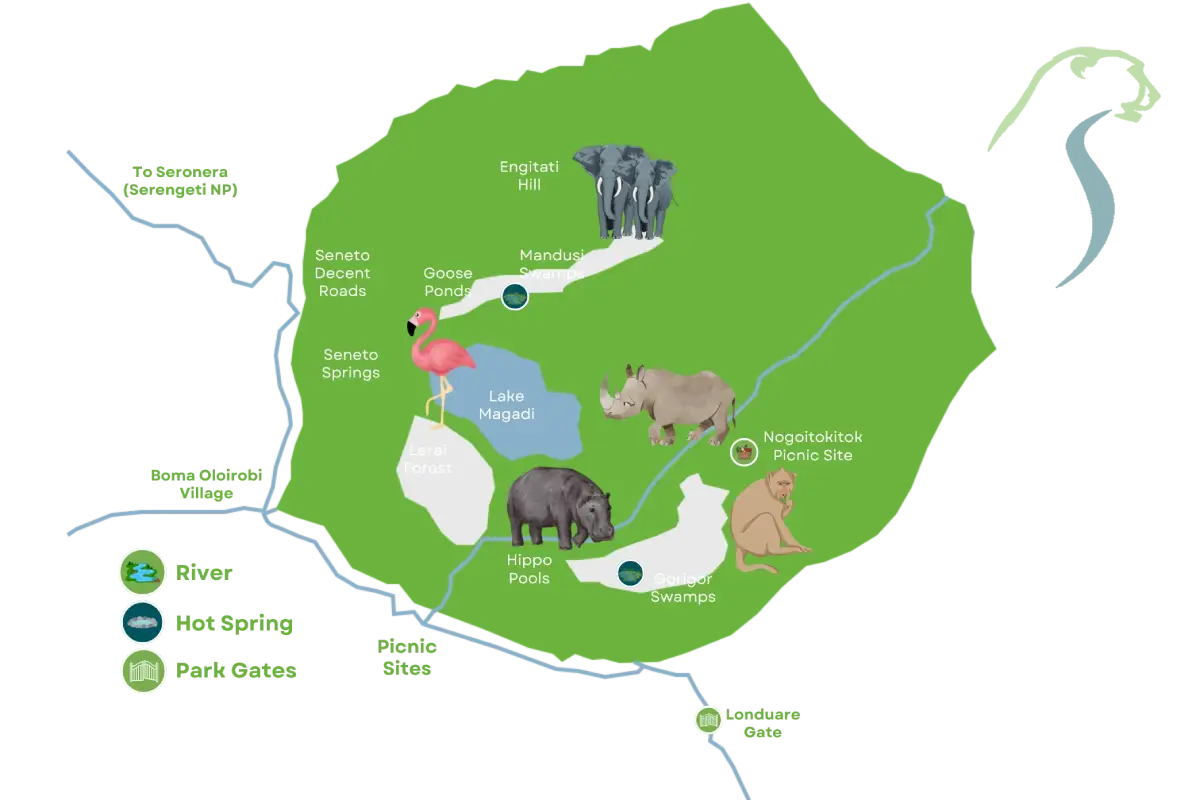
The Loduare Gate is located on the south of the Ngorongoro Conservation Area and the
Naabi Hill Gate is located on the border of Serengeti National Park.
Loduare Gate
This is the southernmost gate of the Ngorongoro Conservation Area. It’s one of
the most popular entry points for travellers on Tanzania Safari
Holidays, due to its proximity to Arusha.
The gate is located near the hippo pools and Lake Magadi, offering early glimpses
into the wildlife-rich landscapes featured in top-rated Ngorongoro
Packages. Entrance fees can be paid here, and there’s an
information centre for all essential visitor details.
Naabi Hill Gate
Next to the Loduare Gate, this is the second most popular gate. You can access both
the Ngorongoro Conservation Area and Serengeti National Park from this gate.
This gate is also the administrative checkpoint and has the offices of both the
Tanzania National Park Authority and Ngorongoro Conservation Area
Authority.
Entrance Fees
After you get to the NCA, you need to know what the entrance fee is. The following
are the entrance fees for the NCA according to age group.
- Visitors above the age of 16 - $50
- Ages from (5-16) - $10
- Children under the age of 5 – Free of cost
The Climate Of Ngorongoro According To The Seasons
| Dry Season (From June to October) |
Wet Season (From November to May) |
| The afternoon temperatures are generally around 19 Celsius on the
crater floor. |
The daytime temperatures are warmer compared to the dry season. |
| Sunny cloudless skies are the norm in this season. The short rains
typically arrive in October. |
The afternoon temperatures are generally around 23 Celsius on the
crater floor.
|
|
The temperatures can get very cold at night and it can be freezing
on the crater rim.
|
Nighttime temperatures are about 6 Celsius on the crater rim.
|
Best Time for Safari in Ngorongoro
Wildlife In the Ngorongoro Conservation Area is excellent
throughout the year. The vegetation of the crater floor is the shortest in the dry
season, which makes spotting wildlife much easier. But, the spectacular landscapes
in the wet season (from November to May) are some of the best you’ll ever see.
Comparison Of Both Seasons
| Dry Season (From June to October) |
Wet Season (From November to May) |
| It is the Best Time to See Wildlife. |
Wildlife viewing is still excellent. |
| Almost no rainfall, abundant sunshine, and clear blue skies. |
Fewer tourists and discounted prices for safaris and accommodations.
|
|
Fewer mosquitoes, so the chances of contracting malaria are
significantly low.
|
The perfect time for birdwatching because of the presence of
migratory birds.
|
|
Morning and nighttime temperatures are very cold.
|
Plenty of photographic opportunities – with lush surroundings and
beautiful sunsets.
|
When Is The Best Time To Visit Ngorongoro Conservation Crater
Let’s see what safaris in every month of the Ngorongoro Conservation Area offer:
After the mid-month rains, January is a lush and active time
in the Ngorongoro Conservation Area. Animals like zebras,
horses, elephants, and antelopes come in large groups when
the land turns green.
Near game tracks, especially early in the morning and late at
night, you can often see lions and leopards. Migrating birds
are coming through now, making this one of the best months
for birdwatching.
It is warm and mostly clear, which is great for going on game
drives. Since June is a popular month for travel,
Ngorongoro Safari Tour Packages tend to
sell out quickly.
- Average temperature: 18°C / 65°F, warm and comfortable
all day.
- Light rainfall, occasional showers with mostly dry,
clear skies.
- Wildebeest calving season fills plains with newborns and
predator activity.
- Ideal month for photography with green backdrops and
vibrant life.
- Dry spell between rains makes travel smooth and scenic.
Our Overview
A good time to
visit
The warmest month in the Ngorongoro Crater Conservation Area
is February, when daytime temperatures can hit as high as
26°C (79°F). Animals like elephants, lions, zebras,
buffalo, ostriches, and even the rare black rhino can often
be seen at this time. Large groups of hippos live in the
southeast corner of the crater. Because the floor of the
valley isn't very big, animals come across almost every 15
to 20 minutes, which makes game drives very enjoyable. A lot
of people come at the beginning and middle of February, but
fewer people come at the end of the month. It is a great
time to make plans for a Tanzania
Safari Tour that you will never forget.
- Average temperature: 18°C / 65°F, mild with
little variation.
- Very low rainfall, dry skies are perfect for safari
outings.
- Predator sightings increase as lions and hyenas stalk
young calves.
- Wide open views and short grass improve game visibility.
- One of the best months for crater-based game drives.
Our Overview
A good time to
visit
Weather in February
Cloud
In the Ngorongoro Conservation Area, March is the start of
the rainy season, but the weather is still nice and warm.
Fewer tourists come during this month of change, making it
perfect for people who want to enjoy their time without any
crowds. There are often deals at lodges during this time,
which makes many Ngorongoro Safari Packages
more valuable.
On the crater floor, you can still see a lot of wildlife,
including elephants, buffalo, lions, zebras, and different
kinds of antelopes, like elands and dik-diks.
The scenery is starting to turn green again, which makes it
better for birdwatching and taking pictures. If you want a
more relaxing and thorough safari in northern Tanzania,
March is the best month to go.
- Average temperature: 19°C / 65°F, slightly
warmer than previous months.
- Rainfall increases slightly toward the end of the month.
- Fewer visitors mean quieter, less crowded crater
experiences.
- Great rates for accommodations before the rainy season
peaks.
- Green shoots emerge, drawing grazing wildlife back into
view.
Our Overview
A good time to
visit
In the Ngorongoro Crater Conservation Area, April is the
rainy month, but there are still some sunny days in the
month that make game drives fun. The crater changes, getting
new green grass, lots of water, and colourful scenery.
Wildlife is spread out, and people still see elephants,
lions, zebras, and antelopes often—every 15 to 20
minutes on average. Because there are fewer people and less
demand, lodges along the crater rim have much lower prices.
It is a great time to travel if you want to find peace, save
money, and take lots of pictures. Even though April is not
the high season, it is still a great time to go on safari in
one of the top Tanzania
Safari Destinations.
- Average temperature: 18°C / 65°F, cool with
morning mist.
- Heavy rainfall throughout the month, especially in the
afternoons.
- The crater becomes lush and scenic with fewer tourists
around.
- Good time for photographers who enjoy dramatic, moody
backdrops.
- Quiet safaris offer peace and more personal wildlife
experiences.
Our Overview
A good time to
visit
May continues the rainy season in the Ngorongoro
Conservation Area, with lush green landscapes
and dense vegetation. While smaller animals like servals and
warthogs may be harder to spot, larger wildlife such as
elephants, buffalo, zebras, and antelopes are commonly seen
grazing across the crater.
Lions and leopards are present too, most active during cooler
hours. Hippos can be found in large numbers in the
southeastern crater pools. Birdwatching is excellent, with
sightings of Schalow’s Turaco around the crater rim.
With fewer visitors and low lodge prices, May is ideal for
peaceful travel and great-value Ngorongoro Safari
Holiday Packages.
- Average temperature: 16°C / 62°F, cooler with
cloudy skies.
- High rainfall continues; roads may become muddy in
places.
- Excellent bird activity and fresh greenery throughout
the crater.
- Lower rates and quiet trails suit slow, scenic safaris.
- The green season draws photographers and birding
enthusiasts alike.
Our Overview
A good time to
visit
By mid-June, the dry season returns to the Ngorongoro
Conservation Area, bringing cool mornings and mild daytime
temperatures. Night temperatures can drop to
5–6°C, so pack a fleece jacket and windbreaker for
early game drives.
Wildlife viewing is excellent—elephants, buffalo,
zebras, antelopes, hippos, lions, and leopards are commonly
seen.
The grass is shorter, making animals easier to spot. Early
June still offers some seasonal discounts, making it a good
time to book Tanzania Safari Packages.
With fewer crowds and fresh, crisp air, June is one of the
best months for a peaceful and rewarding safari experience
in Tanzania.
- Average temperature: 15°C / 60°F, crisp and
pleasant weather.
- Rainfall drops off; skies remain clear most of the
month.
- Game drives resume strongly with fewer vehicles on
trails.
- Ideal time to combine crater visits with Kilimanjaro
climbs.
- Grass thins out, improving chances of spotting hidden
wildlife.
Our Overview
A good time to
visit
July brings ideal conditions for wildlife viewing in the
Ngorongoro Conservation Area. The dry
season is in full swing, with cool mornings and sunny days.
Early game drives can be chilly, with temperatures on the
crater rim dropping to 4–6°C, so pack a fleece or
light jacket. During the day, it warms up to around
25–30°C. The short grass makes animals easy to
spot—lions, elephants, buffalo, zebras, antelopes, and
even rare black rhinos are seen regularly. July is a peak
month for travel, making it a popular time to choose a
Tanzania Safari Package for unforgettable
wildlife encounters.
- Average temperature: 15°C / 58°F, cool mornings
and sunny days.
- Minimal rainfall, the dry season fully begins this
month.
- Peak safari time with high wildlife density near
waterholes.
- Excellent month to see the Big Five in one drive.
- Early bookings are needed due to rising visitor numbers.
Our Overview
A good time to
visit
August is among the driest months in the Ngorongoro
Conservation Area, with almost no rain and clear, sunny
skies daily. Nights and early mornings are chilly,
especially along the crater rim, with temperatures dropping
to 5–7°C.
A fleece and light jacket are recommended for morning game
drives. Wildlife is abundant—you’ll likely see
the Big Five, along with zebras, hippos, antelopes, and
smaller creatures like servals and mongooses. With dry grass
and great visibility, it’s an excellent time for
safaris.
Due to high demand, Ngorongoro Safari Holiday
Packages in August should be booked in advance
to secure top accommodations and guides.
- Average temperature: 15°C / 60°F, dry and cool
conditions continue.
- Very little rainfall, skies remain mostly clear.
- Dry grass plains make wildlife easier to spot.
- Predators actively roam open areas in search of prey.
- Busy month, great for photographers and wildlife lovers.
Our Overview
A good time to
visit
September marks the height of the dry season in the
Ngorongoro Conservation Area, offering excellent wildlife
visibility. Animals gather near Lake Magadi and other water
sources, making it easier to spot elephants, lions, buffalo,
hippos, and zebras. Sightings of the elusive black
rhinoceros are possible, though they often stay away from
safari routes.
With little grass, smaller savanna creatures like caracals,
serval cats, and warthogs become more visible. It’s a
popular time, so expect more safari vehicles.
For travellers seeking rich wildlife encounters and scenic
landscapes, Tanzania Safari Tours in
September are a fantastic choice for exploring Ngorongoro.
- Average temperature: 17°C / 62°F, mild with warm
afternoons.
- Low rainfall continues; the crater remains dry and
golden.
- Short grass boosts visibility for game viewing and
photography.
- Great month for spotting elephants and other grazers.
- Spring transition begins, with fresh light and new
movement.
Our Overview
A good time to
visit
Weather in September
Cloud
October is a peaceful and scenic time to explore the
Ngorongoro Conservation Area. It’s a
transition month between the dry season and short rains,
with pleasant weather and fewer tourists. Light rain may
occur, but most days remain sunny—ideal for game
drives.
Wildlife remains abundant, with frequent sightings of
elephants, lions, zebras, buffalo, antelopes, and hippos at
Lake Magadi. Smaller animals like warthogs, servals, and
caracals are also visible.
Since it’s the shoulder season, Tanzania
Safari Prices are often lower than in
peak months, making October a great option for
budget-conscious travellers seeking rich wildlife encounters
without the crowds.
- Average temperature: 18°C / 64°F, warming
slightly after cool months.
- Rainfall increases slightly as short rains approach.
- Last stretch of dry conditions before the landscape
shifts again.
- Good mix of game activity and early bird arrivals.
- Dusty grasslands begin turning green in later weeks.
Our Overview
A good time to
visit
November brings the arrival of short rains to the Ngorongoro
Crater, refreshing the landscape with vibrant green grass.
With fewer visitors in the area, it's a peaceful time to
enjoy game drives without the usual crowds.
Wildlife remains active, and you're likely to spot elephants,
lions, antelopes, zebras, and hippos near water-rich zones
like Lake Magadi. However, taller grasses can make it harder
to see smaller creatures.
For budget-conscious travellers, this is a great month, as
Tanzania Tour Costs tend to drop. November is ideal for
those who prefer a quieter, more intimate safari experience
in Tanzania.
- Average temperature: 18°C / 65°F, with
refreshing light showers.
- Moderate rainfall, mostly short afternoon bursts.
- Migrant birds arrive, making it great for birdwatchers.
- Greenery returns, creating soft, scenic safari
backdrops.
- Wildlife remains active despite changing seasonal
conditions.
Our Overview
A good time to
visit
Weather in November
Cloud
December in the Ngorongoro Conservation Area
brings warm mornings and evenings, with occasional rain that
rarely disrupts game drives. The crater remains easily
accessible, and wildlife sightings are consistent throughout
the day.
From elephants and buffalo to zebras and antelopes,
you’ll see a variety of animals—often up close.
Smaller animals like jackals and duikers are trickier to
spot in tall grass but often appear along the roads.
As one of the most wildlife-rich Tanzania National
Parks, Ngorongoro is a top choice for year-end
travel. Due to high demand, book Ngorongoro Safari
Holiday Packages several months in advance for
the best availability.
- Average temperature: 18°C / 65°F, mild and
enjoyable weather.
- Short rains continue but rarely disrupt game drives.
- The crater is scenic and green with vibrant wildlife
activity.
- Birding remains excellent as migratory species fill the
skies.
- Lovely festive season escape with a peaceful safari
atmosphere.
Our Overview
A good time to
visit
Weather in December
Cloud
Preparing For a Ngorongoro Safari
Planning for a Safari In
Tanzania takes time and effort. It’s not like you
can visit the nearby store and buy clothes and other essentials. So, to narrow
things down the following is a complete packing guide. It’ll help you prepare
for a Ngorongoro
Safari.
Ngorongoro Conservation area
Clothing Essentials – Comfort is the go-to word!
Breathable and comfortable fabrics are the go-to clothing elements when it comes to
safaris in the NCA. But, colours shouldn’t be forgotten either. Make sure that you
have the below items on your checklist:
- Pants and long sleeve t-shirts (for Bush-walks
and Game Drives)
- Good Quality boots and sandals
- A wide-brim hat and sunglasses
- T-shirt or polo shirt
- Shorts
- Long Trousers
- Long sleeve shirts
- Socks
- Sleepwear
- Rain Jackets and rain trousers for the rainy
season
- Toiletries
Some Pro Packing Insights : Avoid wearing bright colours on your
game drives because they attract tsetse flies. Also, don’t wear
military-inspired or camouflage clothing.
Electronics – One of the major priorities!
Going on a Ngorongoro
Safari is an experience that you’ll have just once
in your life. So, just enjoy what lies in front of you – the vast wilderness.
But, there are a few electronics that will help you heighten the safari experience,
make sure you include items such as:
- A good quality camera with great focal length
and zoom lens
- Extra memory cards
- Power banks for your smartphones and other
electronics
- Travel adapter
- Flashlight and headlamp
- Binoculars (8x42 or 10x42 specification and a
magnification capacity of 300 mm)
- Water-proof or a zip lock bag to carry all the
above items
Packing Suggestion : Do not bring hairdryers or hair
straighteners with you on Safaris
In Tanzania . This is because most of the
accommodations won’t have enough power capacity and you won’t be
able to operate them. Thus, it’s better to leave them behind.
Travel Documents – Don’t forget the important stuff behind!
Necessary documents should be your utmost priority. Having them in your luggage will
make sure that you don’t face any problems on your trip. Whether you're
visiting multiple Tanzania National Parks or heading straight to
the Ngorongoro Conservation Area, don’t forget to include:
- A valid passport
- Tanzania Visa, (which you can get on arrival
[for US citizens the cost is $100, for UK and European Citizens (EU), it costs
$50.]
- A copy of your travel itinerary
- Proof copy of Health/ Travel insurance
- Credits cards (Visa and MasterCard are widely
accepted)
- Cash (US Dollars)
- Medical Certificates
Medical Kit – Better to be on the safe side!
Our travel experts will always be with you in times of emergencies. But it’s
better to be safe than sorry. So, consider having a small go-to medical kit and
include the following items listed in your Tanzania Safari Packing
List:
- Anti-malaria pills/tablets
- Antiseptic cream/ointment
- Antibiotics
- Mosquito Repellent
- Cold/Flu tablets
- Motion sickness pills
- Hand Sanitizer
If you have any prescription medication then include that as well. You can even store
them in your carry-on bag. Also, make sure you have vitamin pills or tablets to last
for your entire trip.
Packing Tip : Do not bring any plastic items with you on your
safari expedition. They are banned in Tanzania. Consider an alternative like zip
lock bags and encourage the green initiative of Tanzania.
The Ecosystem Of Ngorongoro
The ecosystem of Ngorongoro is a combination of wildlife, birdlife, and vegetation.
They all work together to form a thriving bubble of life. Below we’ll dive into the
details of Ngorongoro’s ecosystem.
Flora And Vegetation Of Ngorongoro
The Ngorongoro Conservation Area’s primary flora is the vibrant green vegetation as
well as desert plants. Apart from this, the area is a combination of plenty of short
grass, used for grazing, arid and semi-arid plants, highland forests, and lowland
vegetation.
- Extensive stretches of pure bamboo are found
in Makarut and Oldeani Mountains.
- The slopes of the Crater are covered with
grasslands and scrub heath. Upland woodlands are home to gum acacia and red
thorn acacia while dove weeds are abundant on the lower slopes.
- All of this flora make for some awesome
chances for photographic safaris.
The basin or hollow of the crater is covered by open grasslands with swamps,
freshwater lakes and patches of Acacia woodland. The Lerai Forest is home to acacia
and yellow fever trees. And, the Laiyanai Forest has Acacia Lahai and Pillar wood.
The plains of the western region are covered with grass and dotted with occasional
Commiphora Africana and Umbrella Acacia trees. Around the Lake Eyasi region,
Blackthorn Acacia and Zebrawood are common. The vast grasslands of the
Ngorongoro Conservation Area are rich and untouched by
cultivation—and they help support the vast concentration of wildlife seen on
most Ngorongoro Tour Packages.
Ngorongoro Conservation Area
Wildlife And Birdlife
The Ngorongoro Conservation Area has a huge concentration of more than 25,000 large
animals. This includes a population of around 115 mammals. The three primary
game-viewing areas are the Ngorongoro Crater, the surroundings of Lake Ndutu, and
the short-grass plains of the Gol Mountains.
Animals Of The NCA
| Large Mammals |
Ungulates |
Predators |
The Big Five |
| African Civets |
Grant’s gazelles |
Cheetahs |
Cape Buffalo |
| Caracals |
Gnus |
African Wild Dogs |
Lion |
| Baboons |
Mountain Reedbucks |
Black-backed and Golden Jackals |
Rhinoceros |
| Hippos |
Elands |
Spotted Hyenas |
Leopard |
| Serval Cats |
Hartebeests |
Bat-eared Foxes |
Elephant |
The black rhino population of the NCA is renowned across Tanzania, thanks to the
conservation efforts that have been placed.
- The black rhino population of the NCA is
renowned across Tanzania National Parks, thanks to the
conservation efforts that have been placed.
- Hippos can be seen around the permanent
freshwater pools around the crater swamps.
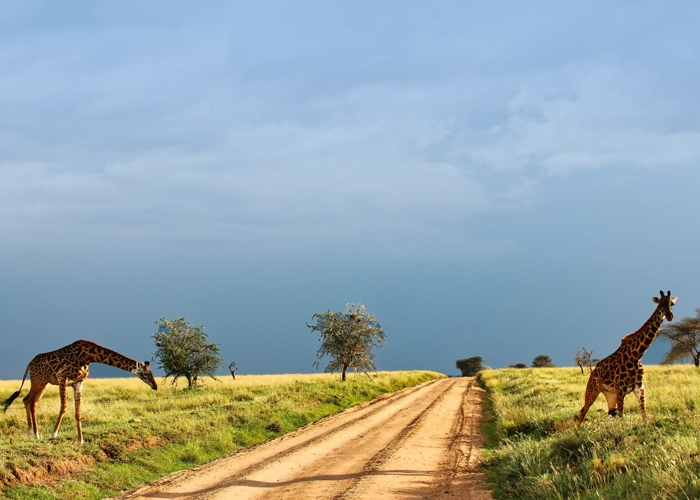
- While giraffes are not present in the Crater,
they can be seen in the habitats around Lake Ndutu.
Further up the rainforests of the crater rim, you’ll get to spot several
animals. They include elephants, jackals, cheetahs, African Wild dogs, leopards,
hyenas, and other predators. There are also several lion prides around the crater
rim.
The plains regions are where you’ll likely get to see elephants, herds of
wildebeests, zebras, cape buffaloes, etc. A few lucky visitors may also get an
opportunity to witness harder-to-spot animals like civets and serval cats.
The Annual Migration in Ngorongoro
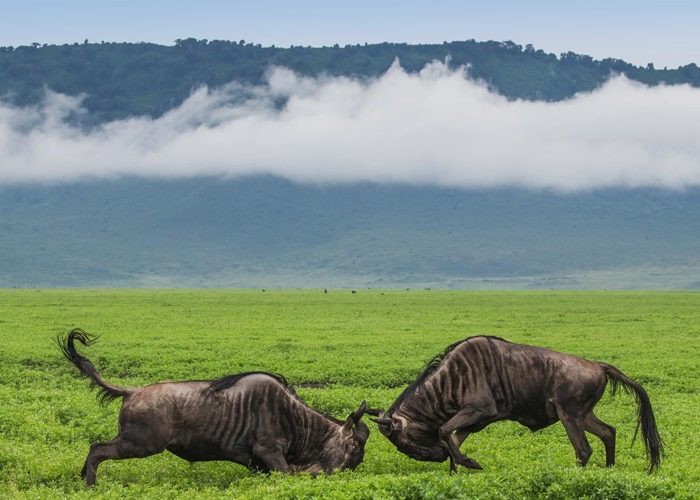
The Great Wildebeest Migration also makes its way through the
Ngorongoro Conservation Area. This is when over 2 million hooved animals move to the
southern part of the area in December. They move out in June to head north. The
migrant that passes through the NCA plains includes around 1.8 million wildebeests,
200,000 zebras, and 350,000 gazelles.
Birdlife
More than 550 species of birds have been recorded in the NCA. Some of them are
resident species and some are migrants. With such a huge bird population, Ngorongoro
can even turn those who aren’t interested in birds into seasoned birdwatchers.
- Lake Magadi, located on the floor of the
crater is often filled with thousands of lesser flamingos and other water birds.
- They can also be seen around the Empakaai
Crater Lake and Lake Ndutu.
- NCA also welcomes migratory birds from Europe
and Northern parts of Africa in the months from November to April.
- Some examples are pallid harriers, European
bee-eater, European storks, Caspian Lapwing, etc.
The forests of Ngorongoro are also rich with birds, including species of hornbills
and turaco. On the plains of the NCA, raptors like goshawk and harrier are common.
The best time for birdwatching in the NCA is in the wet season (from November to
May). For a comprehensive experience, you should bring with you a pair of binoculars
and a birdwatching guidebook.
Wildlife Conservation Efforts
Ngorongoro Conservation Area lies in a WWF Global Freshwater
Eco-region. The area is also an endemic bird region and overlays a UNESCO Biosphere
Reserve. So, unsurprisingly, it has global importance.
Strong measures have been taken by the NCA authority in terms of conservation
efforts. Their principal goal is to safeguard endangered rhinos from illegal
poaching. The government of Tanzania is also directly involved in these efforts.
Because of this, there has been a significant rise in the population of black
rhinos.
Ngorongoro Conservation Area is Tanzania’s emerald crown—where wildlife, human
history, culture, birdlife, and volcanic landscapes converge into one extraordinary
destination offering adventure, heritage, and biodiversity in every direction.
Going On A Ngorongoro Safari
Our safari and travel experts have a deep admiration for the Ngorongoro Conservation
Area. And it’s exactly why we love to show the beauty of the area to visitors.
If you’d also like to experience the fabulous adventures in the NCA, then the
following are some of our hand-picked itineraries:
8 Days
Tanzania Classic Safari – Your
definitive Safari In Tanzania will surely include this itinerary!
Experience the glorious destinations of Tanzania on full-day game drives coupled
with relaxing and luxurious accommodations.
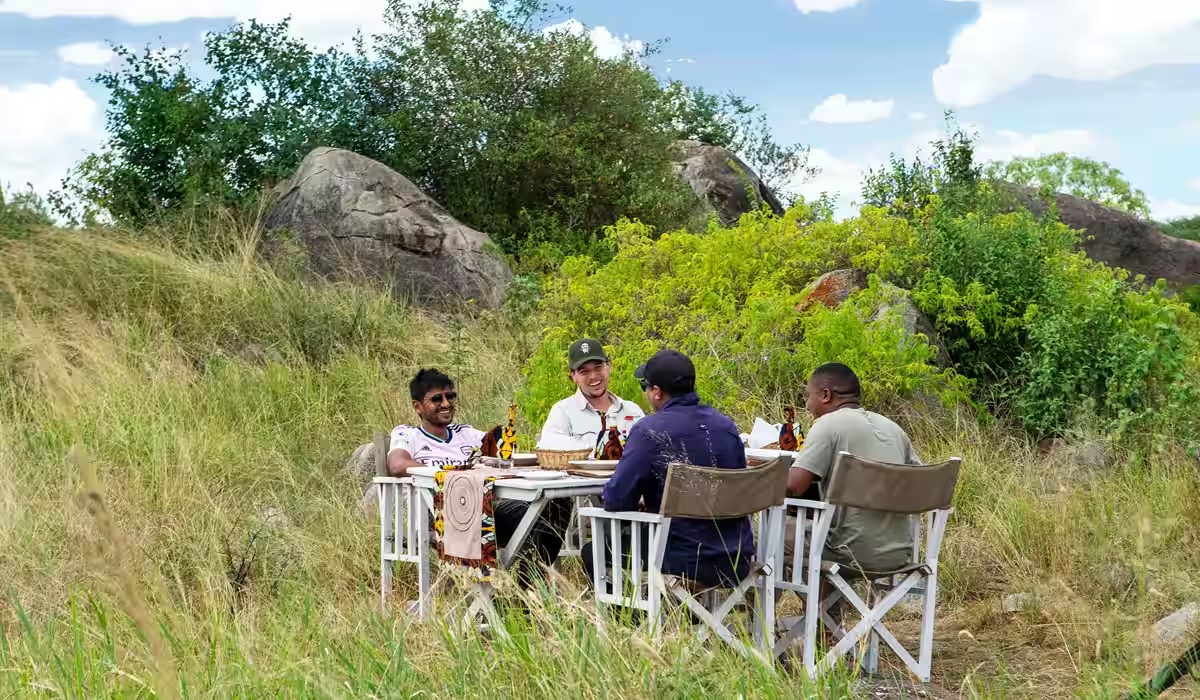
This includes the charming Ngorongoro Conservation Area and the Crater. You’ll
get to go on classic game drives, enjoy outdoor Bush picnics and stay in a luxurious
accommodation overnight.
6 Days Tanzania Short
& Sweet Safari – Don’t be fooled by the
name! Because even though this itinerary is short and sweet, it offers some
unforgettable experiences.
For example, you’ll get to enjoy a full-day game drive in the Ngorongoro
Crater, have lunch by the Hippo Pool and stay in cosy Tanzania
Accommodations.
It’s all about game drives when it comes to the Ngorongoro Conservation Area.
One day is satisfactory if that is all the time you have.
However another day or two will open up new possibilities and increase your chances
of seeing several more animals. You’ll be glad to know that our itineraries
are fully customizable! So, you can plan your Safari in Ngorongoro, the way you
want.
A wonderful thing about the NCA is that it pairs wonderfully well with other Tanzania
Destinations. You can explore some of our itineraries that visitors have a great
time on by clicking Safari In
Tanzania.
Places To Discover In Ngorongoro
There’s a lot to discover in and around the Ngorongoro Conservation Area. The
choices can be a bit overwhelming, so to help you choose, the following are the
best Places To Visit In Ngorongoro Conservation Area.
Lake Magadi
This lake’s name means salty in the Maasai language. It’s
a shallow soda lake located in the southwestern region of the
Ngorongoro Crater in northern Tanzania. Lake Magadi is home to
several lesser flamingos which makes it a perfect place for
birdwatching enthusiasts and a must-visit destination on Safaris
In Tanzania.
Lake Natron
Located in the northern Ngorongoro District, Lake Natron is perhaps
the most beautiful of all the lakes of the Rift Valley. This lake is
renowned for being the breeding ground of lesser flamingos. A great
attraction close to the lake is the ‘Mountain of God’ – Ol Doinyo
Lengai! This is an active volcano located just south of the lake in
the Gregory Rift.
Heroes Point
This is where you will see the stunning sights of Ngorongoro’s Crater
floor. Look closely at the floor below and you’ll witness herds of
zebras, buffaloes, and wildebeests running across the surroundings.
Another unique sight will be the huge elephants on the edge of the
Lerai Forest.
Lake Ndutu and Lake Masek
Both these lakes are located in the far western region of the
Ngorongoro Conservation Area. The shorter vegetation around the
lakes attracts several animals, including herbivores and a range of
bird species.
Empakaai Crater
It’s a shame that the Empaakai Crater is a relatively unknown
Tanzania Destination. This hidden gem of the Ngorongoro Conservation
Area is located along the highland region. Here, you’ll be treated
to stunning panoramic views and a glimpse of the Ol Doinyo Lengai.
Just below the crater floor, birdwatching opportunities are
plentiful. You’ll get to see flocks of flamingos along with animals
like elephants, cape buffaloes, and hyenas.
Olmoti Crater
Another one of the hidden gems of the NCA! This crater is a
fascinating remain of the volcanic activity that shaped the highland
region of Ngorongoro. The name of the crater means cooking pot in
the Maasai language. You’ll get to see beautiful birds here,
including the Verreaux’s Eagle and augur buzzard. There’s also a
small waterfall called Munge waterfall at the edge of the Crater
floor.
Olduvai Gorge
At the distant end of the Ngorongoro Conservation Area, stands the
Cradle of Mankind – the Olduvai Gorge! This is one of the most
important prehistoric sites on our planet. It’s named after
the Maasai word ‘oldupaai’ for the wild sisal that grows
around the area.
For anyone who has an interest in prehistoric ancestors, this is a
fascinating place. The earliest remains of Homosapiens were found
here by Dr Louis and Mary Leakey and were nicknamed
‘Nutcracker Man.’
There’s a museum here where you can visit and admire the 2
million years old fossil remains. Guided walks around the gorge are
also a great option to explore the surroundings.
Gol Mountains
These series of ridges rise from the short grass plains near the
northern edge of the Ngorongoro Conservation Area. These mountain
ridges are believed to have originated millions of years before the
Ngorongoro Crater. Several herbivores live in the areas surrounding
the Gol Mountains.
The amazing Nasera Rock is also located close to the mountains. If
you want to travel to a remote place with no other signs of life
other than the wildlife and the tribal communities, then this is the
place for you.
Safari Activities In Ngorongoro
Few Tanzania Destinations are as rich in wildlife and legacy as the NCA. This
wonderful region is a must-visit for any safari enthusiast. Below are the top things
you should not miss out on a Safari in Ngorongoro.
Ngorongoro Conservation area
Game Drives
The foremost thing every traveller needs to do is go on game drives in the Ngorongoro
Conservation Area. This is for sure going to be the best experience on your Tanzania
Safari Tour. The area is overflowing with wildlife and is one
of the best places in Africa where you can spot the big five.
- Once you reach the Ngorongoro Crater floor,
you’ll get to observe different animals that were too small to be seen from the
rim.
- Our safari guides will take you to every
section of the Crater, including Lerai Forest and Lake Magadi.
You can spend an entire day on a game drive and still not cover the region of the
NCA. After a day’s outing, enjoy a lovely picnic on a spot by the Hippo Pool where
you can relax and enjoy a delicious lunch.
Nature Walks
Exploring the rich surroundings and seeing animals and birds up close is a wholly
different experience. This is exactly what you’ll get to enjoy in the NCA by going
on short and long nature walks along the crater rim. So bask in the cool breeze and
relax your mind in the quiet and peaceful surroundings of Ngorongoro.
Cultural Tours
Tanzania Cultural
Tours are a great way to learn about the lifestyle of the
native tribal communities. And there’s no better place to go on cultural
excursions than the NCA because the Maasai people live in harmony with the
area’s surrounding and wildlife.
- On a visit to the Maasai villages, you can buy
native arts and crafts at the cultural centres and shops.
- This way you’ll have a souvenir of your
enriching time at Ngorongoro.
The region around Lake Eyasi is home to the native hunter-gatherer tribe known as the
Hadzabe. They still live their life in a primitive way and their culture is
untouched by outside influences.
Photographic Safaris
The extensive wildlife and gorgeous landscapes of the Ngorongoro Conservation Area
make it a picturesque safari destination. The best time for a photographic safari is
during the early morning and the late evening. On top of wildlife, you will also be
able to capture stunning sunrises and sunsets.
Laetoli walking safari
Safaris To
Tanzania would be incomplete without learning about our
ancient ancestors. The NCA takes this one step further! This is the place where
trails of ancient human footprints were left. Take a journey to this remote place
and marvel at how far human beings have come.
Accommodations In Ngorongoro
After a day full of game drives along the crater rims of the NCA, you will need a
comfortable bed. And, Ngorongoro doesn’t disappoint! There is a range of
accommodation options, including a budget, mid-range, and luxury choices. Below are
some of our handpicked recommendations for Ngorongoro
Accommodations:
Tanzania Bush Camp
Situated right in the lap of Mother Nature, this Ngorongoro Accommodation is the
perfect choice for budget travellers. Those who want a great natural experience
certainly won’t be disappointed.
Karibu Camps
A blend of authentic Tanzanian wilderness and luxury, this accommodation falls into
the mid-range category. Karibu Camps offer you top-notch facilities along with
unparalleled hospitality and comfort.
&Beyond Ngorongoro Crater Lodge
A safari lodge that’s on top of the world! AndBeyond Ngorongoro Crater Lodge is
an exotic blend of Victorian furnishings with touches of African influences. This
creates a charming atmosphere that’s almost as great as the Ngorongoro Crater
itself.
If you want the utmost luxury with amazing amenities then there’s no other
perfect choice than this Ngorongoro Accommodation.
These are just some of our accommodation options in the Ngorongoro Conservation Area.
All of them offer visitors a great deal of comfort throughout their stay which
you’ll greatly appreciate after a day of game drives.
Interesting Facts About Ngorongoro Conservation Area
Over the course of your Safari in Ngorongoro, you’ll be filled with a sense of
wonder. Because you won’t know what hidden gems you’ll get to explore
the next moment. Each experience on your safari tour will leave you with some
memorable encounters.
Before your trip to this wonderful Tanzania Destination, you should know some
fascinating facts about safaris here. Because they’ll enrich your safari
experience even more. So, let’s get straight to it – the following are
some interesting facts about the Ngorongoro Conservation Area:
- The NCA is home to the world’s largest intact
caldera – the Ngorongoro Crater!
- Home to some of the densest concentrations of
predators.
- There are close to 25,000 large mammals in the
NCA.
- One of the best destinations in East Africa to
spot endangered animals and the Big Five.
- One of the most significant prehistoric and
human archaeological research sites on our planet!
- Around 42,000 people live inside the premises
of Ngorongoro Conservation Area.
- More than 600,000 people visit the NCA every
year.
- There’s a 7-mile lake in the Ngorongoro
Conservation Area called Lake Magadi.
Ngorongoro Through The Famous Lens
Just like many travellers, the NCA has tugged the heartstrings of celebrities too.
This charming destination has been visited by several well-known famous individuals
through the years.
Famed visitors include the reverend Jesse Jackson, former president of the United
States – Bill Clinton, the Queen of Denmark – Margrethe II, Chris
Tucker, Prince William, and John Wayne.
The entire delegation attending the 2008 Leon Sullivan Summit which took place in
Arusha National Park also visited the NCA.
highlights of the ngorongoro conservation area
- Home to some of the most diverse wildlife
species in Tanzania – with the numbers going above 25,000.
- The place of the wild sisal – Learn about our
ancestors in the Olduvai Gorge and also by visiting the Oldupai Museum.
- A great place for photographic safaris – with
rich grasslands and stunning landscapes.
- Learn about the tribal communities – On
cultural excursions to Maasai bomas and Lake Eyasi, to meet the Hadzabe people.
- Enjoy an outdoor picnic on the backdrop of the
Tanzania Bush!
- Nature Walks – Discover the flora and fauna of
Ngorongoro from a completely different perspective!
- One of the best places for birdwatching – with
more than 550 species of birds and the presence of migratory birds in the wet
season.
- The best place in Tanzania to see the
endangered black rhinoceros!
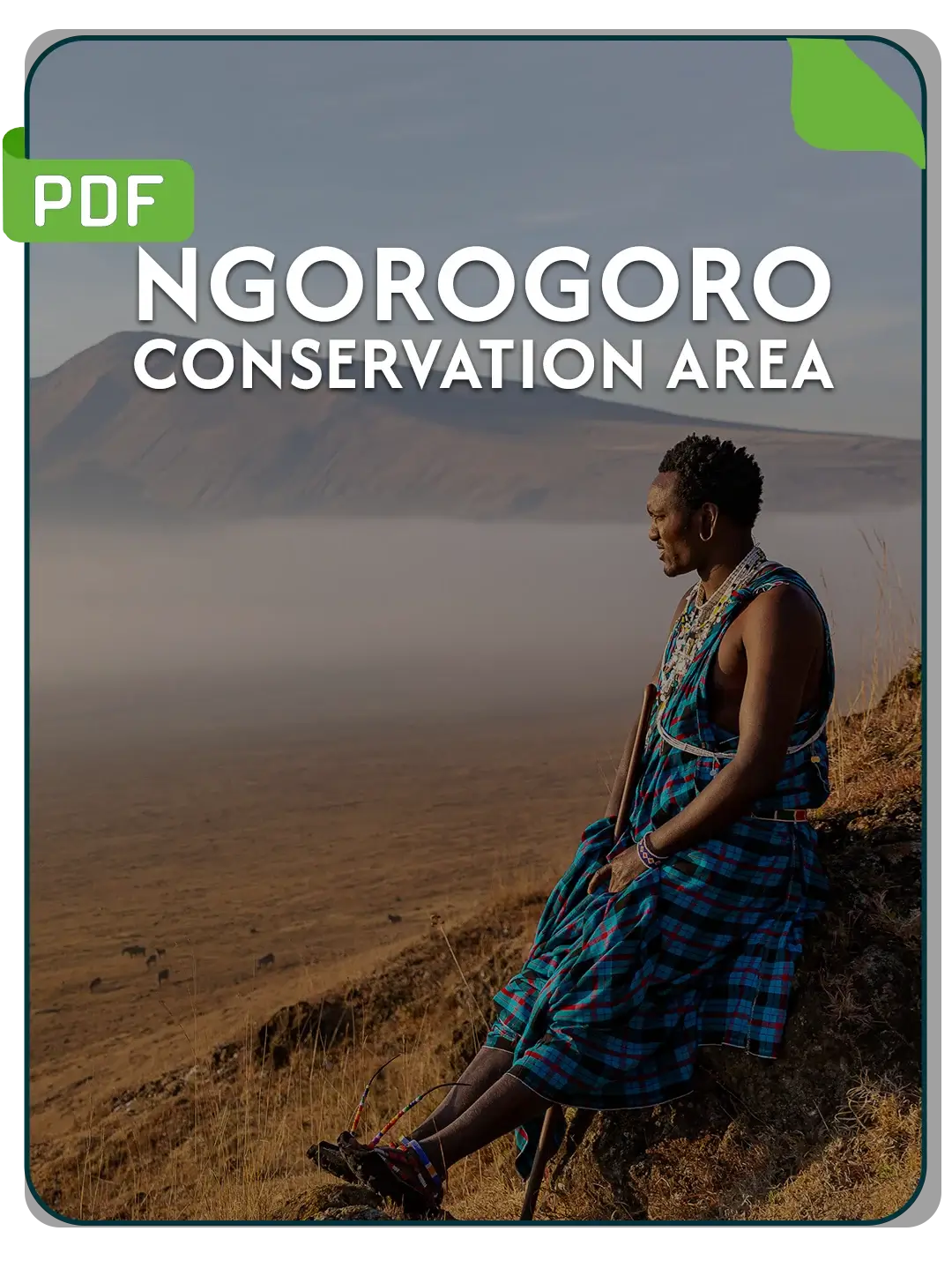
Ngorongoro Conservation Area PDF
Download our free guide to discover Ngorongoro’s crater wildlife, cultural
history and unique landscapes. It is your perfect introduction to this
natural wonder of Tanzania.
The Wondrous Capital – Ngorongoro Conservation Area!
Our team of safari experts have had their bags full of safari experiences for
decades. They have an everlasting passion for the stunning experiences that Tanzania
offers. And we can’t wait to show you the beauty of Ngorongoro. But,
don’t take our word for it! Believe the tons of visitors who have gone on
a Ngorongoro
Safari with us. The following are some words they had to
say.
A hub of natural wonders! This describes the Ngorongoro Conservation Area perfectly.
Home to the 2 million years old Ngorongoro Crater and some of the most diverse
wildlife on the planet – Safaris in Ngorongoro are
simply an unforgettable experience.
It’s also one of the only places in Africa where humanity and wildlife coexist
in harmony. So, the time has come! The time to get your Safaris in
Tanzania on and visit the eighth wonder of Africa –
The Ngorongoro Conservation Area.
Go on Safari with Us
Discover Tanzania’s untamed beauty with experts who bring every moment to life. From tracking lions to quiet sunset views, we make each day in the wild truly count.
Ngorongoro Conservation Area FAQ'S
Ngorongoro is a Maasai term which refers to the sound of the bell
that hangs around the neck of the leader cow in a herd. The bell
makes a sound like ‘ngor ngor’ which made the native Maasai
pastoralists name the area Ngorongoro.
The NCA is situated in the Ngorongoro District, 110 miles west of
the city of Arusha. It’s within the Crater Highlands geological
region of Northern Tanzania. The coordinates are 3.2279° S,
35.5075° E
The NCA is home to the largest intact and unfolded caldera on
Earth – the Ngorongoro Crater. And is a natural sanctuary for
some of the densest concentrations of large mammals in Africa.
It’s also one of the best places in Africa to see the Big Five.
Getting to the NCA is fairly convenient. There’s an airstrip
located on the crater rim, close to the headquarters of the
area. You can take a charter flight and fly into the airstrip.
Another option to access the area is by road from the town of
Arusha. From there it’s just a 3-hour drive to the NCA.
Kilimanjaro International Airport (JRO) is the airport nearest to
the NCA. It’s approximately midway between the towns of Moshi
and Arusha, in the Northern region of Tanzania.
From John F Kennedy International Airport (JFK) to Kilimanjaro
International Airport, the flight costs start from $1198 (for
Economy Class) and $4350 (for Premium Economy Class). From
there, you can hire a car or taxi to the NCA or take a charter
flight.
KLM Airlines is the primary airline that connects London City
Airport (LCY) to Kilimanjaro International Airport (JRO). The
flight costs start from $1148 (for Economy Class) and $3498 (for
Premium Economy Class). After landing at Kilimanjaro
International Airport you can either hire a taxi or take a
charter flight to the airstrip in the NCA.
The entrance fee for Ngorongoro Conservation Area in the high
season is $70. And, $60 in the low season. For instance, the
average prices for Ngorongoro Crater (including vehicle costs)
are:
- 1-Day Ngorongoro Safari –
From $280 (per person)
- 2-Day Ngorongoro Safari –
From $395 (per person, per day)
- 3-Day Ngorongoro Safari –
From $600 (per person, per day)
The NCA can be explored in just a single day. But, to have the
best possible safari experience you should at least plan a
safari here for two or three days. This way you can explore the
vast area completely and take part in lots of safari activities.
Great News, all of the big five animals (Lions, Leopards,
Elephants, Cape Buffaloes, and Rhinos) can be seen in the
Ngorongoro Conservation Area. The NCA is one of the best places
in Africa to see the big five.
There are more than 25 rhinos present on the premises of the NCA.
It’s one of the best places in Africa to see these endangered
creatures.
The Ngorongoro Crater is a volcanic caldera located inside the
Ngorongoro Conservation Area. The Crater is the largest
unfilled, inactive, and intact volcanic caldera on the planet.
Whereas, the NCA is the overall protected area covering around
8,292 sq. km.
A caldera is a bowl-shaped cavity in the Earth that is generally
more than a kilometre in diameter. It has an outer boundary
formed by steep slopes. It’s usually formed when the top of a
volcano collapses. The Ngorongoro Crater was formed when an
active volcano imploded inwards after a huge eruption.
Yes, several tribal people live in the Ngorongoro Conservation
Area. The numbers go above 40,000. The most prominent among them
are the Maasai communities. They do not hunt and only practice
small-scale agriculture and livestock rearing. They also live in
harmony with the surroundings and wildlife of the area.
Strong measures have been taken by the NCA authority in terms of
conservation efforts around the area. Their chief goal is to
safeguard endangered rhinos from illegal poaching practices. The
government of Tanzania is also directly involved in these
efforts. Because of this, there has been a significant rise in
the population of black rhinos.
Simbo Natai, founder of African Scenic Safaris, crafts sustainable, meaningful Tanzanian journeys rooted in his deep local knowledge and passion.
Director











 African Scenic Safaris #1 on TripAdvisor